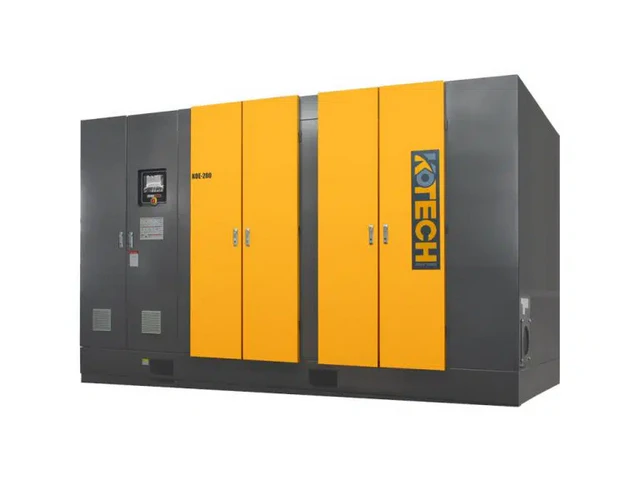
Two-Stage Compressors: The Backbone of Modern Farm Operations
Why Two-Stage Compressors Are Non-Negotiable for Modern Agriculture
Look, in agriculture, downtime isn’t just an inconvenience; it’s a financial hit. Modern farms operate on tight margins and even tighter schedules, especially during planting and harvest. They consistently deliver the higher pressure and greater volume (CFM) required to keep complex machinery running smoothly, ensuring you’re not left stranded in the field.
These units are built to handle the continuous, demanding workloads that single-stage compressors simply can’t sustain. Think about it: you’re not just blowing up a bicycle tire. You’re maintaining massive tractor tires, powering impact wrenches for stubborn bolts, and running sophisticated air-assist sprayers. This level of demand requires a compressor that runs cooler, more efficiently, and with unwavering reliability.
The Economic Imperative: Uptime, Efficiency, and Longevity
The financial implications of equipment reliability in agriculture are staggering. Unplanned downtime, especially during peak seasons, can lead to substantial losses. A two-stage compressor’s ability to provide consistent, high-volume air for maintenance and repairs means faster fixes and less time with machinery sitting idle.
Beyond just preventing downtime, these compressors offer significant operational efficiencies. Energy consumption is a major overhead for any farm. Two-stage compressors achieve this by compressing air in two stages, which is inherently more efficient for higher pressure outputs, generating less heat and requiring less horsepower per CFM delivered compared to a single-stage unit under similar load. This translates directly to lower electricity bills and a healthier bottom line.
Furthermore, the longevity of your equipment is paramount. Investing in durable tools and maintaining them properly extends their lifespan, delaying costly replacements. Maximizing the service life of these expensive assets through proper maintenance, often facilitated by robust air tools, is a smart financial strategy. A reliable air compressor is a core component of that strategy.
Core Applications: Powering the Farm's Backbone
The versatility of a two-stage air compressor makes it indispensable across numerous farm tasks.
Tire Inflation and Repair
Large agricultural tires, whether on tractors, combines, or trailers, require substantial air pressure and volume. Maintaining correct tire pressure is crucial for fuel efficiency, traction, and tire longevity. A two-stage compressor provides the consistent high PSI and CFM needed to quickly inflate these massive tires, even after a complete flat. Moreover, for field repairs, pneumatic impact wrenches and bead breakers powered by a two-stage unit are essential for removing stubborn lug nuts or reseating tire beads quickly and safely. Trying to do this with an underpowered compressor is just asking for frustration and lost time.
Pneumatic Tool Operation
From routine maintenance to emergency repairs, pneumatic tools are workhorses in any farm shop. Air-powered impact wrenches, ratchets, grinders, and drills make quick work of tasks that would be far slower and more fatiguing with electric or manual tools. A two-stage compressor ensures these tools operate at their peak performance, delivering consistent torque and speed without cycling excessively or running out of air mid-job. This boosts productivity and reduces physical strain on operators, which frankly, is a huge win for morale and efficiency.
Precision Agriculture and Spraying Systems
Modern agriculture increasingly relies on precision. Air-assist sprayers, for example, use compressed air to atomize spray droplets, ensuring more uniform coverage and reduced drift of pesticides and fertilizers. These systems demand a clean, consistent air supply at specific pressures. Beyond spraying, compressed air is used for cleaning sensitive sensors on GPS guidance systems, clearing blockages in seeders, and maintaining other delicate components of precision farming equipment. The reliability and clean air output of a two-stage compressor are critical for these high-tech applications.
Shop and Barn Maintenance
Beyond the field, a two-stage compressor is invaluable for general farm maintenance. It powers air blowguns for cleaning dust and debris from machinery, painting equipment, and even operating air hoists or lifts in the maintenance bay. The ability to quickly clean, paint, or operate heavy lifting equipment efficiently contributes significantly to a safer and more organized working environment.
When Less Isn't More: Understanding the Limitations of Single-Stage Units
While a single-stage compressor might seem like a more budget-friendly option upfront, it’s rarely suitable for the rigorous demands of agricultural work. These units compress air in a single stroke, generating more heat and delivering lower CFM at higher pressures. For light, intermittent tasks like inflating a small utility trailer tire or using a basic blowgun, a single-stage might suffice. However, for continuous operation or tasks requiring sustained high pressure and volume—like running an impact wrench for multiple bolts or inflating a tractor tire—they quickly overheat, cycle excessively, and often fail prematurely.
It’s a false economy. The energy waste from constant cycling and the inevitable downtime for repairs or replacement far outweigh any initial cost savings. For any farm serious about efficiency and equipment longevity, a single-stage unit is a compromise that simply doesn’t pay off in the long run.
Selecting the Right System: Key Considerations for Your Operation
Choosing the correct two-stage air compressor involves more than just picking the biggest unit. You need a system tailored to your specific needs.
First, **assess your CFM and PSI requirements.** List all the pneumatic tools you use and their individual air demands. Add them up, considering which tools might run simultaneously. Always err on the side of slightly more CFM than you think you need.
Second, consider your **power source and portability.** Will the compressor primarily live in the shop (electric) or do you need a mobile unit for field repairs (gas/diesel powered)? Gas or diesel models offer invaluable flexibility for remote job sites.
Third, **tank size and duty cycle** are critical. A larger tank provides a reservoir of air, reducing how often the compressor motor has to run, extending its life. Look for units designed for a high duty cycle, meaning they can run for extended periods without overheating.
Finally, factor in **durability and environmental conditions.** Agricultural environments are tough—dusty, dirty, and often exposed to the elements. Choose a robust, industrial-grade unit with good filtration and protective casings. Regular maintenance, including draining condensation and checking filters, will significantly extend the life of your investment.
Future-Proofing Your Farm with Robust Air Power
In the competitive landscape of modern agriculture, every operational advantage counts. Investing in a high-quality two-stage air compressor isn’t just buying another piece of equipment; it’s a strategic decision to enhance your farm’s productivity, reduce costly downtime, and extend the life of your valuable machinery. It’s about building a resilient, efficient operation that can handle the demands of today and tomorrow. Don’t let an inadequate air supply be the bottleneck that holds your farm back.