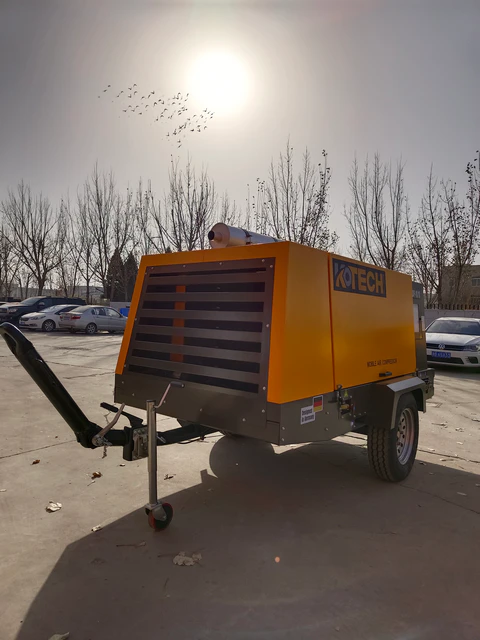
Unlocking Mine Site Productivity with Diesel Portable Air Compressors
- Uninterrupted Power: Diesel portable compressors provide essential, self-contained pneumatic power, crucial for remote and off-grid mining operations.
- Versatility is Key: From powering pneumatic drills and blasting equipment to supporting critical maintenance and ventilation, these units handle diverse tasks efficiently.
- Operational Efficiency Focus: Modern designs prioritize fuel economy and robust performance, directly addressing high operating costs and demanding site conditions.
- Strategic Investment: Choosing the right compressor, focusing on CFM, PSI, and serviceability, directly impacts mine site productivity and reduces costly downtime.
In the demanding world of mining, reliable compressed air isn’t just a convenience; it’s the lifeblood of operations. Diesel portable compressors are critical for maintaining productivity, especially in remote or rapidly changing work zones where fixed power grids are unavailable or impractical. Frankly, without them, many critical tasks simply wouldn’t happen on schedule.
The Unsung Workhorse: Why Diesel Portable Compressors Matter in Mining
Modern mining sites, whether open-pit or underground, face relentless pressure to maximize output while minimizing operational expenditure. The need for robust, flexible, and powerful compressed air solutions is constant. Diesel portable air compressors step into this void, offering independence from electrical grids and the mobility to follow the workface wherever it moves. This autonomy is a major differentiator.
These heavy-duty portable air compressors are engineered to withstand the harshest conditions imaginable, from extreme temperatures to abrasive dust. Their self-contained design means they can be deployed quickly for a range of tasks, from initial exploration drilling to ongoing maintenance. This adaptability drives significant value.
Core Applications Driving Mine Site Productivity
The versatility of a diesel portable compressor means it powers a staggering array of pneumatic tools and systems across a mine site. Each application directly contributes to operational efficiency and safety.
Pneumatic Drilling Operations
This is perhaps the most fundamental application. Rock drills and blast hole drills rely heavily on powerful, consistent compressed air to penetrate hard rock formations. Without adequate air pressure and volume (CFM), drilling speed plummets, directly impacting extraction rates. Modern drills demand precision and power.
Blasting & Demolition Support
While explosives do the primary work, secondary breakage of oversized rocks often requires pneumatic hammers and breakers. These tools, powered by portable compressors, quickly reduce material to manageable sizes for crushing and transport, preventing bottlenecks in the processing chain. It’s about maintaining flow.
Ventilation & Dust Control Systems
In underground mines, adequate ventilation is paramount for worker safety and regulatory compliance. Portable compressors can power auxiliary ventilation fans in active headings or provide compressed air for dust suppression systems in both underground and open-pit environments. Reducing airborne particulates is a health and safety priority.
Equipment Maintenance & Repair
Mine sites are essentially vast, mobile workshops. Air tools—impact wrenches, grinders, sanders, and paint sprayers—are indispensable for routine maintenance and emergency repairs on heavy machinery like excavators, haul trucks, and loaders. Having a portable air supply means repairs can happen on the spot, significantly reducing downtime.
Dewatering & Slurry Pumping
Air-operated diaphragm pumps are commonly used for dewatering sumps or transferring abrasive slurries. These pumps are robust, can handle solids, and are often powered by portable compressors, especially in areas without electrical infrastructure. Their reliability in these tough applications is critical.
Shotcreting and Rock Bolting for Ground Support
In underground mining, ground support is non-negotiable. Shotcreting (spraying concrete onto rock surfaces) and rock bolting (installing steel bolts into rock) are vital for stabilizing tunnels and shafts. Both processes often require a consistent supply of compressed air, ensuring structural integrity and worker safety.
Addressing Key Operational Challenges with Advanced Solutions
Mining operations are constantly battling high fuel costs, remote site logistics, and the need for maximum uptime. Modern diesel portable compressors incorporate technologies to mitigate these challenges.
Fuel Efficiency & Cost Management
Fuel consumption is a major operating expense. Newer compressor models feature advanced engine management systems, variable speed drives (VSD), and optimized air ends that adjust output to demand. This can lead to substantial fuel savings. This directly impacts the bottom line.
Durability in Extreme Environments
Mine sites are brutal. Compressors must be designed with heavy-duty frames, robust enclosures, and superior filtration systems to protect internal components from dust, moisture, and vibration. Extended service intervals and easy access points for maintenance are also crucial. Longevity is key.
Maintenance & Uptime: The Remote Monitoring Edge
Downtime on a mine site is incredibly expensive, potentially costing tens of thousands of dollars per hour. Modern portable compressors often come equipped with telematics and remote monitoring capabilities. These systems allow operators to track performance, fuel levels, and potential issues in real-time, enabling proactive maintenance and reducing unexpected breakdowns.
Safety & Compliance
Noise reduction technologies and lower emission engines (Tier 4 Final in the US) are increasingly important for worker safety and environmental compliance. Reputable manufacturers prioritize these features, ensuring their equipment meets stringent regulatory standards. Safer operations are more productive operations.
The Evolving Landscape: Integration and Data-Driven Decisions
The mining industry is embracing digitalization. Portable compressors are no exception, integrating with broader mine management systems. The data collected from these units—run hours, fuel consumption, load cycles—provides valuable insights for optimizing fleet management and operational planning. This shift towards data-driven decision-making is transforming how equipment is utilized.
This growth underscores the ongoing investment in robust, high-performance machinery, including advanced portable air compressors. As mines go deeper and become more complex, the demand for reliable, mobile compressed air only intensifies.
When Diesel Portable Compressors Aren’t the Best Fit: A Counter-Example
While indispensable, diesel portable compressors aren’t a one-size-fits-all solution. For long-term, stable, and extensively developed underground operations with a readily available and reliable electrical grid, a fixed electric compressor system might be more cost-effective. Electric compressors offer lower running costs (no fuel, less engine maintenance), quieter operation, and zero emissions at the point of use. They are ideal for applications with consistent, high air demand in a static location. The portable units excel where mobility, independence, and rapid deployment are the primary drivers.
Choosing the Right Compressor for Your Mine Site
Selecting the ideal diesel portable compressor involves more than just looking at the price tag. Consider these factors:
- CFM (Cubic Feet per Minute) and PSI (Pounds per Square Inch): Match the compressor’s output to the specific demands of your pneumatic tools and applications. Over-specifying wastes fuel; under-specifying leads to poor performance.
- Engine Type and Emissions: Ensure compliance with local environmental regulations (e.g., EPA Tier standards). Modern engines also offer better fuel economy.
- Aftercooler and Air Dryer: For applications sensitive to moisture (like certain painting or instrumentation tasks), an integrated aftercooler and air dryer are essential.
- Robustness and Enclosure: Look for heavy-duty construction, impact-resistant enclosures, and superior dust filtration for the harsh mining environment.
- Serviceability and Parts Availability: A strong dealer network and readily available parts are critical for minimizing downtime.
Investing in the right diesel portable compressor is a strategic move that directly impacts a mine’s operational efficiency, safety, and profitability. These machines are far more than simple air pumps; they are integral components of a productive mining ecosystem.