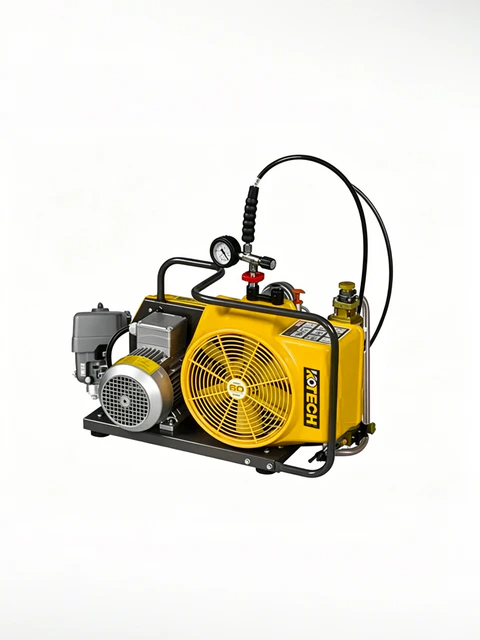
Unlocking Exploration Potential: The Indispensable Role of Portable Diesel Air Compressors
Portable diesel air compressors are not just another piece of equipment; they are fundamental to efficient and effective mining exploration. Without them, most remote, off-grid operations would simply grind to a halt. They deliver the essential power and mobility required to push boundaries, literally, in the search for valuable mineral deposits. Forget grid power or easy access; in exploration, your equipment has to bring its own energy, and do it reliably, day in and day out.
- Mobility is King: Portable diesel air compressors allow exploration teams to access and work in the most remote, off-grid locations, a non-negotiable for new discoveries.
- Reliability Under Pressure: Built for harsh environments, these units ensure consistent air supply for critical drilling and sampling operations, minimizing costly downtime.
- Versatility Drives Efficiency: From initial geophysical surveys to deep core drilling, a single portable compressor can power multiple essential tasks, optimizing equipment utilization.
- Economic Imperative: Modern, fuel-efficient diesel compressors significantly reduce operational costs in remote areas, directly impacting project viability and ROI.
Why Portable Diesel Air Compressors are Non-Negotiable in Exploration
In the world of mineral exploration, the targets are rarely found next to a paved road or a power grid. Teams are often deep in rugged terrain, hundreds of miles from the nearest town. This isolation creates a unique set of challenges that conventional equipment simply can’t meet. Portable diesel air compressors fill this void, providing self-contained power for a multitude of tasks. They’re designed to handle extreme temperatures, dust, and continuous operation, which is exactly what exploration demands.
The core need is consistent, high-pressure air. Whether it’s for clearing boreholes, powering pneumatic tools, or operating sophisticated drilling rigs, interruptions mean lost time and money. A robust, field-ready diesel compressor ensures that once you’ve mobilized to a site, your operations can proceed without being tethered to external power sources.
The Economic & Operational Drivers: Data Shaping Our Choices
The financial landscape of mining exploration heavily influences equipment selection. Every dollar spent on fuel, maintenance, and logistics impacts the bottom line. Modern portable diesel air compressors are designed with these realities in mind, offering significant operational advantages that translate directly to cost savings and improved project economics.
This substantial investment underscores the ongoing need for efficient and reliable exploration tools. Companies simply cannot afford equipment that fails or consumes excessive fuel when budgets are tight and shareholder expectations are high. The push for greater efficiency isn’t just a marketing slogan; it’s an economic imperative.
Consider the impact of fuel consumption. Older models might be cheaper to acquire upfront, but their higher fuel burn and increased maintenance requirements quickly erode any initial savings. We’re talking about direct impacts on project viability here.
Furthermore, specific drilling methods are growing, driving demand for specialized air power. RC drilling is heavily reliant on high-pressure, high-volume air, making advanced portable diesel compressors indispensable for these growing exploration techniques. The market is clearly signaling a need for better air solutions.
Beyond the Basics: Specific Applications and Technical Demands
Portable diesel air compressors are incredibly versatile, serving a diverse range of applications within mining exploration. Each application has specific technical demands regarding air pressure, flow rate, and duty cycle.
Core Sampling & Diamond Drilling
This is the gold standard for geological analysis. Diamond drilling requires a consistent air supply for clearing cuttings from the borehole and cooling the drill bit. While the air volume might be lower than for other methods, pressure stability is paramount. A reliable compressor ensures smooth operation, preventing blockages and extending bit life, which is crucial when operating costly diamond bits in remote areas. Interrupted air flow can lead to core recovery issues, directly impacting the quality of geological data.
Reverse Circulation (RC) Drilling
RC drilling is a high-production method used for initial resource definition. It demands massive volumes of high-pressure air to drive the hammer and lift rock cuttings to the surface. Portable diesel compressors for RC drilling are typically large, robust units capable of delivering 350-1200 CFM (Cubic Feet per Minute) at pressures ranging from 350-500 PSI (Pounds per Square Inch). Downtime on an RC rig due to compressor failure is incredibly expensive, making reliability the absolute top priority.
Geophysical Survey Support
Even before drilling begins, portable compressors support various geophysical survey techniques. They can power pneumatic tools for clearing access routes, operating seismic vibrators, or even inflating specialized equipment for ground-penetrating radar. These applications often require smaller, more nimble units that can be easily moved across difficult terrain.
Blast Hole Drilling (Early Stage)
In some early-stage exploration projects, small-scale blasting might be used for trenching or bulk sampling. Portable compressors provide the air for top-hammer drills to create blast holes. These operations require a balance of power and precision, ensuring holes are drilled accurately and efficiently.
Navigating the Challenges: What Doesn’t Work and Why
While portable diesel air compressors are incredibly effective, they aren’t a one-size-fits-all solution, and misapplication can lead to significant problems. Understanding these boundary conditions is crucial for successful deployment.
For instance, deploying an oversized compressor for a small core sampling rig is inefficient. You’re burning more fuel than necessary, adding unnecessary weight for transport, and increasing capital expenditure. Conversely, an undersized unit for an RC rig will lead to poor penetration rates, frequent blockages, and potential damage to the drilling equipment. It’s a delicate balance that needs careful planning.
Another scenario where diesel might not be the optimal choice is in highly regulated urban or semi-urban exploration projects. Here, environmental regulations regarding noise and emissions might favor electric compressors, especially if grid power is readily available. Only when grid power is reliably accessible, or environmental mandates strictly prohibit diesel, do electric options become more viable for exploration. Otherwise, the logistical hurdles of providing electricity to remote sites often outweigh the benefits. Similarly, for very short, sporadic tasks requiring minimal air, a small, gas-powered unit might suffice, but it lacks the durability and sustained output for serious exploration work.
Smart Deployment: Practical Tips for Maximizing Uptime and ROI
Getting the most out of your portable diesel air compressor in exploration is about more than just buying the right model. It’s about strategic deployment, meticulous maintenance, and understanding the operational environment.
Matching Compressor to Application
Always specify the compressor based on the exact air requirements (CFM and PSI) of your primary drilling rig or pneumatic tools. Oversizing wastes fuel and capital; undersizing leads to underperformance. Consult with drilling contractors and compressor manufacturers to get precise specifications.
Fuel Management and Efficiency
Given that fuel is a major operating cost, prioritize modern compressors with advanced engine management systems. These units often feature variable speed drives that adjust engine RPM to match air demand, significantly reducing fuel consumption. Implement a robust fuel logistics plan, including secure storage and reliable delivery to remote sites. Regular filter changes and engine tuning are non-negotiable for maintaining efficiency.
Preventative Maintenance is Key
In remote environments, unscheduled downtime is a disaster. Stick to a rigorous preventative maintenance schedule, often exceeding manufacturer recommendations for harsh conditions. This includes daily checks (oil, coolant, air filters), regular fluid changes, and inspecting hoses and connections for wear. Keep critical spare parts on hand – filters, belts, and common wear items – to facilitate immediate field repairs.
Logistics and Site Preparation
Plan for transportation. Portable compressors, especially larger units for RC drilling, are heavy. Ensure you have the right vehicles and lifting equipment. Prepare stable, level ground at the drill site to prevent tipping and ensure optimal operation. Consider weather protection – while robust, shielding from extreme sun or heavy rain can extend equipment life.
Training and Safety Protocols
Ensure all operators and maintenance personnel are thoroughly trained on the specific compressor models being used. This includes safe operating procedures, emergency shutdown protocols, and basic troubleshooting. Safety around high-pressure air and heavy machinery is paramount in remote, high-risk environments.
The Future of Exploration Air: Efficiency, Telematics, and Sustainability
The industry isn’t standing still. The next generation of portable diesel air compressors will continue to push boundaries in efficiency, connectivity, and environmental performance.
We’re seeing an increasing integration of telematics and IoT (Internet of Things) into compressor units. This allows for real-time monitoring of performance metrics – fuel consumption, pressure, temperature, engine hours – from a central location. This data is invaluable for predictive maintenance, optimizing deployment, and managing fuel logistics more effectively. Imagine knowing a filter needs changing before it causes a breakdown, hundreds of miles away.
Sustainability is another major driver. This pushes manufacturers to develop more fuel-efficient diesel engines, incorporate hybrid-electric options, and explore alternative fuels. While fully electric portable compressors might be a distant reality for truly remote exploration, hybrid solutions that combine diesel power with battery storage are becoming more viable, offering reduced fuel consumption and lower emissions during periods of lower air demand. This isn’t just about compliance; it’s about being a responsible operator.