Compressed air systems are foundational to safe, efficient operations across upstream, midstream and downstream oil and gas. The three highest-impact use cases each have unique specification requirements that cannot be one-size-fits-all.
Instrument Air for Process Control
Core Requirements and Pain Points
Instrument air powers pneumatic valves, sensors and control devices across production platforms, refineries and pipeline networks. Unlike general utility plant air, it requires strict dryness and purity standards to prevent freezing, corrosion or device jamming that can shut down entire operations.
Boundary Condition for This Use Case
Portable temporary air systems for short-term 72-hour or less control hookups can meet less stringent standards, as the contamination risk is low over short time frames.
Purging for Pipelines and Process Vessels
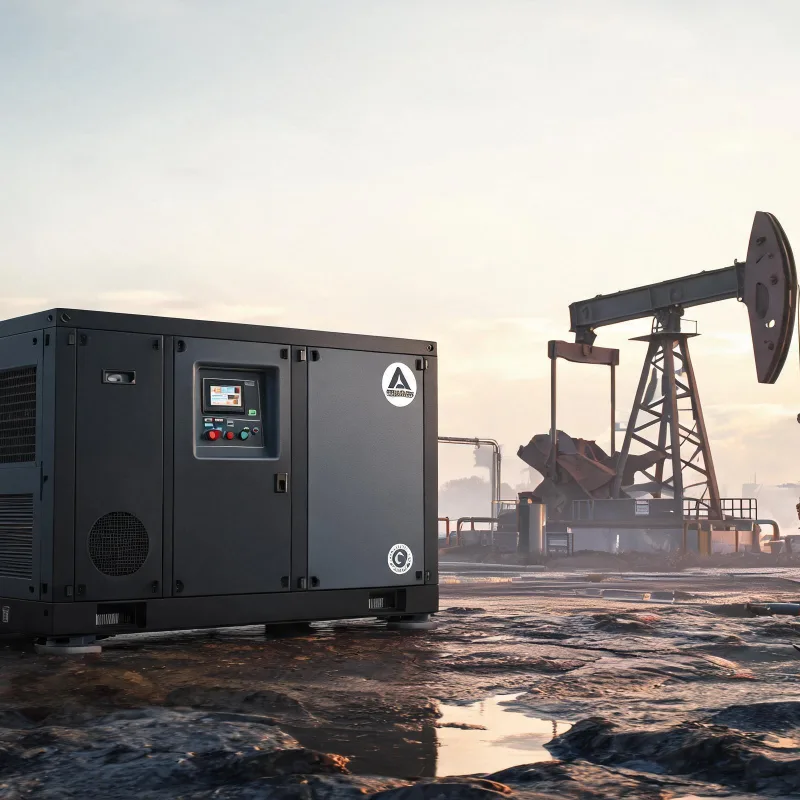
Purging removes flammable gases, water vapor or residual contaminants from pipelines, storage tanks and process vessels before maintenance or initial startup. Proper purging is critical for worker safety and emissions compliance.
Many operators default to delivered nitrogen for all purging projects, but that’s rarely necessary. Reverse that thinking: a poorly filtered compressor that introduces oil residue to a natural gas pipeline creates an immediate explosion hazard no post-purging test can fully mitigate. Dry, oil-free compressed air meets all safety standards for most onshore projects, at a far lower cost.
Compressed Air for Well Services
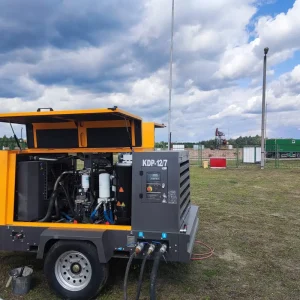
Well services cover everything from pressure testing during well completion to well stimulation, feed air for on-site nitrogen generation and cementing operations. Compressors used here are almost always portable, built to handle variable demand and remote, harsh locations.
Demand is rising as more operators add mobile well workover operations to reduce costs.
Offshore well services require more corrosion-resistant units to handle salt-laden ambient air, while onshore fracking operations use compressors to power auxiliary pneumatic components.
Not all well service applications require oil-free compressors. For example, compressors used to power on-site drill pneumatic tools can tolerate trace amounts of oil, as the air never comes into permanent contact with process infrastructure or product.
Actionable Selection Best Practices
Prioritize dryness: aim for a dew point of -40°F or lower for instrument air to prevent freezing in cold climates. Match portability to your operation: select permanent fixed units for refineries and permanent pipeline stations, and skid-mounted portable units for mobile well services.
It’s critical to map the air quality requirement to the specific job before you sign a purchase order.
Implementation Checklist
- Confirm air purity and dew point requirements before selection
- Test air quality monthly for continuous-duty instrument air systems
- Drain moisture from portable compressors after each well service job
- Replace air filters every 6 months for permanent purging systems
- Inspect corrosion protection yearly for offshore compressor units
Common Myths
- Myth: Nitrogen is the only safe option for all pipeline purging
- Fact: Dry purified compressed air meets safety standards for most onshore projects
- Fact: Many utility well service applications tolerate low oil contamination
Use Cases
- Upstream: Well completion, pressure testing, pneumatic control
- Midstream: Pipeline purging, storage tank maintenance, valve control
- Downstream: Refinery process control, vessel purging, utility air
Buyer Guide
- Prioritize ISO 8573-1 Class 0 certification for core process applications
- Choose skid-mounted portable units for mobile well services operations
- Select dew point rating based on your site’s lowest expected temperature
- Match compressor capacity to your maximum peak air demand