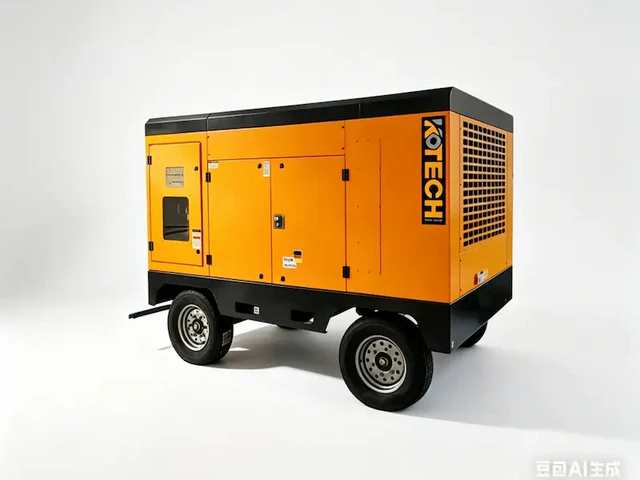
Unlocking Uptime: Durable Air Compressors in Relentless Oil & Gas Environments
The demands of 24-hour oil and gas production are relentless, pushing every piece of equipment to its absolute limit. In this high-stakes environment, durable air compressor applications aren’t just a preference; they are a non-negotiable requirement for sustained operational integrity. Failure simply isn’t an option when millions of dollars and critical safety depend on continuous air supply.
The Unyielding Demand: Why Durability Isn’t Optional
The operational landscape of oil and gas—from remote drilling sites to bustling refineries—is inherently hostile. Extreme temperatures, corrosive atmospheres, abrasive dust, and constant vibration are daily realities. Standard industrial compressors, while perfectly adequate for many manufacturing settings, frequently buckle under these sustained pressures. Downtime, a direct consequence of inadequate durability, carries an astronomical cost.
Maintaining consistent air pressure and flow is crucial for everything from instrument control and pneumatic tools to process air and pipeline operations. Any interruption can cascade into significant production halts, safety risks, and environmental incidents. Our experience shows that operators often underestimate the cumulative strain on components.
Beyond the Specs: Real-World Challenges and Compressor Design
True durability in oil and gas air compression extends far beyond a robust casing. It’s about the meticulous engineering of every component to withstand specific operational stressors. Take offshore platforms, for example. Here, compressors face not only saltwater corrosion but also constant motion and limited access for maintenance. Onshore, in desert regions, fine sand can infiltrate seals and bearings, while extreme heat can degrade lubricants and electronics.
Effective durable designs incorporate features like heavy-duty filtration systems, corrosion-resistant materials (e.g., stainless steel piping, specialized coatings), and robust cooling mechanisms. Vibration isolation is also paramount to protect sensitive controls and extend the lifespan of internal components. Frankly, we often overlook the cumulative impact of minor stresses until a critical failure occurs.
The Cost of Compromise: When Standard Compressors Fall Short
Opting for a less expensive, standard-grade air compressor might seem like a smart financial move initially. However, this decision almost invariably leads to higher operational expenditures over time. These units are not designed for continuous, severe-duty cycles. Their components wear out faster, requiring more frequent and costly maintenance. This translates to increased spare parts inventory, higher labor costs for repairs, and, most critically, more unplanned shutdowns.
Consider a conventional screw compressor in a highly corrosive environment. Without specialized materials and seals, its internal components will degrade rapidly, leading to efficiency losses and eventual catastrophic failure. This is where a boundary condition applies: standard industrial compressors are suitable only when the environment is controlled, ambient temperatures are moderate, and operational cycles allow for regular, scheduled downtime. For 24/7 oil and gas production, these conditions rarely exist.
Implementing Robust Solutions: Key Considerations for 24/7 Operations
Selecting and deploying durable air compressor applications for continuous oil and gas production requires a strategic approach. It’s not just about buying the biggest or most powerful unit; it’s about matching the technology to the specific demands of the site and process.
Material Selection and Protection
Corrosion resistance is non-negotiable. This means specifying components made from materials like stainless steel, special alloys, or those treated with protective coatings. Enclosures should be NEMA 4X or equivalent for protection against dust, water, and corrosive agents. Think about the seals, the piping, and even the fasteners; every part matters.
Redundancy and Reliability
For truly uninterrupted operation, N+1 or even N+2 redundancy configurations are standard practice. Having a backup compressor, or even multiple backups, ready to take over instantly can prevent costly shutdowns. This might involve parallel systems or standby units that can be brought online quickly.
Advanced Monitoring and Predictive Maintenance
Modern durable compressors integrate advanced sensor technology and IoT capabilities. These systems monitor critical parameters like vibration, temperature, pressure, flow, and oil quality in real-time. Leveraging this data for predictive maintenance allows operators to identify potential issues before they escalate into failures. This proactive approach minimizes unexpected downtime and optimizes maintenance schedules.
Energy Efficiency in Durable Systems
While durability is paramount, energy efficiency cannot be ignored. Air compressors are significant power consumers. Modern durable units are designed with variable speed drives (VSDs) and advanced control systems that adjust power consumption based on demand. This optimizes energy usage without compromising performance or reliability. Therefore, even small efficiency gains in a durable system lead to substantial long-term savings.
Future-Proofing Your Operations: Trends and Technology Integration
The oil and gas industry is continuously evolving, and so too must its supporting infrastructure. Future-proofing your air compressor applications involves embracing emerging technologies and adapting to new operational paradigms.
Digitalization and Remote Management
The integration of digitalization allows for remote monitoring and control of compressor systems, a huge advantage for geographically dispersed oil and gas operations. Operators can access performance data, troubleshoot issues, and even adjust settings from a central control room, minimizing the need for on-site personnel in hazardous areas.
Modular and Skid-Mounted Solutions
For rapid deployment and flexibility, especially in exploration and temporary production sites, modular and skid-mounted compressor packages are gaining traction. These units are pre-engineered, factory-tested, and can be quickly transported and installed, reducing commissioning time and costs.
Environmental Compliance
Stricter environmental regulations are driving demand for compressors with lower noise emissions and enhanced leak detection capabilities. Durable systems are now being designed not only for performance but also for minimal environmental footprint, incorporating features like oil-free compression for sensitive applications.
Investing in durability, integrating advanced monitoring, and planning for redundancy are not merely best practices; they are foundational pillars for operational excellence and long-term profitability in this demanding sector.