
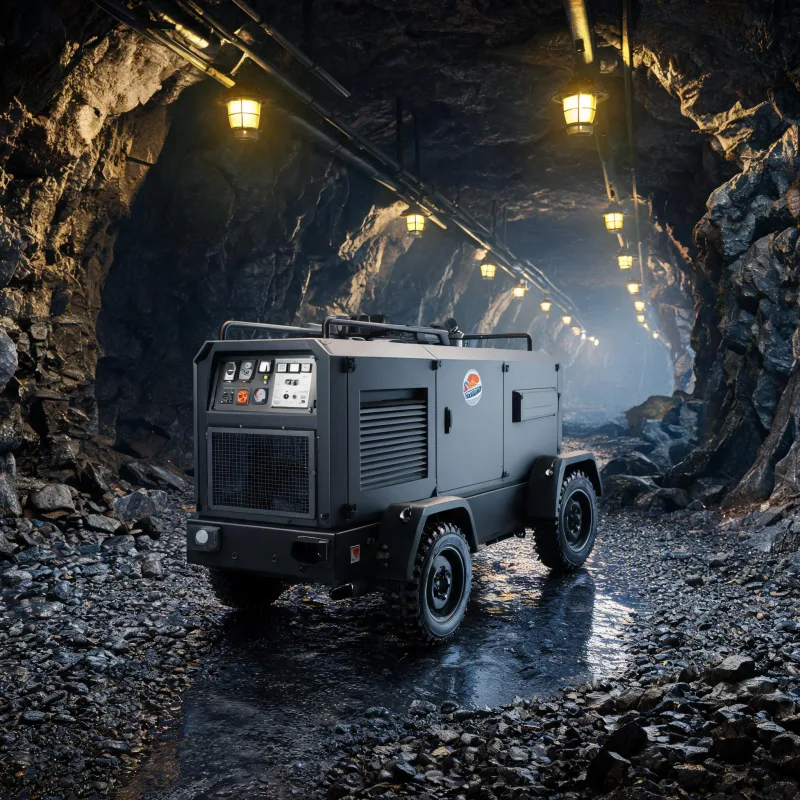
This design framework only applies to stationary underground mining compressors, not open-pit mobile units. Proper phased upgrade will bring your system into compliance with 2023-2024 global personnel safety standards without excessive production downtime.
Don’t use this approach for open-pit mobile compressors, or small-scale short-term tunneling projects with fewer than 10 on-site personnel. It’s built exclusively for permanent underground hard rock or coal mining operations.
Current System Noise Level Assessment
First, you need to map your actual noise exposure, not just rely on the original compressor spec from 10+ years ago.
Take an 8-hour time-weighted average noise measurement at all personnel work zones within 10 meters of the compressor. Measure noise at the 1-meter boundary of the unit itself to get a baseline.
Action step: Document all readings to confirm your compliance gap before planning any changes.
Common Triggers for an Upgrade
Not every high-noise compressor needs an immediate design upgrade. Watch for these clear triggers:
- You received a citation or formal warning from OSHA or your local regulator for excessive noise exposure
- Three or more personnel on your crew have reported measurable hearing threshold shifts in annual exams
- Your operations are renewing their safety certification, which now requires adherence to 2024 updated standards
ISO 16812:2024, the updated global standard for underground mining equipment, requires 8-hour time-weighted average noise exposure at personnel work zones to not exceed 80 dBA, down from 85 dBA in the 2018 version.
If none of these triggers apply, you can push an upgrade to the next planned maintenance window, but you still need to conduct annual noise checks.
Temporary Transition Noise Control Solutions
While you wait for new components or a full replacement unit, you need to keep operations compliant. Temporary solutions buy you time without breaking the budget.
Common options include: adding a portable acoustic barrier between the compressor and regularly occupied work zones, scheduling compressor intensive operation during shift changes when fewer personnel are on site, and adding vibration isolation pads to reduce structure-borne noise from existing units.
Action step: Install temporary controls within 10 business days of identifying a compliance gap.
Phased Cutover Steps for New Low Noise Design Installation
The biggest concern for mine operators is unplanned downtime that eats into production. A phased cutover eliminates most of that risk.
1. Pre-stage all new components (acoustic enclosure, vibration damping system, low-noise rotors if replacing) on surface at the mine access point 3 days before cutover. Do all pre-assembly of the enclosure off-site to cut down on underground work time. 2. Schedule the cutover over a weekend shutdown, when production is already paused. Lock out the old unit and remove it in 4 to 6 hours. 3. Install the new low noise unit and acoustic enclosure, test pressure output and noise levels in 6 to 8 hours. 4. Bring the unit online slowly for 4 hours of continuous testing before the restart of weekday production.
Total downtime for this approach ranges from 12 to 24 hours, compared to 3 to 5 days for a full unplanned one-time replacement.
Only use this phased approach for permanent underground stations. It doesn’t work for mobile units that need to be repositioned regularly.
Rollback Contingency Plan
You need a backup plan if the new unit has installation defects or performance issues that don’t show up in pre-delivery testing.
Prep the old unit’s connection points and keep it on standby at the surface for 7 full days after the new unit goes online. If the new unit fails pressure or noise tests, you can disconnect the new unit, reconnect the old unit, and add temporary acoustic barriers to restore production in less than 2 hours.
Action step: Document the rollback procedure and share it with the maintenance team before starting cutover.
Implementation Timeline
Week 1: Complete on-site noise survey and compliance gap analysis Week 2: Order components and install temporary noise control Week 3: Schedule weekend downtime for cutover Week 4: Conduct post-installation noise testing and compliance documentation
Alternatives
1. Shared backup compressor during transition for continuous production mines
Procurement Checklist
1. Confirm 80 dBA maximum noise at 1-meter boundary 2. Verify compliance with ISO 16812:2024 and local regulations 3. Confirm delivery lead time matches planned downtime window 4. Check that noise design does not reduce required CFM output




