
Only properly sized, fuel-efficient portable compressors deliver reliable air power for off-grid remote exploration mining. Most premature failures stem from poor matching to site conditions, not product defects.
On-Site Operational Constraints
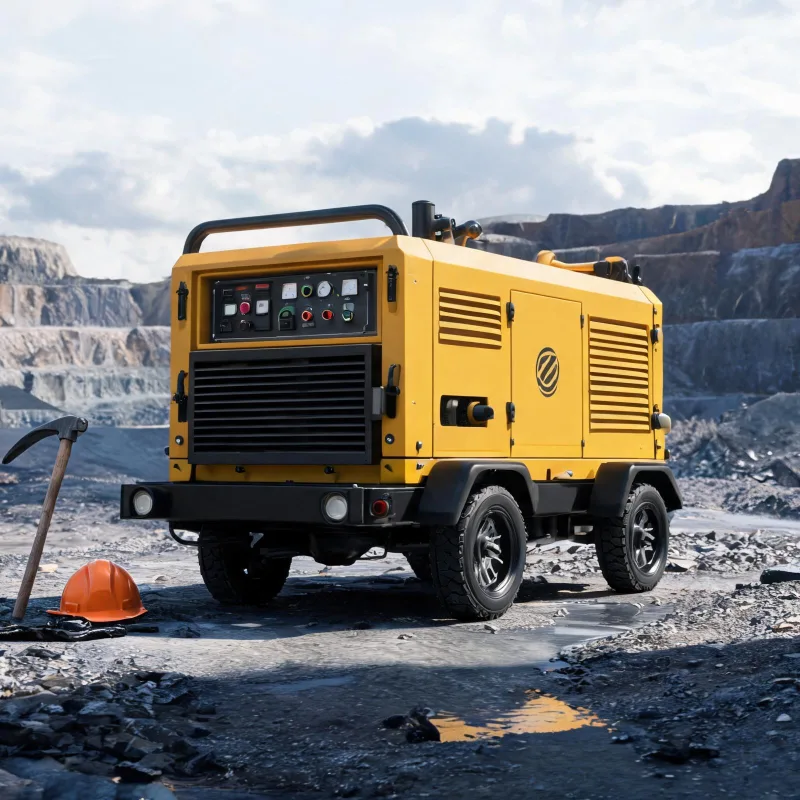
Off-grid exploration sites have no access to utility-connected power. Most exploration campaigns last 3 to 18 months, so permanent infrastructure investment makes no financial sense.
Portable units are the only cost-effective power solution for short-term remote exploration campaigns.
Common Early Failure Signals
Most teams don’t check compressor performance until a full outage hits.
Centrifugal portable compressors follow different failure diagnostics.
Step-by-Step Pre-Startup Deployment
Exploration sites often add temporary drilling or ventilation tools mid-campaign, and you can’t quickly swap units in remote locations.
Second, match fuel type to locally available supply. Most off-grid sites stock diesel for heavy equipment, so a multi-fuel unit that can run on natural gas is only useful if you have local gas access.
Don’t overbuy a unit with extra capacity you don’t need.
In-Service Performance Acceptance Criteria
What counts as acceptable performance for a remote off-grid unit? First, unplanned downtime per 1000 hours of operation must be under 8 hours. Third, noise levels must meet local mining safety standards to avoid disrupting the team’s campsite.
Most off-grid sites have no on-site compressor repair technicians.
Any unplanned outage longer than 4 hours will push back your core drilling schedule.
When to Switch to a Different Power Setup
Portable units for off-grid exploration are not suitable for all operations. If your site has confirmed mineral reserves and you plan to extend operations beyond 24 months, a permanent grid-tied or solar-hybrid power setup will deliver lower long-term costs.
For small-scale artisanal exploration with air demand under 50 cfm, a compact gas-powered unit may be more cost-effective than a full-size mining portable unit.
Maintenance Tips
- Complete a 15-minute weekly check of pressure, vibration and fuel use
- Change engine oil and filters every 200 operating hours, regardless of use
- Drain moisture from the air tank after every 48 hours of continuous operation
- Keep a spare set of fuel filters on-site at all times
Failure Modes
- Premature engine wear from consistent operation at incorrect elevation
- Pressure output drop from clogged intake filters in dusty remote sites
- Fuel system failure from contaminated diesel stored on-site long-term
- Belt wear from excessive vibration during transport to remote locations




