
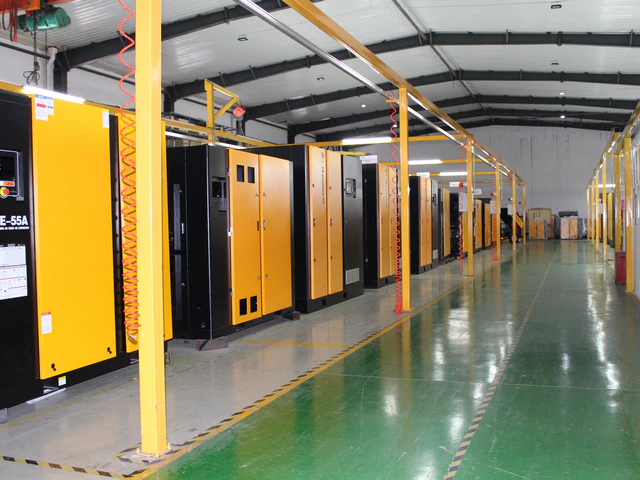
Selecting Heavy-Duty Mining Air Compressors for Uninterrupted Operations
The bedrock of any successful mining operation isn’t just the extraction equipment; it’s the often-overlooked, yet absolutely critical, heavy-duty mining air compressor. A reliable and durable compressed air system is the silent workhorse, powering everything from drilling and blasting to ventilation and pneumatic tools. Without it, operations grind to a halt, costing millions.
The Non-Negotiable Core: Why Reliability and Durability Matter
In mining, the cost of failure is astronomical. A compressor breakdown doesn’t just mean a repair bill; it means halted production, idle personnel, and missed targets. This directly impacts revenue streams and can even compromise worker safety in certain scenarios. Reliability, in this context, isn’t a luxury; it’s an operational imperative. It dictates how consistently your equipment performs under duress, day in and day out, deep underground or exposed on an open pit.
Durability, on the other hand, speaks to the compressor’s ability to withstand the brutal mining environment over its lifespan. We’re talking about relentless dust, extreme temperatures, vibrations, and often corrosive elements that would quickly destroy lesser equipment. A robust industrial air compressor is built with fortified enclosures, heavy-duty components, and advanced filtration systems to shrug off these challenges.
Unpacking the Costs: Beyond the Sticker Price
Many procurement teams fixate solely on the initial capital expenditure. That’s a rookie mistake. The true financial impact of a heavy-duty mining air compressor is revealed through its Total Cost of Ownership (TCO). This encompasses acquisition, installation, energy consumption, maintenance, spare parts, and, crucially, the cost of downtime.
For a large-scale mining operation, a single day of halted production due to compressor failure could easily run into six or seven figures. Energy-efficient models, though potentially pricier upfront, deliver substantial savings over their operational life.
Industry Shifts & Data-Backed Decisions
The mining industry isn’t static; it’s evolving rapidly with a strong push towards automation, digitalization, and sustainability. These trends directly influence the demand for and design of mining air compressors. This growth underscores the need for equally advanced and reliable support machinery.
Sustainability is another major driver. With increasing regulatory pressure and corporate responsibility initiatives, mining companies are scrutinizing their energy footprint. This significant energy draw means that selecting highly efficient models isn’t just good for the environment; it’s excellent for the bottom line. Modern compressors often feature advanced controls, VSD technology, and heat recovery options, drastically reducing power consumption and operational expenses. Furthermore, the integration of IoT and AI for predictive maintenance is transforming how we manage these assets, shifting from reactive repairs to proactive interventions, ensuring maximum uptime.
Choosing the Right Compressor: A Practical Guide
Selecting the ideal heavy-duty mining air compressor involves a nuanced understanding of your specific operational needs and environmental conditions. It’s not a one-size-fits-all decision.
Application-Specific Requirements
First, define the primary application. Are you powering rock drills, jackhammers, ventilation systems, or processing plant equipment? Each demands different pressure (PSI) and flow (CFM) rates. Drilling operations, for instance, require consistent high pressure, whereas general utility air might need more volume at lower pressure. Match the compressor’s output to the aggregate demand of your pneumatic tools and processes, always factoring in a buffer for future expansion or simultaneous tool usage.
Environmental Considerations
Mining environments are notoriously harsh. Dust, moisture, extreme temperatures (both hot and cold), and sometimes corrosive gases are common. Your compressor must be built to handle these conditions. Look for features like heavy-duty air filtration systems, robust cooling mechanisms, and specialized coatings or materials for corrosion resistance. Enclosures should be designed to prevent ingress of dust and moisture, protecting sensitive internal components.
Compressor Types and Technologies
- Rotary Screw Compressors: These are the workhorses of the mining industry. They offer continuous, pulsation-free air delivery, excellent energy efficiency (especially VSD models), and are generally robust. They’re ideal for demanding, continuous operations.
- Reciprocating (Piston) Compressors: While less common for large-scale continuous mining applications, they excel in very high-pressure, intermittent tasks, or as backup units. They are generally simpler in design and easier to maintain for specific uses.
- Centrifugal Compressors: These are typically reserved for very large-scale operations requiring huge volumes of compressed air at moderate pressures. They are highly efficient but have a higher upfront cost and require more specialized maintenance.
For most heavy-duty mining applications, a well-specified rotary screw compressor, particularly a VSD model, offers the best balance of efficiency, reliability, and durability. These industrial air solutions are designed to adapt to fluctuating air demands, saving significant energy.
When Not to Over-Spec: Understanding Your Limits
While the emphasis is on “heavy-duty,” it’s important to acknowledge that not every mining scenario warrants the absolute biggest or most rugged compressor available.
For instance, a small-scale, short-term exploration project in a relatively benign environment might not require the same level of over-engineering as a permanent, deep underground mine. Similarly, if your compressed air needs are highly intermittent and low-volume—perhaps for a single, rarely used pneumatic tool—a smaller, more portable, or even a specialized reciprocating compressor might be more cost-effective. Over-specifying can lead to higher capital costs, increased energy consumption (if the unit isn’t running at its optimal load), and potentially more complex maintenance for features you don’t fully utilize. It’s about matching the tool to the task, not just buying the biggest hammer.
Operational Best Practices for Longevity
Even the most durable heavy-duty mining air compressor won’t last without proper care. Longevity and sustained reliability are direct results of diligent operational practices.
The core of this is a robust preventive maintenance schedule. This isn’t just about changing filters when they’re visibly dirty; it’s about adhering to manufacturer guidelines, performing regular oil changes, checking for leaks, and monitoring critical parameters like temperature and pressure. Air quality is paramount; invest in high-quality air filters and dryers to prevent moisture and particulates from entering the system, which can cause significant damage to internal components and downstream tools.
Furthermore, consider implementing remote monitoring systems. These allow operators to track compressor performance in real-time, identify potential issues before they escalate, and even perform predictive maintenance based on data trends. Proper operator training is also crucial. Ensure your team understands the compressor’s functions, daily checks, and emergency procedures. A well-trained operator is the first line of defense against costly breakdowns.





