
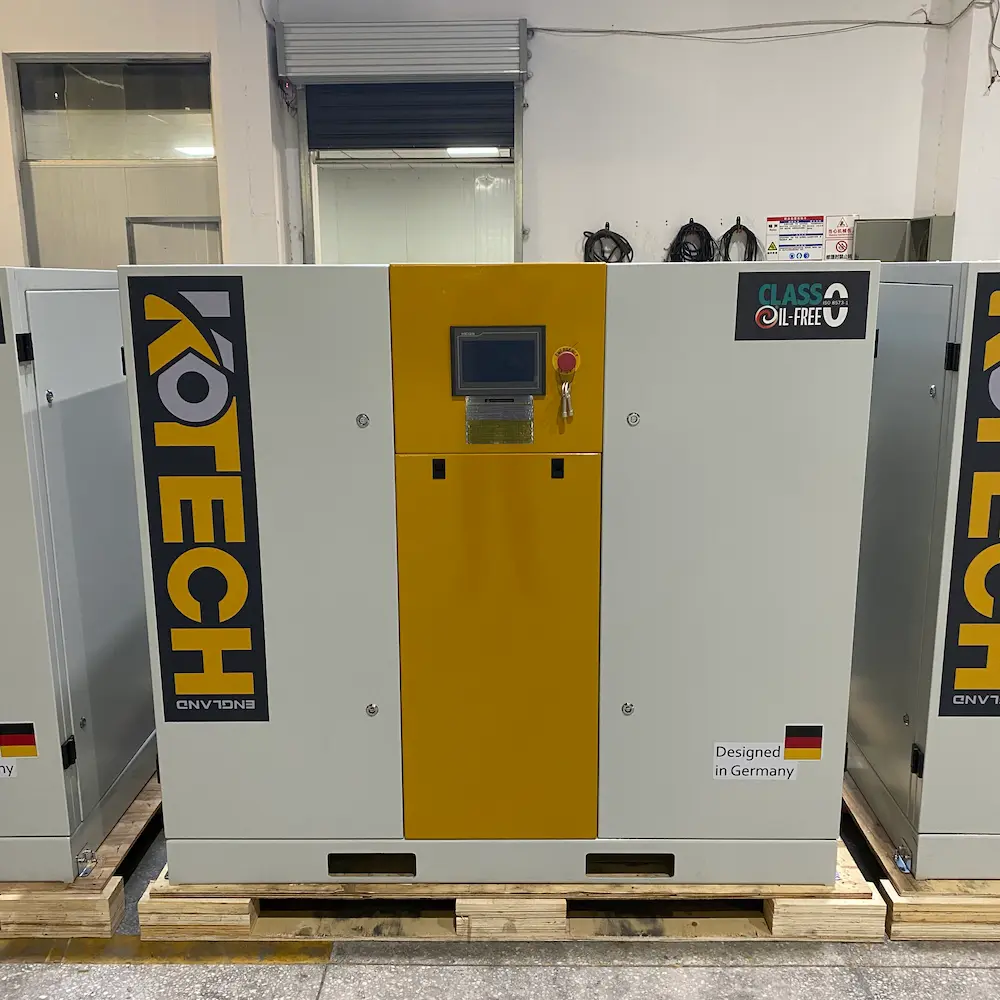
Kotech Compressor Supports Milking Parlor Automation & Sanitary Cleaning in Czech Dairy Sector
A dairy farm in the South Bohemian region of the Czech Republic upgraded its compressed air system to support expanded milking robot capacity and improve cleaning reliability. Kotech supplied a rotary screw compressor with multi-stage filtration, delivering clean, stable air for pneumatic valves, actuators, and CIP cleaning cycles. The new system maintained steady pressure during peak milking demand, cut energy consumption by 25% using Variable Speed Drive technology, and reduced cleaning cycle times. Operators noted easier maintenance, quieter operation near the milking parlor, and improved herd calmness without pressure fluctuations. The case study demonstrates the value of properly specified compressed air for dairy automation and hygiene.
Get a QuoteCustomer Pain Points
In the Czech Republic's dairy sector, compressed air is essential but often overlooked until something goes wrong. A dairy processor in the South Bohemian region—an area with a long history of dairy production—was facing two persistent problems with their milking parlor operation. The first was compressor reliability. Their existing unit would trip out at peak demand, causing the milking robots to pause mid-cycle. That meant interrupted milking, stressed cows, and lost production . The farm manager explained: "If the air drops, the robots stop. And when robots stop during milking, that's a problem not just for us but for the animals."
The second issue was air quality. The client's oil-lubricated compressor was showing signs of oil carryover, which risked contaminating the compressed air used for cleaning the milking lines and storage tanks. In dairy processing, even trace amounts of oil can compromise product quality and trigger failed hygiene audits . The farm had recently missed a cleaning validation target, and the equipment supplier had warned that they were "on the edge" of what was acceptable.
Beyond these immediate issues, the farm was expanding its automated milking capacity, adding more robots and increasing the demand for reliable, high-quality compressed air. They needed a solution that could grow with them—and one that didn't require constant maintenance attention.
Solutions
Kotech deployed a high-reliability rotary screw air compressor specifically configured for dairy farm automation applications. The unit is powered by an energy-efficient electric motor and features Kotech's advanced air-end technology, delivering stable compressed air at the required pressure for pneumatic valves, actuators, and cleaning systems .
To ensure air quality meets food-grade standards, the system is configured with a multi-stage filtration package that removes oil, water, and particulate matter . For applications where compressed air comes into indirect contact with milk or cleaning solutions, Kotech recommends oil-free or properly filtered compressed air to meet hygiene standards .
The compressor's capacity is matched to the farm's peak milking demand, providing enough flow to run all milking robots simultaneously while maintaining pressure for CIP cleaning cycles and pneumatic conveying systems . The unit also features a Variable Speed Drive (VSD) for efficient partial-load operation during off-peak periods, saving energy and reducing wear.
Finally, the compressor is housed in a low-noise enclosure suitable for installation near the milking parlor, minimizing disturbance to the herd during operation.
Implementation Steps
- Assessment of the farm's existing compressed air system, including air demand profile, pressure requirements, and air quality standards.
- Selection of an appropriate compressor and filtration package based on the client's daily milking schedule and cleaning protocols .
- Installation and integration of the compressor with the milking parlor's control system, including the pneumatic valves, cylinders, and actuators used in the milking robots.
- Installation of the filtration package and verification of air quality against the client's hygiene specifications .
- On-site commissioning and operator training, covering daily maintenance routines and fault-finding .
- Implementation of a leak detection program to identify and repair compressed air leaks, reducing energy waste and improving system performance .
Customer results
Products Used in This Case

FAQ (Frequently Asked Questions)
Why is compressed air quality important in dairy farming?
In dairy farming, compressed air is used for three critical applications: operating milking robots and their pneumatic components (valves, actuators, cylinders); cleaning milking lines and storage tanks through CIP systems; and occasionally for product contact or conveying. Contamination from oil, water, or microbes can compromise product quality, equipment reliability, and hygiene audit performance . For direct or indirect product contact, air purity should meet food-grade standards
What type of compressor is best for a milking parlor?
The best compressor for a milking parlor depends on the farm's size and air demand. For smaller operations, a well-filtered oil-lubricated rotary screw compressor can be suitable. For larger operations or where compressed air comes into direct contact with milk, an oil-free compressor is recommended . A Variable Speed Drive can improve energy efficiency in applications with variable demand.
How can I reduce energy costs on my farm's compressed air system?
Reducing energy costs in a compressed air system involves several strategies: repairing air leaks, which are estimated to waste 20–30% of compressor output ; installing a VSD for variable demand; optimizing system pressure to the minimum required level; and implementing a routine maintenance schedule. A professional system assessment can identify the most cost-effective opportunities for your farm
How often should the compressor be serviced?
Compressor service intervals depend on the manufacturer's recommendations and operating conditions. Typical oil and filter changes range from 500 to 2,000 operating hours for oil-lubricated units, while oil-free compressors have less frequent maintenance requirements . The filters and dryers in the air treatment package should be inspected regularly to maintain air quality standards.