Optimizing Sandblasting: The Two-Stage Compressor Advantage
Why Two-Stage is Non-Negotiable for Sandblasting & Finishing
In the world of industrial surface preparation, the air compressor isn’t just a piece of equipment; it’s the heartbeat of your operation. For demanding tasks like sandblasting and surface finishing, a two-stage air compressor is the only reliable option for consistent, high-quality results. Trying to cut corners with a single-stage unit often leads to inadequate air volume, fluctuating pressure, and ultimately, substandard work and higher operational costs. Our experience consistently shows that proper air supply directly translates to better abrasive performance, faster project completion, and superior adhesion for subsequent coatings.
The Performance Gap: Data-Driven Insights
The difference between a single-stage and a two-stage compressor for abrasive blasting is stark, especially under continuous load. Two-stage units compress air in two steps, cooling it between stages. This process dramatically increases efficiency and reduces operating temperatures.
This growth underscores the critical role of robust air systems. Inadequate air supply, on the other hand, can lead to significant rework.
Beyond CFM: Understanding Efficiency and Longevity
While Cubic Feet per Minute (CFM) is often the primary metric people look at, it’s only part of the story. A two-stage compressor delivers higher CFM *at a given pressure* more efficiently. This means your blast pot operates at its optimal pressure for longer, ensuring consistent abrasive velocity and impact. That consistency is paramount for achieving the specified surface profile, whether it’s an SP-10 near-white blast or a less aggressive brush-off.
The cooler operation of a two-stage system also extends the life of internal components, reducing wear and tear on pistons, rings, and valves in reciprocating models, or the air end in rotary screw versions. This directly translates to less maintenance, fewer breakdowns, and a lower total cost of ownership over the compressor’s lifespan. It’s a false economy.
When to Reconsider: The Niche Cases
While two-stage compressors are the gold standard for continuous, heavy-duty sandblasting and surface finishing, there are specific, limited scenarios where a single-stage unit might be considered. For very occasional, light-duty touch-up work, perhaps with a small gravity-fed blaster and fine media, a portable single-stage compressor *might* suffice. Think hobbyist projects or extremely intermittent, low-demand tasks where sustained pressure and high CFM aren aren’t critical. However, for any professional application involving larger blast pots, coarser abrasives, or continuous operation, a single-stage unit simply won’t cut it. It’s also not suitable for applications requiring consistent air quality for sensitive finishing processes where temperature control is paramount.
Specifying Your System: Practical Considerations
Choosing the right two-stage compressor involves more than just picking a model. You need to consider nozzle size, desired blast pressure, and duty cycle. A 3/8-inch blast nozzle, for example, can demand over 200 CFM at 100 PSI. Your compressor must comfortably exceed this requirement, factoring in hose losses and potential future expansion. Always oversize slightly to avoid running the unit at its absolute maximum, which reduces efficiency and lifespan.
Air treatment is another non-negotiable aspect. Aftercoolers, air dryers (refrigerated or desiccant), and filtration systems are essential to remove moisture and contaminants. Wet air clogs blast pots, damages media, and leads to flash rusting on freshly blasted surfaces. This compromises coating adhesion and is a major headache. Don’t skimp on these ancillaries.
Rotary Screw vs. Reciprocating: Making the Choice
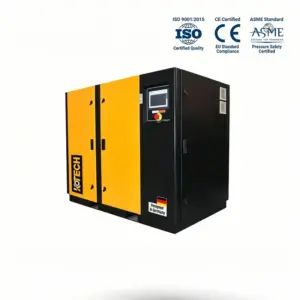
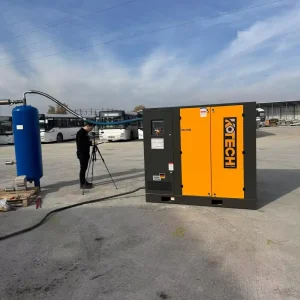
For continuous-duty applications like production sandblasting lines, a two-stage rotary screw compressor is generally preferred.
Maintenance & Operational Best Practices
Regular maintenance is key to maximizing the return on your two-stage compressor investment. This includes daily checks of oil levels and filters, weekly draining of moisture traps, and scheduled replacement of air filters, oil filters, and oil according to manufacturer guidelines. Neglecting these steps will lead to reduced efficiency, increased wear, and costly breakdowns.
Proper ventilation for the compressor room is also vital to prevent overheating, especially for rotary screw units. And remember, operator training on both the compressor and the blasting equipment ensures safe, efficient operation and prolongs equipment life. On the flip side, ignoring these basics is a surefire way to shorten your equipment’s lifespan and compromise safety.