
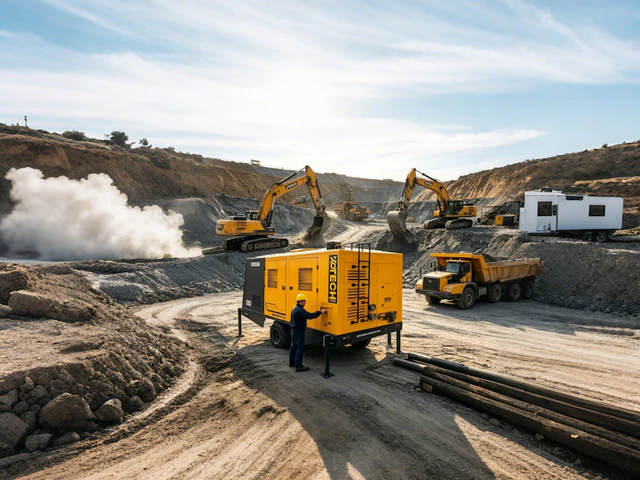
Ensuring Compressed Air Reliability in Arctic Mining
When you’re dealing with Arctic and harsh winter mining operations, your air compressor isn’t just another piece of equipment; it’s the lifeline for critical tools, ventilation, and safety systems. The brutal truth is, standard industrial compressors simply don’t cut it in sub-zero temperatures, leading to catastrophic failures and crippling downtime. Investing in purpose-built cold-weather mining air compressors isn’t a luxury—it’s an absolute necessity for survival and profitability in these extreme environments.
Here are the Key Insights for maintaining operational integrity:
- Standard compressors fail rapidly in extreme cold due to material brittleness, lubricant solidification, and inadequate moisture management.
- Specialized engineering for Arctic conditions involves robust materials, advanced cold-start systems, and precise thermal management.
- Unplanned downtime in remote, cold environments costs exponentially more than proactive investment in purpose-built equipment.
- Proactive maintenance and operator training are non-negotiable for maximizing the lifespan and efficiency of winterized compressors.
The Unforgiving Reality: Why Standard Compressors Fail in Arctic Mining
Operating in environments where temperatures routinely plunge below -40°F (-40°C) introduces a gauntlet of challenges for conventional air compressors. The problems aren’t just minor inconveniences; they’re fundamental breakdowns. Metals become brittle, seals lose elasticity, and standard lubricants thicken to the consistency of molasses, if they don’t freeze solid. Moisture, which is always present in compressed air, becomes a deadly enemy, freezing in lines, valves, and pneumatic tools, causing blockages and irreparable damage.
The core issue lies in design philosophy. Most industrial compressors are engineered for temperate climates, not for the relentless assault of Arctic winters. Components like standard elastomers, hoses, and even electronic wiring are often rated only down to -20°F. Pushing them beyond their design limits guarantees premature wear, inefficient operation, and ultimately, complete system failure. This isn’t just about comfort; it’s about the physics of materials and fluids under extreme stress.
Economic Impact of Downtime & Energy Waste in Extreme Cold
The financial ramifications of compressor failure in Arctic mining are staggering.
Beyond breakdowns, standard compressors operating in cold environments are also energy hogs. They struggle to start, requiring more power, and their efficiency plummets as components fight against increased friction from viscous lubricants. Heating enclosures and pre-warming systems, while necessary, also add to the operational expenditure (OpEx). Specialized cold-weather units, designed for optimal thermal management, can significantly mitigate this energy waste.
Specialized Design & Technology: The Core of Arctic Compressor Reliability
True cold-weather mining air compressors are not merely standard units with a coat of winterized paint. They are fundamentally re-engineered from the ground up to conquer sub-zero conditions. This specialization touches every aspect of the machine, from its physical enclosure to its internal fluids and control systems.
Material Science & Enclosures
The outer shell and internal components are constructed from materials specifically chosen for their low-temperature ductility and impact resistance. High-grade, cold-rolled steel, often with specialized coatings, prevents brittleness and cracking. All seals, gaskets, and hoses are made from low-temperature elastomers (e.g., silicone, specific fluorocarbons) that maintain flexibility and sealing integrity even at -60°F (-51°C). The enclosure itself is heavily insulated, often with integrated heating elements and controlled ventilation, to maintain a stable internal operating temperature for sensitive components.
Lubrication & Fluid Management
This is arguably the most critical area. Arctic-grade compressors utilize fully synthetic lubricants with extremely low pour points and high viscosity indexes. These specialized fluids remain fluid and effective across a vast temperature range, preventing the “sludge effect” that cripples conventional compressors. Integrated heating systems for oil sumps, air/oil separators, and fuel lines are standard, ensuring fluids are at optimal starting temperatures. Moisture separators are often heated and drain automatically to prevent ice formation, a common cause of system blockage in cold climates.
Engine & Control Systems
The power plant, whether diesel or electric, is equipped with robust cold-start assist systems. Diesel engines typically feature block heaters, battery blankets, and glow plugs or ether injection for reliable ignition in extreme cold. Electronic control units (ECUs) and programmable logic controllers (PLCs) are housed in heated, sealed enclosures, protecting them from both cold and moisture. Advanced telemetry and SCADA integration allow for remote monitoring and diagnostics, reducing the need for personnel exposure in hazardous conditions and enabling predictive maintenance from afar.
When “General Purpose” Just Won’t Cut It: Understanding Boundary Conditions
While the allure of a lower initial capital expenditure (CapEx) for a “general purpose” industrial air compressor might be tempting, it’s a false economy for Arctic and extreme winter operations. These units are simply not designed to withstand sustained temperatures below -20°F (-29°C) without significant, often custom-fabricated, modifications. Even then, their inherent design limitations regarding material choices and fluid management will lead to compromised performance and reduced lifespan.
A standard compressor might function adequately for a brief cold snap in a milder climate, but it will fail catastrophically under the prolonged, intense cold of an Arctic winter. This approach is particularly unsuitable for continuous, mission-critical mining applications where downtime is measured in hundreds of thousands of dollars per hour. The boundary condition here is clear: if your operational environment consistently dips below -20°F for extended periods, or if the cost of downtime is exceptionally high, a general-purpose compressor is a non-starter. Only purpose-built, cold-weather rated equipment can provide the necessary resilience and reliability.
Best Practices for Deploying & Maintaining Cold-Weather Mining Air Compressors
Even the most advanced Arctic-grade compressor requires diligent deployment and maintenance to deliver peak performance and longevity. These practices extend beyond routine checks, focusing on the unique demands of extreme cold.
Pre-Deployment Checklist
- Site Preparation: Ensure a level, stable foundation, protected from direct wind and snow accumulation. Consider a dedicated, heated shelter for optimal performance and maintenance access.
- Fluid Verification: Double-check that all fluids—engine oil, compressor lubricant, coolant, and fuel—are Arctic-grade and rated for the lowest expected ambient temperature.
- Electrical Supply: Confirm a stable power supply capable of handling initial cold-start loads, especially for block heaters and internal enclosure heaters.
- Hose & Line Inspection: Inspect all air lines and hoses for damage. Use only cold-weather rated hoses that remain flexible and won’t crack under stress.
Operational Best Practices
Proper operation is key to preventing issues. Always allow sufficient warm-up time before placing the compressor under full load. Monitor discharge air temperature and pressure closely for any anomalies, which can indicate impending issues with freezing moisture or lubricant viscosity. Implement a strict schedule for draining moisture traps, ideally with automated, heated drains, to prevent ice blockages. Regular visual inspections for ice buildup around vents or drains are also crucial.
Proactive Maintenance Strategies
A robust preventive maintenance (PM) schedule is paramount. This includes more frequent oil and filter changes than in temperate climates, as cold operation can accelerate lubricant degradation. Regularly inspect and test all heating elements (block heaters, oil heaters, battery blankets). Check the condition of all belts and hoses for signs of cold-induced brittleness. Pay close attention to electrical connections and wiring, ensuring they are free from corrosion and secure, as vibrations and temperature cycling can loosen them. Leveraging remote monitoring systems for real-time diagnostics and predictive maintenance alerts can significantly reduce the risk of unexpected breakdowns.
The Future: AI, IoT, and Predictive Maintenance in Sub-Zero Environments
The next frontier for cold-weather mining air compressors lies in advanced digitalization. Integrating Artificial Intelligence (AI) with Internet of Things (IoT) sensors is transforming maintenance from reactive to predictive. These systems collect vast amounts of data—temperature, pressure, vibration, lubricant analysis—and use AI algorithms to identify subtle patterns indicative of impending failure. This allows for scheduled maintenance interventions before a breakdown occurs, optimizing resource allocation and minimizing downtime.
For Arctic operations, where human intervention is costly and hazardous, this technology is invaluable. Remote diagnostics, firmware updates, and even autonomous adjustments can be performed, further enhancing reliability and efficiency. This shift promises a future where compressed air systems in the harshest climates operate with unprecedented levels of uptime and cost-effectiveness.




