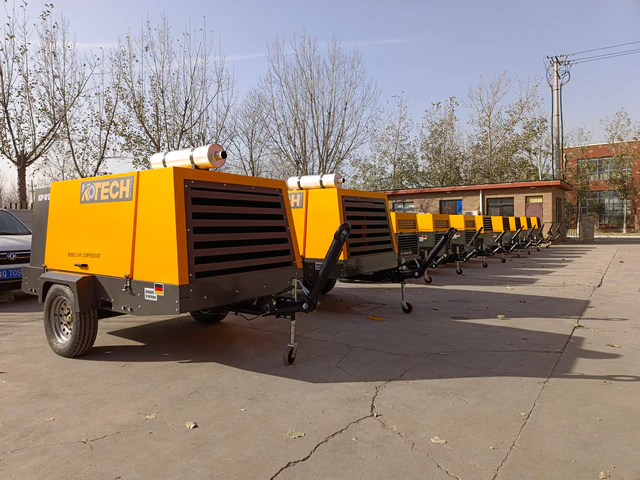
Unlocking Mine Profitability with Advanced Air Compressor Strategies
- Downtime Mitigation is Non-Negotiable: A single compressor failure can halt critical operations, costing hundreds of thousands per day in large-scale mines.
- Robustness is Key in Harsh Environments: Mining conditions demand specialized, heavy-duty equipment designed to withstand dust, extreme temperatures, and vibrations.
The Unseen Powerhouse: Why Air Compressors Rule Mining
The profitability and operational continuity of any mining venture hinge on a network of critical machinery, and few are as foundational as the industrial air compressor. From the precision of pneumatic tools breaking ground to the life-sustaining air in underground tunnels, these systems are indispensable. Yet, their strategic importance is often overlooked until a problem arises. Getting this right means significant gains in productivity and a tangible reduction in operational expenditure.
Navigating the Minefield: Common Challenges & Data-Backed Solutions
Mining environments present unique challenges that stress air compressor systems to their limits. Understanding these pain points is the first step toward implementing effective, long-term solutions.
Energy Efficiency: The Silent Profit Drain
One of the most persistent headaches for mine operators is energy consumption. Air compressors are notorious energy hogs, and in mining, where operations run 24/7, this translates directly to exorbitant utility bills.
Solution: The adoption of Variable Speed Drive (VSD) compressors has proven transformative. Unlike fixed-speed units that run at full capacity regardless of demand, VSD compressors adjust their motor speed to match the exact air requirement.
Downtime: The Cost of Inaction
Unplanned downtime is the nemesis of any industrial operation, but in mining, the stakes are exceptionally high. A single point of failure in the compressed air system can bring an entire drilling operation or ventilation system to a grinding halt. The financial repercussions are staggering, often running into hundreds of thousands of dollars per day for large-scale mining operations.
Solution: Investing in robust, mine-specific compressors and implementing a rigorous predictive maintenance schedule are critical. Modern compressors designed for mining often feature heavy-duty enclosures, advanced filtration systems, and components built to withstand extreme conditions. Furthermore, leveraging IoT sensors and remote monitoring allows maintenance teams to track performance metrics, identify potential issues before they escalate, and schedule proactive interventions.
Harsh Environments: Built to Last, Not Just Operate
Mines are brutal environments. Dust, corrosive elements, extreme temperatures, vibrations, and remote locations all conspire against equipment longevity. Standard industrial compressors simply won’t cut it. The cost of frequent repairs or early replacement far outweighs the initial savings on a less robust unit.
Solution: Prioritize compressors specifically engineered for mining applications. These units typically feature heavy-gauge steel canopies, high-efficiency air intake filters with multiple stages, robust cooling systems, and sealed electrical components to resist dust and moisture ingress. For surface mining operations, mobile diesel compressors need exceptional mobility and fuel efficiency, while underground operations demand electric units with superior ventilation and low noise profiles. It’s a false economy, every single time.
Real-World Impact: Case Studies Unpacked
Let’s drill down into some practical examples that illustrate these principles in action.
Case Study 1: Optimizing a Remote Gold Mine with VSD Compressors
A mid-sized gold mine in Nevada faced escalating energy costs and inconsistent air pressure for its drilling rigs and processing plant. Their existing fleet of fixed-speed, aging diesel compressors struggled to meet fluctuating demand, leading to significant energy waste during low-demand periods and pressure drops during peak loads.
Intervention: The mine replaced several older units with modern, electric-powered Variable Speed Drive (VSD) rotary screw compressors, strategically placed closer to high-demand points. They also upgraded their air distribution network, minimizing leaks and pressure drops.
The return on investment for the new compressors was projected at 2.5 years, a critical factor for their budget planning.
Case Study 2: Enhancing Safety and Productivity in an Underground Coal Operation
An underground coal mine in Appalachia struggled with maintaining consistent air quality and pressure for its rock drills and ventilation systems. The dusty, hazardous environment placed immense strain on their compressors, leading to frequent filter changes, premature component wear, and concerns about worker safety due to unreliable air supply for respirators in emergency scenarios.
Intervention: The mine invested in specialized, explosion-proof electric compressors featuring multi-stage heavy-duty filtration systems and integrated air quality monitoring. These units were equipped with robust enclosures and advanced cooling to handle the high ambient temperatures underground. Redundant systems were also installed to ensure continuous air supply.
This move also helped them meet increasingly stringent MSHA regulations for underground air quality.
Case Study 3: Overcoming Logistics in a Quarrying Site with Mobile Units
A large-scale quarrying operation in Texas, frequently relocating its drilling and blasting sites, faced logistical challenges with its stationary air compressor infrastructure. Moving and reinstalling large electric units was time-consuming and costly, leading to operational delays.
Intervention: The quarry transitioned to a fleet of high-capacity, mobile diesel air compressors. These units were selected for their rugged design, excellent fuel efficiency, and ease of transport. They also incorporated advanced GPS tracking and remote monitoring for fleet management.
This scenario highlights how sometimes, the “best” solution isn’t always the most energy-efficient in isolation, but the one that optimizes the entire logistical chain.
Strategic Implementation: Beyond the Purchase Order
Selecting and deploying air compressors in mining isn’t a one-size-fits-all proposition. It requires a holistic view of your operation, considering everything from geology and climate to regulatory frameworks and future expansion plans.
Start with a comprehensive air demand audit. Understand your peak, average, and minimum air requirements across all applications. This data is invaluable for right-sizing your compressors and avoiding both undersizing (leading to pressure drops) and oversizing (leading to wasted energy). Consider the total cost of ownership (TCO) – factoring in energy consumption, maintenance, spare parts, and expected lifespan – rather than just the initial purchase price. This perspective, honestly, makes or breaks long-term profitability.
When Not to Choose VSD: A Critical Look
While VSD compressors offer significant energy savings, they are not a universal panacea. For applications with extremely stable and continuous air demand (e.g., a large, continuously running ventilation system with minimal fluctuation), a fixed-speed compressor might still be a more cost-effective choice. The upfront cost of a VSD unit is higher, and its energy-saving benefits are maximized when demand fluctuates significantly. Only when there’s a clear, measurable variation in air consumption throughout the operating cycle will the VSD technology deliver its full potential ROI.
The Future of Mining Air: Smart Systems & Sustainability
The mining industry is rapidly embracing digital transformation. For air compressors, this means a move towards even smarter, more sustainable systems. Expect greater integration of Artificial Intelligence (AI) for predictive maintenance, optimizing compressor networks across multiple sites, and even anticipating demand fluctuations based on operational schedules. Furthermore, the push for decarbonization will drive innovation in electric and hydrogen-powered compressors, reducing the carbon footprint of mining operations. This trend signals a clear direction for anyone looking to future-proof their mining investments.