
Kotech KDP-23-10.5 Diesel Compressor with GHH & Cummins Engine Delivers 4-Stage Pressure for Catalyst Cleaning at Mexican Refinery
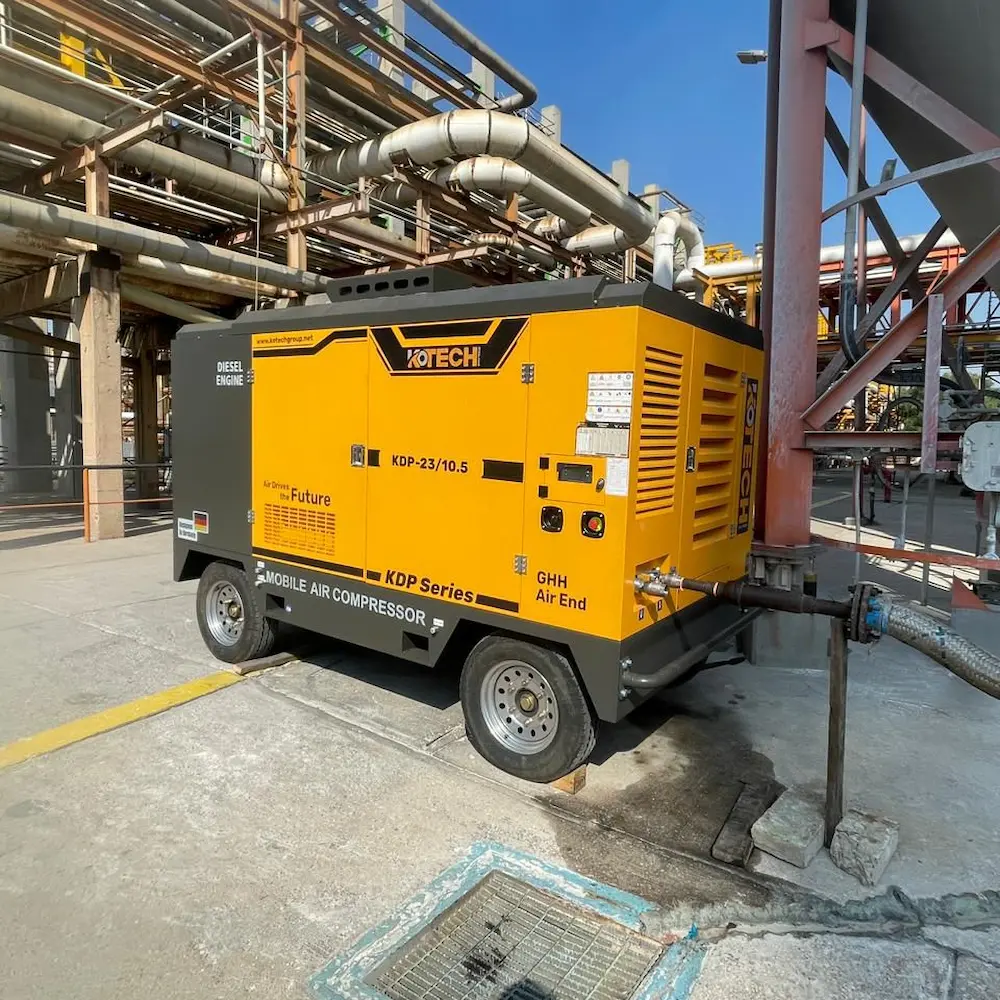
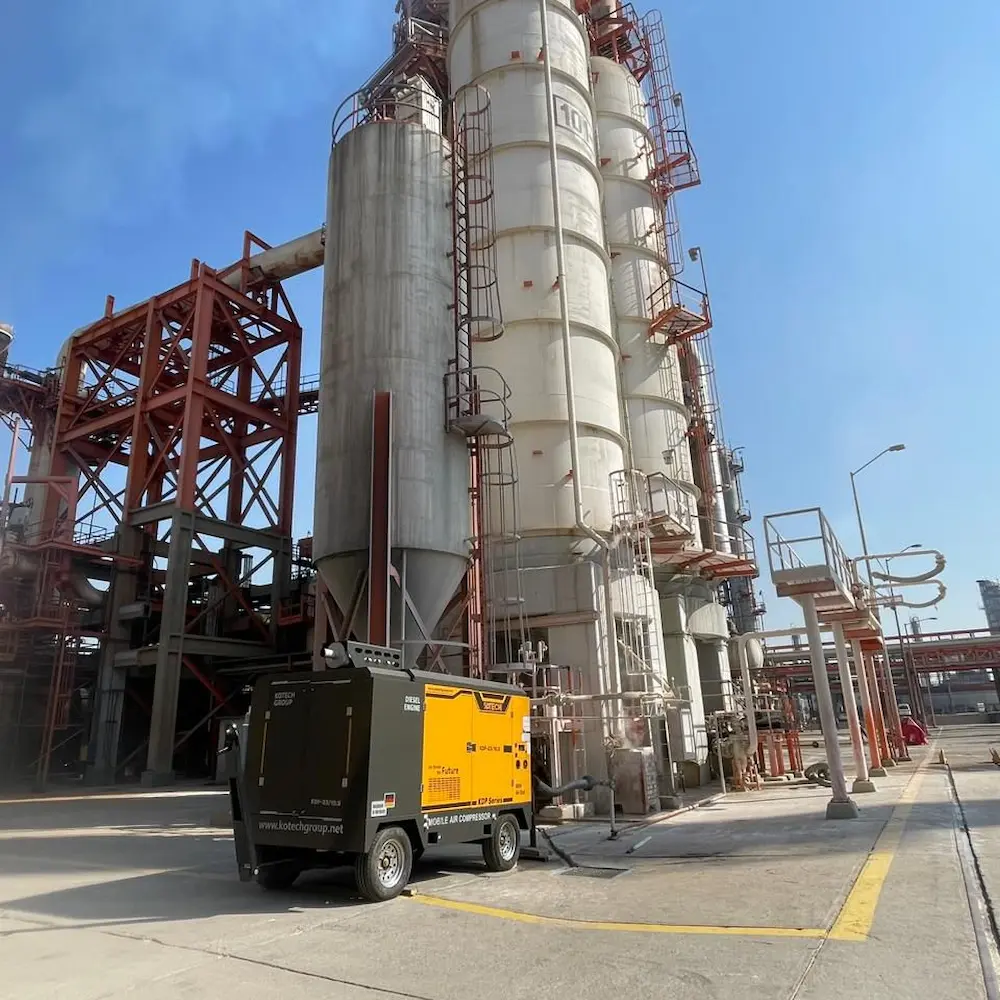
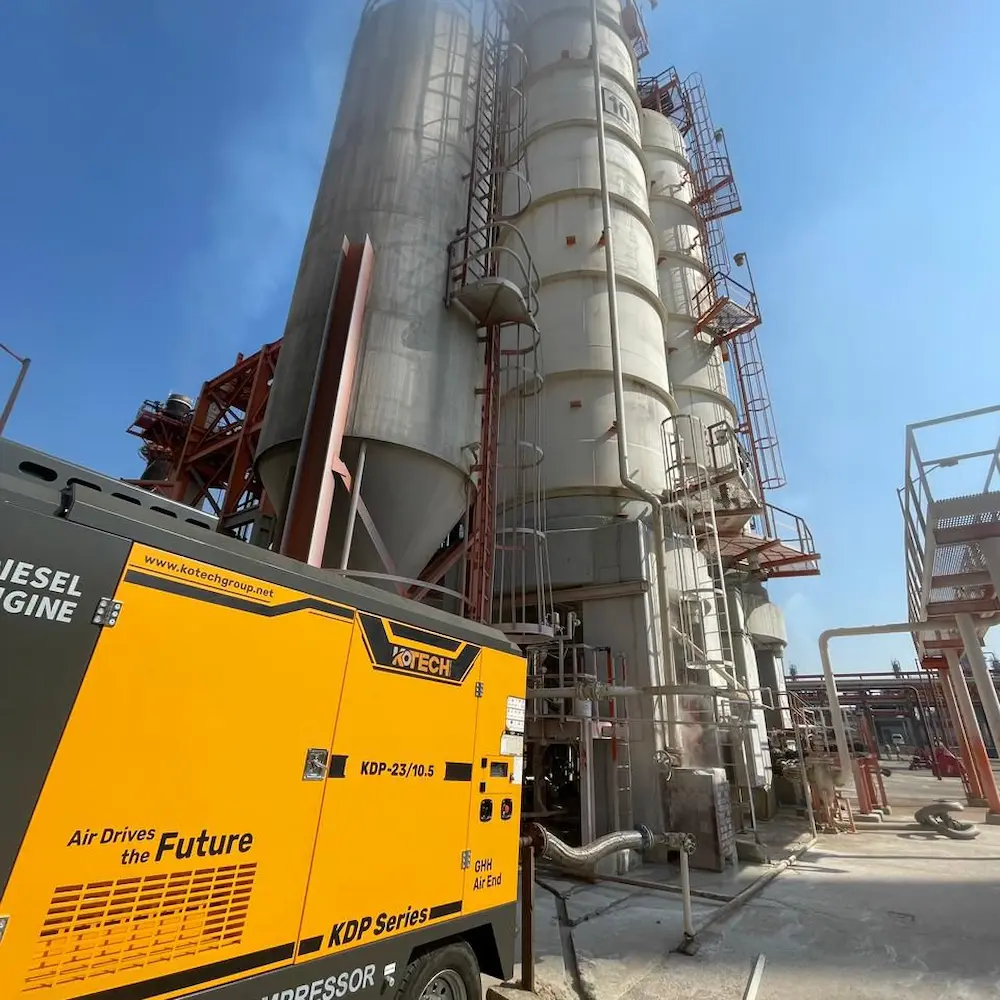
The Kotech KDP-23-10.5 diesel portable rotary screw compressor was deployed for a 90-day catalyst regeneration campaign at a refinery on Mexico's Gulf Coast. Delivering four adjustable pressure settings—7 bar (23.0 m³/min), 8.6 bar (22.9 m³/min), 10 bar (22.8 m³/min), and 12 bar (21.6 m³/min)—the unit powered the coke burn, oxychlorination, and sulphiding steps of the regeneration process. Powered by a Cummins QSB6.7-C260 engine (194 kW) with a GHH two-stage airend, the compressor features a pneumatically actuated inlet shut-off valve that isolates the unit from the process stream during gas detection events. The regeneration cycle was reduced from 21 days to 14 days—a 33% improvement—with catalyst activity recovery reaching 96% compared to the previous 88–90% baseline. Equipment uptime across the campaign was 98.5%.
Get a QuoteCustomer Pain Points
Catalyst regeneration isn't something a refinery does every day, but when it's time, the pressure is on. The client—a major refinery on Mexico's Gulf Coast—operates a continuous catalytic reforming (CCR) unit that's the heart of their gasoline production. The unit uses platinum and rhenium catalysts to turn low-octane naphtha into high-octane reformate, but over time the catalyst gets fouled with carbon deposits and other contaminants. Every 6 to 12 months, the unit has to come offline for regeneration to clean the catalyst and restore its activity.
The problem wasn't the process itself—the refinery had been regenerating catalysts for years. The problem was the compressor they were using for the regeneration air. It was an older oil-lubricated unit, and every time they ran the regeneration, oil carryover from the compressor would contaminate the catalyst bed. The oil introduced hydrocarbons and moisture that interfered with the delicate chemical steps of the regeneration process—coke burning, oxychlorination, and sulphiding.
The refinery's process engineer later admitted: "We were poisoning the catalyst while we were trying to clean it. The activity recovery was never what it should have been. We were replacing catalyst more often than the industry average, and that's a five-figure expense every time."
On top of the contamination issue, the regeneration process demands different air pressures at different stages. Coke burning needs high airflow at moderate pressure; oxychlorination and rejuvenation require controlled, consistent pressure to distribute chemicals evenly; and sulphiding needs a final high-pressure boost. The old compressor had one fixed pressure, so the operators had to use pressure-reducing valves and vent excess air—wasting energy and making flow inconsistent.
The third problem was safety. During regeneration, flammable gases are present in the process system. The client's existing compressor had no mechanism to isolate itself from the process if something went wrong. The safety manager told the project team: "Every time we ran that unit during regeneration, I had one eye on the gas detectors. If we had a leak and that compressor kept running, it could pull combustible gas right into the intake. That scenario kept me up at night."
Solutions
Kotech deployed the KDP-23-10.5 diesel portable rotary screw air compressor, purpose-built for refinery catalyst regeneration applications.
The KDP-23-10.5 is powered by a Cummins QSB6.7-C260 diesel engine producing 194 kW—enough grunt to run the compressor continuously through multi-day regeneration cycles. The engine is the same platform used in many refinery support vehicles, which meant the client's maintenance team already knew the service schedule and parts sources.
The airend is a GHH two-stage rotary screw unit, a German-made component known for reliability in continuous industrial service. The GHH unit is built for steady-state operation, which is exactly what catalyst regeneration requires—hours of running at a set pressure without fluctuations.
Four adjustable pressure settings give the operator precise control over the regeneration sequence. The operator can dial in the exact pressure needed for each step: 7 bar at 23.0 m³/min for the coke burn phase, 8.6 bar at 22.9 m³/min for mid-stage control, 10 bar at 22.8 m³/min for oxychlorination and rejuvenation, and 12 bar at 21.6 m³/min for the final sulphiding step. This flexibility means no more venting air through pressure-reducing valves—the compressor delivers exactly what the process needs, when it needs it.
The critical safety feature is the pneumatically actuated inlet shut-off valve, mounted directly on the compressor intake. If the refinery's distributed control system detects a flammable gas leak or triggers an emergency shutdown, the valve closes instantly, isolating the compressor from the process stream. It stops the compressor from pulling in combustible gas—the scenario that kept the safety manager awake at night.
Implementation Steps
- The project rolled out in phases. Kotech engineers started with a thorough review of the refinery's regeneration sequence, mapping each step and identifying the pressure and airflow requirements. Based on that, they configured the compressor with the four pressure settings tuned specifically to the client's recipe.
- The inlet shut-off valve was integrated with the refinery's distributed control system—a critical step that required careful coordination with the refinery's instrument and control team. Once the unit was delivered and positioned next to the CCR unit, the team connected it to the existing air header and completed the safety validation, testing the valve's response time and emergency shutdown integration.
- On-site commissioning involved running a full regeneration cycle under supervision, validating each pressure setting against real process conditions. The final step was operator training: hands-on sessions on pressure selection, emergency procedures, and preventive maintenance.
Customer results
Products Used in This Case
FAQ (Frequently Asked Questions)
Why did the refinery need an inlet shut-off valve on the compressor?
During catalyst regeneration, flammable gases may be present in the process system. If a gas leak occurs and the compressor continues to run, it could draw combustible gas into the intake—a serious explosion hazard. The inlet shut-off valve is pneumatically actuated and integrated with the refinery's safety system. If the DCS detects a gas alarm or triggers an emergency stop, the valve closes instantly, isolating the compressor from the process stream and preventing gas ingress
What are the four pressure settings used for in the KDP-23-10.5?
Different regeneration steps require different pressures. Coke burn uses 7 bar to oxidise carbon deposits; mid-stage control uses 8.6 bar; oxychlorination and rejuvenation use 10 bar to distribute chemicals evenly; and sulphiding uses 12 bar for final catalyst conditioning. Having these presets means the operator can select the exact pressure needed for each step without venting excess air or using pressure-reducing valves.
What makes the GHH airend suitable for this application?
The GHH two-stage rotary screw airend is built for continuous, steady-state operation—exactly what catalyst regeneration requires. It's a German-made unit known for reliability in industrial service, with oversized bearings and precision-machined rotors that handle sustained loads without performance drift. In the Mexican refinery project, the airend ran for up to 24 hours continuously at each pressure setting without any fluctuation or maintenance issues.
Is the KDP-23-10.5 oil-free or oil-lubricated?
The KDP-23-10.5 is an oil-lubricated rotary screw compressor. It uses oil for cooling and sealing within the airend, and Kotech's efficient oil separation system ensures minimal oil carryover in the discharge air. For catalyst regeneration, the client's previous compressor had significant oil carryover issues, but the KDP-23-10.5's oil separation system delivered clean, consistent air that met the refinery's process requirements.