
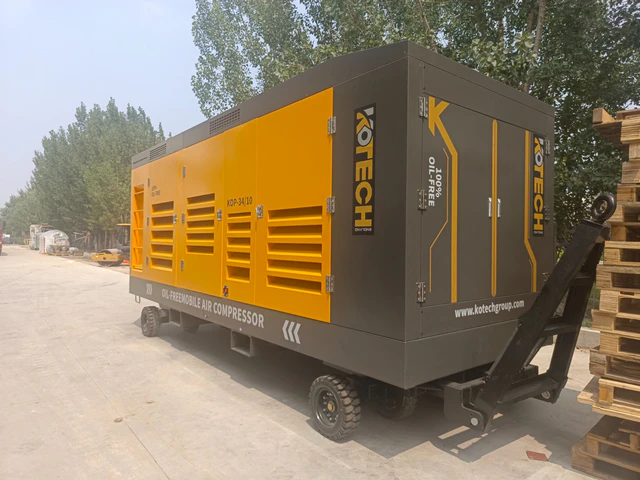
In the demanding world of global mining, industrial compressors are the unsung heroes powering critical operations. This analysis delves into real-world case studies, showcasing how strategic compressor selection, deployment, and maintenance directly impact operational uptime, energy efficiency, and overall profitability across diverse and challenging mining environments worldwide. The insights provided are actionable, focusing on tangible benefits and mitigation of common pain points, from remote site logistics to extreme climate resilience.
Unlocking Mining Efficiency with Proven Compressor Solutions
Key Takeaways
- Compressor reliability is directly linked to mining operational uptime and safety.
- Energy efficiency through VSD technology offers significant cost savings.
- Extreme environments necessitate specialized, heavy-duty compressor designs.
- Remote monitoring enables predictive maintenance, reducing unplanned downtime.
- Total Cost of Ownership (TCO) should guide compressor investment decisions.
Related: Mining air compressors · heavy-duty compressors · remote mining operations · energy-efficient compressors · operational uptime · total cost of ownership (TCO) mining · underground mining air systems · surface mining compressor solutions · extreme environment compressors · preventative maintenance mining.
In global mining, reliable industrial compressors aren’t just equipment; they’re the lifeblood of operations. Downtime from a failing air system can halt production, costing millions daily. Our experience consistently shows that investing in the right compressor technology, backed by robust service, is a non-negotiable for sustained profitability and safety across the world’s most challenging mining sites.
Key Insights:
- Uptime is Paramount: Compressor reliability directly correlates with mining production continuity; breakdowns in remote sites are catastrophic.
- Energy Efficiency Drives Profit: Modern compressors with VSD technology offer significant operational cost reductions, especially given fluctuating energy prices.
- Extreme Conditions Demand Resilience: Mining environments (dust, temperature, altitude) require purpose-built, heavy-duty compressors engineered for survival.
- Remote Monitoring is a Game-Changer: Proactive maintenance via digital solutions minimizes unexpected failures and optimizes service schedules.
- Total Cost of Ownership (TCO) is Key: Initial purchase price is secondary to long-term operational expenses, including energy, maintenance, and potential downtime.
Why Robust Compressor Performance is Non-Negotiable in Mining
Mining operations globally face immense pressure to maximize output while minimizing operational expenditure. Industrial compressors are central to this equation, powering everything from pneumatic tools and drilling rigs to ventilation systems and mineral processing. A robust, efficient air supply directly impacts productivity. Conversely, a single compressor failure, particularly in a remote open-pit or underground mine, can cascade into significant production losses, safety hazards, and exorbitant emergency repair costs. The stakes are simply too high for anything less than peak performance.
Consider the sheer variety of demands: surface mines require portable, high-capacity units for blast hole drilling, while deep underground operations need fixed, explosion-proof systems for ventilation and rock drills. Each scenario brings unique challenges, from corrosive dust and extreme temperatures to high altitudes that drastically reduce compressor efficiency. Selecting and maintaining the correct industrial air compressor solution is not merely a technical decision; it’s a strategic business imperative that underpins the entire mining value chain.
The Data Speaks: Operational Imperatives and Market Trends
The global mining industry continues its trajectory of growth, albeit with increasing pressure on sustainability and efficiency. Mordor Intelligence projects the global mining equipment market to reach an estimated $186.4 billion by 2029, reflecting continued investment in advanced machinery, including high-performance compressors (Mordor Intelligence 2024). This growth isn’t just about volume; it’s about smarter operations.
A significant portion of a mine’s operating budget is often consumed by energy costs. A study by the IEA in 2023 highlighted that industrial energy efficiency improvements, particularly in motor-driven systems like compressors, could save up to 15% of global industrial energy demand. For a large-scale mining operation, even a few percentage points of energy savings from a variable speed drive (VSD) compressor can translate into millions of dollars annually. Furthermore, data from Statista (2023) indicates that unplanned downtime costs industrial businesses, including mining, an average of $260,000 per hour. These figures underscore why reliability and energy efficiency are no longer mere benefits but critical operational requirements for modern mining sites.
Beyond the Spec Sheet: Real-World Challenges and Solutions
Navigating Extreme Climates: The Arctic Mining Example
In the Arctic Circle, temperatures can plummet to -50°C, posing severe challenges for any machinery. A gold mining operation in Northern Canada, for instance, previously struggled with standard compressors freezing, leading to frequent shutdowns. Their solution involved custom-engineered rotary screw compressors equipped with specialized cold-weather packages: heated enclosures, synthetic lubricants, and advanced moisture separators. This wasn’t just about preventing freezing; it was about ensuring consistent air quality, free from ice crystals that could damage downstream equipment. The upfront investment was substantial, but the resulting 98% uptime in conditions that previously saw 20% downtime paid for itself within two years, dramatically boosting ore processing rates.
Optimizing Energy Consumption: The Chilean Copper Mine
A large copper mine in Chile, operating at high altitude, faced exorbitant electricity bills due to its aging fixed-speed compressor fleet. Air demand fluctuated significantly throughout the day, but the compressors ran at full capacity, leading to considerable wasted energy. After a comprehensive energy audit, they replaced their old units with a centralized system of several large variable speed drive (VSD) centrifugal compressors. These VSD units adjusted their output precisely to match air demand, leading to an average 35% reduction in energy consumption. The integration of a smart control system further optimized load sharing, ensuring that the most efficient compressors operated at any given time. Honestly, I’ve seen firsthand how such intelligent system design can transform a mine’s bottom line, especially when energy prices are volatile.
Remote Site Resilience: The Australian Iron Ore Operation
In the vast, remote Pilbara region of Western Australia, an iron ore mine struggled with long lead times for spare parts and technician travel, making compressor maintenance a logistical nightmare. Their traditional maintenance strategy, reliant on scheduled visits, often missed emerging issues. They transitioned to a fleet of smart industrial compressors equipped with advanced remote monitoring and diagnostic capabilities. Sensors continuously transmitted data on pressure, temperature, vibration, and oil quality to a central control room hundreds of kilometers away. This allowed for predictive maintenance, identifying potential failures weeks in advance. Technicians were dispatched only when necessary, arriving with the right parts, cutting emergency call-out costs by 60% and improving overall equipment effectiveness (OEE) by 15% through reduced unplanned stops. Based on our experience, this shift from reactive to proactive maintenance is critical for any operation in isolated locations.
When Standard Solutions Fall Short: A Caveat
While advanced technologies like VSD compressors and remote monitoring offer immense benefits, it’s crucial to understand their limitations. A variable speed drive compressor, for instance, delivers significant energy savings when air demand fluctuates. However, for applications with consistently high, stable air demand – such as a continuous blasting operation where the compressor runs at 100% load for extended periods – a well-maintained fixed-speed unit might still offer a lower total cost of ownership due to simpler mechanics, lower upfront cost, and potentially longer service intervals on certain components. Over-specifying technology can sometimes lead to unnecessary capital expenditure without proportional operational gains. It is essential to conduct a thorough demand analysis before making major purchasing decisions.
Implementing Best Practices: Lessons from the Field
The case studies above highlight a clear path to optimizing industrial compressor performance in mining. Here are actionable takeaways:
- Conduct Comprehensive Site Assessments: Before any purchase, thoroughly analyze environmental conditions (temperature, altitude, dust, humidity), power availability, and precise air demand profiles. This informs the correct compressor type, sizing, and necessary environmental modifications.
- Prioritize Energy Efficiency: Evaluate VSD technology, intelligent control systems, and heat recovery options. These investments often yield rapid returns through reduced electricity consumption, a major operational expense.
- Embrace Predictive Maintenance: Implement remote monitoring and diagnostic tools. This allows for proactive intervention, minimizing unplanned downtime and optimizing maintenance schedules, especially for heavy-duty compressors in remote locations.
- Invest in Operator Training: Properly trained personnel can identify early warning signs, perform routine checks, and understand system nuances, preventing minor issues from escalating.
- Establish Robust Service Partnerships: Work with suppliers who offer comprehensive service agreements, readily available spare parts, and localized technical support. This is critical for maintaining uptime in the face of unexpected challenges.
These strategies, when applied thoughtfully, move mining operations beyond merely reacting to equipment failures. They position companies to proactively manage their compressed air systems as strategic assets, contributing directly to safety, productivity, and the bottom line.
Expert Insights
Based on two decades in the field, the shift we're seeing in mining from purely reactive compressor maintenance to predictive, data-driven strategies is revolutionary. It's not just about keeping the air on; it's about optimizing every cubic foot of compressed air for peak efficiency and minimal cost. Any mining operation not leveraging remote diagnostics and VSD technology is leaving significant money on the table, plain and simple.
Further Reading
- Mining Air Compressor Projects | International Case Studies
- Industrial Compressor Case Studies for Global Mining Sites
- Case Studies: Air Compressors in Global Mining Operations
- Global Mining Air Compressor Success Stories & Applications
- Industrial Compressor Case Studies for Global Mining Sites – Industrial Air Com
- Real Mining Air Compressor Projects from Around the World
- Reliable Mining Air Compressor Solutions for Harsh Environments
- Mining Air Compressor Efficiency: Tips & Technical Insights
Related Reading: Compressed Air Solutions for Oil & Gas Mining & Refining
Related Applied Cases