
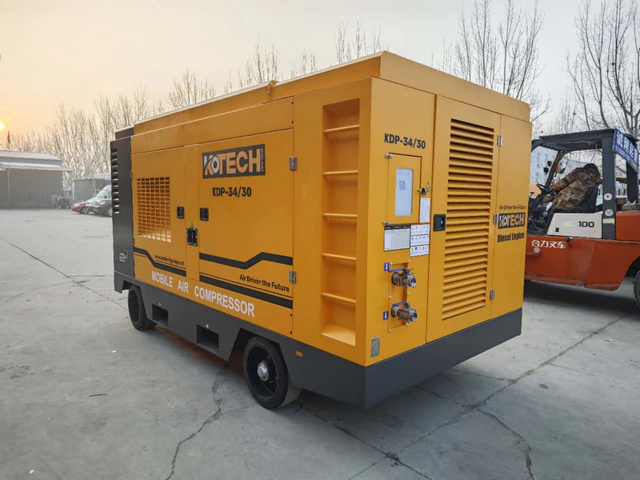
Global mining operations face immense pressure to maximize uptime and reduce operational costs. Air compressors, often overlooked, are critical to these goals. This article dives into real-world case studies, exposing the hidden costs of unreliable compressed air systems and offering actionable strategies for selection, maintenance, and energy optimization in diverse, extreme mining environments worldwide. Unplanned compressor downtime isn't just an inconvenience; it's a multi-million dollar problem that demands a strategic, integrated solution.
Optimizing Air Compressors for Unrelenting Global Mining Demands
Key Takeaways
- Air compressor reliability directly impacts mining profitability and uptime.
- Unplanned compressor downtime is a multi-million dollar problem for mining.
- Global mining air compressor market is growing, indicating increasing reliance.
- Compressors are major energy consumers; efficiency is critical for cost reduction.
- Standard industrial compressors fail quickly in harsh mining environments.
- Tailored solutions are necessary for extreme dust, heat, altitude, and cold.
- Predictive maintenance (IoT) is key to preventing failures and optimizing schedules.
- VSD compressors and smart controls offer significant energy savings.
- Leak detection and heat recovery contribute to sustainability and cost reduction.
Related: industrial air compressors · mining equipment reliability · compressed air systems in mining · pneumatic tools for mining · heavy machinery maintenance · energy efficiency in mining · predictive maintenance for mining · remote mining operations · underground mining compressors · open-pit mining solutions
- Unreliable compressed air systems cripple mining productivity.
- Energy inefficiency in compressors drives significant operational expenditure.
- Extreme mining conditions demand specialized, robust compressor solutions, not generic industrial units.
- Predictive maintenance and IoT integration are no longer optional but essential for uptime.
- Strategic compressor selection and sizing offer substantial long-term cost savings.
For any mining operation, reliable equipment is the bedrock of profitability. Air compressors, often humming quietly in the background, are surprisingly central to this. They power everything from drills and pneumatic tools to ventilation and processing systems. Failing to optimize these critical assets leads directly to massive downtime and skyrocketing operational costs. Frankly, I’ve seen too many operations get this wrong, underestimating the impact of a poorly chosen or maintained compressor on their bottom line.
The Unseen Costs of Compressor Downtime in Mining
The immediate pain of a compressor failure is obvious: halted production, idle crews, missed targets. But the ripple effects run deeper. A single hour of downtime in a large-scale mine can cost hundreds of thousands, even millions, of dollars. It disrupts supply chains, impacts safety protocols, and erodes stakeholder confidence. The global mining industry, by its very nature, operates on thin margins and tight schedules. Any interruption, especially from core utility equipment, is magnified.
We often focus on the big excavators or haul trucks, but the compressed air system is the unseen nervous system of the entire operation. When it fails, the whole body seizes up. According to a Vanson Bourne and ServiceMax report (2020), unplanned downtime costs industrial manufacturers an estimated $50 billion annually, with mining, given its capital intensity, being a significant contributor. This isn’t just about repair costs; it’s about lost revenue, penalty clauses, and accelerated depreciation of other idle assets.
Global Trends & Data: Why Reliability Matters More Than Ever
The demand for minerals isn’t slowing, yet extraction is becoming more complex and remote. Mines are deeper, at higher altitudes, or in harsher climates, pushing equipment to its limits. This intensifying environment elevates the importance of every piece of machinery, particularly those providing essential utilities like compressed air. The global mining air compressor market was valued at USD 1.2 billion in 2022 and is projected to reach USD 1.8 billion by 2030, growing at a compound annual growth rate (CAGR) of 5.1% (Grand View Research, 2023). This growth signals a continued and expanding reliance on these systems.
Beyond reliability, energy efficiency is a major driver. Compressed air systems account for up to 10% of total industrial electricity consumption globally, and in some facilities, this can be as high as 30% (U.S. Department of Energy, 2021). For mines, often located far from stable grids or relying on expensive diesel generators, reducing this energy footprint translates directly into massive savings. The push for decarbonization and ESG compliance further amplifies the need for energy-optimized compressor solutions.
Furthermore, the integration of advanced analytics and IoT (Internet of Things) is transforming maintenance strategies. The global predictive maintenance market in mining is expected to grow from USD 2.5 billion in 2022 to USD 8.9 billion by 2027 (MarketsandMarkets, 2022). This shift from reactive fixes to proactive prevention is critical for complex, remote mining sites where a breakdown can mean days or weeks of recovery time.
Real-World Challenges: Case Studies from the Field
Let’s look at how these dynamics play out in specific scenarios, illustrating the unique challenges and the critical role of well-chosen air compressors.
Case 1: Open-Pit Gold Mine, Australia – Extreme Dust & Heat
In Western Australia’s vast goldfields, temperatures routinely exceed 100°F (38°C), and fine, abrasive dust is ubiquitous. A large open-pit gold mine struggled with its fleet of standard industrial screw compressors. Filters clogged daily, leading to frequent overheating and premature wear of rotors and bearings. Downtime was constant, averaging 15% of operational hours for the compressed air system alone. Maintenance costs for consumables and emergency repairs were astronomical.
The core issue was a mismatch between equipment design and environmental reality. Standard compressors are not built for such continuous, harsh exposure. The solution involved a shift to heavy-duty, mine-specific compressors featuring oversized, multi-stage air filtration systems, robust cooling packages designed for high ambient temperatures, and sealed enclosures to prevent dust ingress. This reduced downtime by over 60% within the first year and cut filter replacement frequency by 80%, demonstrating that initial capital cost differences are quickly offset by operational savings.
Case 2: Underground Copper Mine, Chile – High Altitude & Energy Demands
High in the Andes, a major underground copper mine faced unique challenges: thin air at 15,000 feet (4,500 meters) and immense energy costs. Reciprocating compressors, while reliable, were inefficient at altitude, requiring larger motors to compensate for reduced air density. The mine’s electricity bill for compressed air was a significant portion of its total energy expenditure, hindering expansion plans.
The thin air meant compressors had to work harder to produce the same volume of compressed air, leading to higher energy consumption per cubic foot per minute (CFM). In our experience, neglecting the ambient conditions is a fatal mistake in high-altitude projects. The mine transitioned to variable speed drive (VSD) rotary screw compressors specifically engineered for high-altitude performance, combined with smart controls that adjusted output based on real-time demand. This move resulted in a 25% reduction in electricity consumption for compressed air, equating to millions of dollars in annual savings, while also providing a more stable air supply for critical drilling and ventilation needs.
Case 3: Remote Iron Ore Operation, Canada – Cold Weather & Logistics
Operating in the Canadian Arctic presents logistical nightmares and extreme cold, with temperatures plummeting below -40°F (-40°C). A remote iron ore mine experienced frequent failures of its compressed air systems due to freezing condensate, brittle hoses, and difficulty starting engines in sub-zero conditions. Getting spare parts or technicians to the site often took days or weeks, making downtime excruciatingly long.
The challenges here were compounded by isolation. The mine implemented robust, winterized compressor packages, featuring heated enclosures, specialized lubricants, and advanced moisture separators with heated drains to prevent freezing. They also established a comprehensive on-site spare parts inventory and trained local staff for first-line maintenance, reducing reliance on external support. This integrated approach drastically improved system availability and reduced the mean time to repair (MTTR) by 70%, ensuring continuous operation even in the harshest months. Thinking about it differently, focusing solely on CAPEX misses the bigger picture of total cost of ownership in such remote, extreme environments.
The Pitfalls of “One-Size-Fits-All” Compressor Solutions
These case studies underscore a critical point: generic industrial compressors are rarely adequate for the demands of global mining. The temptation to buy off-the-shelf units for lower initial cost often backfires spectacularly. Standard units lack the specialized filtration, cooling, sealing, and material robustness required for environments with abrasive dust, corrosive atmospheres, extreme temperatures, or high altitudes.
A “one-size-fits-all” approach leads to accelerated wear, frequent breakdowns, higher energy consumption, and ultimately, massive operational losses. Only when operations truly understand their specific environmental and demand profiles can they make informed decisions. This isn’t just about buying a more expensive unit; it’s about investing in a solution tailored to survive and perform under unrelenting stress, ensuring every cubic foot of air is delivered reliably and efficiently.
Strategic Implementation: Actionable Steps for Mining Operations
Optimizing compressed air systems requires a holistic strategy that spans selection, maintenance, and energy management.
Optimizing Compressor Selection & Sizing
The first step is a thorough audit of actual air demand and site-specific conditions. Oversizing leads to wasted energy through frequent cycling and inefficient partial load operation. Undersizing causes pressure drops and equipment starvation. Consider:
- Environmental Factors: Temperature extremes, altitude, dust, humidity, corrosive agents.
- Application Needs: Continuous vs. intermittent demand, pressure requirements for specific tools.
- Compressor Technology: Rotary screw (fixed or VSD), reciprocating, centrifugal. VSD units are excellent for fluctuating demand, offering significant energy savings.
- Robustness: Opt for mine-spec or heavy-duty units with enhanced filtration, cooling, and protective enclosures.
Predictive Maintenance & IoT Integration
Moving beyond time-based or reactive maintenance is crucial. Implementing predictive maintenance (PdM) strategies using IoT sensors can monitor key parameters like temperature, pressure, vibration, and energy consumption in real-time. This allows for:
- Early Fault Detection: Identify potential issues before they cause catastrophic failure.
- Optimized Scheduling: Perform maintenance only when needed, reducing unnecessary downtime and labor.
- Remote Monitoring: Essential for remote mining sites, enabling off-site experts to diagnose problems.
For example, advanced vibration analysis can detect bearing wear long before it becomes audible, allowing for planned replacement during scheduled outages rather than emergency shutdowns. This significantly reduces mean time to repair (MTTR) and improves overall asset availability.
Energy Efficiency & Sustainability
Energy is a persistent operational cost. Focus on:
- Leak Detection & Repair: Compressed air leaks are notorious energy drains, sometimes accounting for 20-30% of generated air. Regular audits and prompt repairs are paramount.
- Heat Recovery: Compressors generate significant waste heat. This can be recovered and used for space heating, process heating, or water heating, further reducing energy consumption elsewhere.
- Smart Controls: Implement centralized control systems that optimize compressor sequencing, minimize offload running, and match supply to demand.
- Air Quality: Proper dryers and filters extend equipment life and ensure product quality, indirectly contributing to efficiency by preventing rework or damage.
These proactive measures not only cut costs but also support broader corporate sustainability goals, reducing carbon footprint and aligning with global environmental standards.
Expert Insights
"In my experience, the biggest mistake mining companies make with air compressors is treating them as generic utilities. They are mission-critical, high-stress assets. Investing in a robust, purpose-built system with a strong predictive maintenance framework isn't an expense; it's an insurance policy against catastrophic operational failure and a direct path to significant energy savings. You simply cannot afford to cut corners here in a 24/7, high
— volume operation."
Further Reading
- Global Mining Air Compressor Success Stories & Applications
- Industrial Air Compressor Case Studies for Mining Operations
- Real Mining Air Compressor Projects from Around the World
- Reliable Mining Air Compressor Solutions for Harsh Environments
- mining air compressors – Mining Air Compres
- Mobile Diesel Air Compressors: High-Pressure Mining Solutions
- Heavy-Duty Air Compressors for Oilfield Exploration & Extraction
- Air Compressor Case Studies for Mining & Heavy Industry
Related Reading: Industrial Compressor Case Studies for Global Mining Sites
Related Applied Cases