
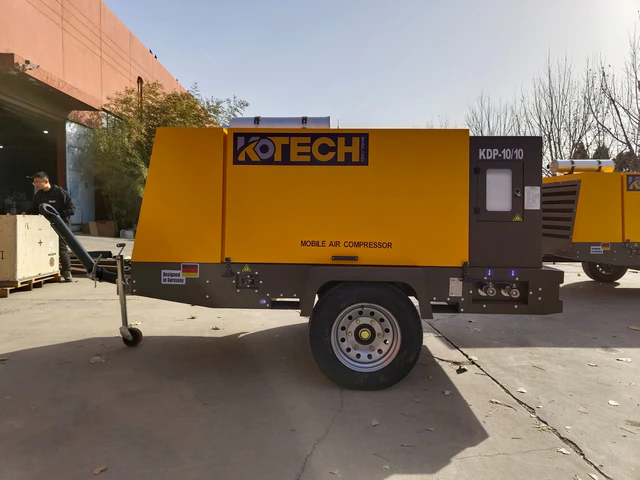
Optimizing Mining Uptime with Maintenance-Friendly Portable Diesel Air Compressors
Key Insights
- Optimized Uptime is King: Easy-to-service compressors drastically reduce downtime, a critical factor in mining’s high-cost operational environment.
- Significant TCO Reduction: Lower maintenance hours, fewer specialized tools, and extended service intervals directly translate into substantial savings over the equipment’s lifespan.
- Enhanced Safety & Productivity: Simplified maintenance procedures minimize exposure to hazards and allow teams to focus on core mining tasks, boosting overall site efficiency.
- Designed for Harsh Realities: Modern maintenance-friendly units incorporate features like robust filtration, accessible components, and advanced diagnostics, built for extreme conditions.
- Strategic Investment: Prioritizing serviceability in procurement ensures long-term operational resilience and a stronger return on investment for mining operations.
Mining operations exist in a league of their own when it comes to equipment demands. The relentless grind of extraction, often in remote and unforgiving environments, means every piece of machinery needs to be a workhorse.
Why Maintenance-Friendly Compressors Are Non-Negotiable in Mining
For mining teams, a portable diesel air compressor isn’t a luxury; it’s the lifeline powering everything from pneumatic tools to blast hole drilling. When that compressor goes down, the entire chain grinds to a halt. Unscheduled downtime is the silent killer of profitability.
A truly maintenance-friendly unit is designed from the ground up with the field technician in mind. Think easy access to filters, fluids, and wear parts. Consider extended service intervals that align with typical mining shift patterns. This focus on serviceability directly translates into higher equipment availability, which, in turn, keeps your mining operation running smoothly. It’s about minimizing the time your skilled technicians spend wrestling with complex repairs and maximizing their time on productive tasks.
Moreover, safety is inherently tied to maintenance ease. Complicated, awkward service points increase the risk of injury. Equipment that’s difficult to maintain often gets neglected, leading to higher failure rates and more dangerous operating conditions. Simple, straightforward procedures reduce human error and promote a culture of proactive maintenance rather than reactive crisis management. This isn’t just good for the bottom line; it’s good for your people.
The Economic Reality: Data Driving Adoption
The push for maintenance-friendly designs isn’t just anecdotal; it’s backed by hard numbers. The cost of downtime in mining is staggering, often running into tens of thousands of dollars per hour, depending on the scale of the operation. Reducing the time it takes to get critical equipment back online directly impacts profitability.
This highlights a massive opportunity for improvement through smarter equipment choices. Every minute saved on a filter change or fluid top-off accumulates into significant operational gains over a year.
Furthermore, safety records underscore the importance of reliable equipment. It’s not just about compliance; it’s about protecting your workforce.
The market itself is responding to these demands.
Unpacking the “Maintenance-Friendly” Design Philosophy
So, what exactly makes a portable diesel air compressor “maintenance-friendly” for a mining team? It boils down to several key design elements that prioritize accessibility, simplicity, and longevity in harsh conditions.
Intelligent Component Layout and Accessibility
This is perhaps the most crucial aspect. Filters (air, oil, fuel), fluid fill points, and drain valves should be easily reachable without needing to dismantle half the machine. Large, hinged access panels, often secured with quick-release latches, are a hallmark of good design. We’re talking about components that can be accessed at chest height or with minimal bending, reducing strain and time. Think about the impact of changing an air filter on a dusty mine site; if it’s buried deep within the chassis, it’s a job that takes longer and exposes technicians to more potential hazards.
Extended Service Intervals and Fewer Consumables
Modern compressors incorporate advanced filtration and synthetic lubricants that allow for significantly longer service intervals. Some premium models now boast 1,000-hour or even 2,000-hour service intervals, a stark contrast to older units requiring service every 250-500 hours. Fewer consumables, like long-life air-oil separators, also reduce the inventory burden on remote sites and simplify supply chain logistics. This directly impacts the total cost of ownership (TCO) by reducing both parts and labor expenses.
Robust Filtration Systems
Mining environments are notoriously dusty and dirty. A maintenance-friendly compressor needs a multi-stage, heavy-duty air intake filtration system that’s easy to clean or replace. Pre-filters that can be quickly tapped out or washed, combined with high-capacity main filters, prevent premature wear on the compressor block and engine. This proactive approach saves significant repair costs down the line.
Advanced Telemetry and Diagnostics
Many contemporary diesel air compressors now come equipped with telematics systems. These systems provide real-time data on performance, fuel levels, engine hours, and, critically, fault codes. Remote monitoring allows maintenance teams to anticipate issues before they become critical failures, schedule proactive service, and even diagnose problems from miles away.
Modular Design and Common Parts
A modular design, where components are grouped and easily replaceable as units, simplifies repairs. Furthermore, manufacturers who prioritize commonality of parts across different models within their range can significantly streamline spare parts inventory for mining companies. This reduces complexity and ensures that the right part is more likely to be on hand when needed.
When Simplicity Isn’t Enough: Specific Mining Challenges
While a maintenance-friendly design is crucial, it’s not a silver bullet. There are specific boundary conditions in mining where even the best-designed equipment faces unique hurdles. For instance, in extremely cold environments, specialized arctic packages are essential, including block heaters, battery blankets, and heated fluid reservoirs. Without these, even the most accessible components won’t help if the unit won’t start.
Similarly, highly abrasive dust, like that found in certain hard rock mining operations, can overwhelm even the most robust standard filtration systems. In such cases, specialized heavy-duty pre-cleaners or custom filtration solutions might be necessary. This is where a “one-size-fits-all” approach simply doesn’t cut it.
Another crucial factor often underestimated is the skill level of the local workforce. A compressor might be designed for easy maintenance, but if the local team lacks the proper training, tools, or understanding of preventative maintenance schedules, even simple tasks can become problematic. Comprehensive training programs, often provided by the equipment manufacturer or dealer, are just as vital as the equipment’s design itself.
Practical Implementation: Selecting and Deploying Your Fleet
Choosing the right maintenance-friendly portable diesel air compressor for your mining operation involves more than just looking at the spec sheet. It requires a holistic approach that considers your specific site conditions, operational demands, and long-term support needs.





