
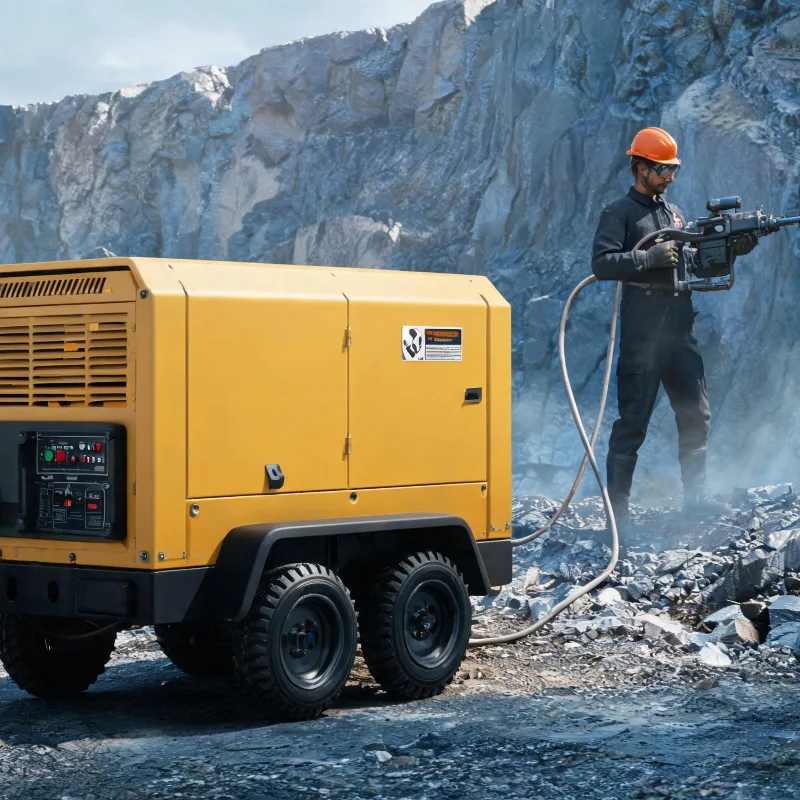
Supporting Mining Operations with Portable Diesel Air Compressors
- Mobile diesel-powered air units solve off-grid mobility pain points that stationary electric compressors cannot address for mining
- These units work for both remote exploration and active development work in open-pit and underground sites
- They are not ideal for permanent, high-volume operations with existing on-grid compressed air infrastructure
Portable diesel-powered air units are a critical productivity driver for modern mining operations that need flexible, off-grid compressed air.
Core Operational Value for Mining Sites
Mining operations rarely have consistent power access across all work zones. Exploration teams move between remote claim sites daily. Development crews work in areas that haven’t had permanent power run yet.
Diesel-powered portable units don’t rely on grid connections. They can be towed behind pickup trucks or moved via small utility vehicles to any work zone. They deliver consistent compressed air for drilling, powering pneumatic tools, ventilation, and blast hole preparation.
Open-Pit Mining Use Cases
Open-pit operations spread across hundreds of acres, with work zones shifting every few weeks as crews expand the pit. Portable units support exploration drilling, blast hole preparation, and maintenance of heavy equipment. Pneumatic jackhammers and drill rigs require consistent CFM output that mobile diesel units deliver on demand.
Crews can move a unit from one blast zone to another in under an hour, no electrician or rewiring required.
Underground Mining Use Cases
Underground exploration and development work often happens in areas without permanent ventilation or power lines. Modern portable diesel units meet global safety standards for low exhaust emissions, and can be used to power ventilation fans, pneumatic drilling tools, and emergency backup air systems for working teams.
Industry Data on Productivity Impact
Three recent independent datasets confirm the value of these units for mining operations: 1. 2. 3.
When These Units Are Not the Right Fit
Portable diesel units are not ideal for all mining operations. They are not optimal for permanent, 24/7 underground mining zones that already have installed high-volume compressed air lines connected to on-site power generation.
For these fixed sites, stationary electric units have lower long-term operating costs and lower ongoing maintenance requirements. Only when the operation needs temporary air for new development or emergency backup do portable diesel units make sense here.
Actionable Deployment Best Practices
To get the maximum value from portable diesel units for mining: 1. 2. Always confirm the unit meets local mining safety regulations for exhaust emissions before using it underground. 3. Keep spare air filters and fuel filters on site to avoid unplanned downtime from routine maintenance needs. 4. Store units in a covered, dry area when not in use to extend their service life in harsh mining conditions.
Use Cases
Exploration drilling, blast hole preparation, maintenance pneumatic tools, temporary underground ventilation, emergency backup air, remote site construction
Buyer Guide
Match CFM output to your maximum air demand Select a unit with an 8+ hour fuel tank for remote work Confirm compliance with local mining safety regulations Choose a towable model for easy movement between sites
Pitfalls to Avoid
Don’t buy an underpowered unit for multiple simultaneous tools Don’t skip routine exhaust filter changes for underground use Don’t ignore cold-weather fuel system maintenance for remote sites
Glossary
CFM: Cubic Feet per Minute, a measure of compressed air flow output Off-grid: A site with no access to permanent utility power infrastructure Pneumatic tools: Tools powered by compressed air, common in mining
Cost Factors
Lower upfront cost than stationary high-volume compressors No permanent power infrastructure installation costs Fuel costs vary based on weekly runtime Lower long-term operating costs for intermittent use




