

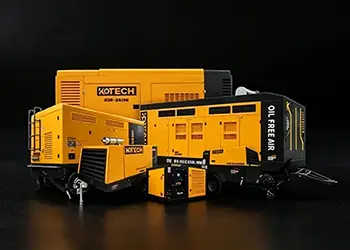
This guide explores 100 CFM diesel air compressors for construction, covering core mechanics, optimized deployment, performance comparisons, and risk mitigation. It helps construction teams select, operate, and maintain these units for reliable off-grid pneumatic power.
100 CFM Diesel Air Compressor for Construction
Related: 100 CFM portable diesel air compressor · construction site pneumatic power · medium-duty diesel air compressor · off-grid construction air supply · 100 CFM rotary screw air compressor · mobile diesel compressor for tools
A 100 CFM diesel air compressor for construction defines a critical piece of heavy-duty equipment delivering 100 cubic feet per minute of compressed air, powered by a robust diesel engine, specifically engineered for the demanding environments of construction sites. This class of compressor is indispensable for powering a wide array of pneumatic tools and equipment, from jackhammers and concrete breakers to sandblasters and impact wrenches, making it a cornerstone of operational efficiency in modern building and infrastructure projects. The primary problem that a 100 CFM diesel air compressor solves in the current construction landscape is the pervasive need for reliable, portable, and powerful air supply independent of grid electricity. Traditional electric compressors often require significant power infrastructure or lack the mobility required for dynamic job sites, leading to increased setup times, logistical challenges, and potential operational bottlenecks. Diesel-powered units, conversely, offer unparalleled autonomy, enabling continuous work in remote or undeveloped areas where consistent electrical power is non-existent. Based on structural analysis, this article will delve into the core mechanics, practical applications, and strategic advantages of integrating a 100 CFM diesel air compressor into construction operations. We will explore its technical breakdown, provide actionable steps for optimized deployment, offer a comparative analysis against alternative systems, and address common pitfalls to ensure maximum operational effectiveness and long-term strategic value.
The Core Mechanics of a 100 CFM Diesel Air Compressor
The core mechanics of a 100 CFM diesel air compressor involve a sophisticated interplay between its diesel engine, air end (compressor block), air receiver, and control systems, all designed to convert fuel energy into pneumatic power efficiently. This robust engineering enables consistent delivery of 100 cubic feet per minute (CFM) of pressurized air, a volume ideal for a broad spectrum of medium-duty construction tools.
From a framework perspective, the diesel engine acts as the prime mover, converting diesel fuel into mechanical energy that drives the air end. Most commonly, rotary screw compressors are employed as the air end due to their continuous air delivery, higher efficiency, and smoother operation compared to reciprocating piston compressors in this CFM range. The air end traps ambient air and compresses it through the synchronized rotation of two helical screws, increasing its pressure and temperature.
Compressed air then flows into the air receiver tank, which serves multiple critical functions: it stores the compressed air, allowing for a steady supply and reducing compressor cycling; it helps to cool the air, causing moisture to condense; and it acts as a pulsation dampener. Integrated cooling systems, including aftercoolers and fans, are essential for reducing air temperature before it reaches tools, preventing wear and improving tool longevity. Furthermore, advanced control panels regulate engine speed, pressure settings, and provide diagnostic information, ensuring optimal performance and safety protocols are maintained consistently.
In practical application, the synergy of these components ensures that a 100 CFM diesel air compressor provides reliable and consistent power, capable of sustaining demanding construction tasks for extended periods. The diesel engine’s fuel efficiency and torque characteristics make it particularly well-suited for powering the continuous compression required by the air end, establishing it as a highly reliable solution for off-grid operations.
Optimizing Deployment: Practical Steps for 100 CFM Compressor Integration
Optimizing the deployment of a 100 CFM diesel air compressor on a construction site involves a series of practical steps that ensure maximum efficiency, safety, and longevity of the equipment and its connected tools. This methodical approach begins long before the compressor arrives on site, encompassing planning, positioning, connection, and ongoing operational checks.
The first critical step in practical application is conducting a thorough pre-site assessment to identify optimal placement. This assessment should consider factors such as proximity to the work area to minimize hose length and pressure drops, clear access for refueling and maintenance, stable and level ground to prevent tipping, and adequate ventilation to dissipate heat and prevent recirculation of exhaust fumes. Understanding the specific pneumatic tool requirements, including their individual CFM and pressure needs, is also crucial for ensuring the 100 CFM output is appropriately matched.
Upon arrival, correct positioning of the compressor is paramount. The unit should be placed on firm, level ground, ideally on a concrete slab or compacted soil, away from potential hazards like falling debris or heavy traffic routes. Wheel chocks should always be used to secure the unit in place. Connecting the air hoses requires attention to proper sizing and sealing to prevent leaks; using high-quality, durable hoses and quick-connect fittings rated for the compressor’s pressure output is essential. Always ensure that safety chains or cables are used when towing the compressor to prevent detachment.
Before initial startup, a comprehensive pre-operation checklist must be followed, including checking fluid levels (engine oil, coolant, fuel), inspecting air filters, ensuring all safety guards are in place, and verifying that all air outlets are securely capped or connected. During operation, regular monitoring of pressure gauges, temperature indicators, and engine performance is vital. From a framework perspective, implementing a routine daily inspection schedule ensures that any emerging issues are identified and addressed proactively, minimizing downtime and extending equipment lifespan. This proactive management is a hallmark of efficient site operations.
Benchmarking Performance: 100 CFM Diesel vs. Electric and Larger Units
Benchmarking the performance of a 100 CFM diesel air compressor against alternatives like electric compressors and larger diesel units reveals distinct advantages and disadvantages across critical dimensions such as complexity, efficiency, cost, and frequency of use. This comparative analysis is essential for making informed procurement and deployment decisions tailored to specific project needs.
Regarding complexity, 100 CFM diesel compressors are generally more complex than their similarly sized electric counterparts due to the presence of an internal combustion engine, which requires more elaborate maintenance schedules involving oil changes, fuel filter replacements, and emission controls. Electric compressors, while simpler in mechanical design, introduce complexity in power supply, often requiring heavy-gauge cabling, generators, or direct grid connections, which can be cumbersome on mobile construction sites. Larger diesel units, while offering higher CFM, scale up this complexity with more powerful engines and larger air ends.
From an efficiency standpoint, 100 CFM diesel units excel in fuel-to-air conversion for off-grid applications, providing robust power without significant power losses over long distances. Electric compressors boast high motor efficiency but are entirely dependent on their power source’s efficiency and availability. Cost analysis encompasses initial purchase price, operational expenses (fuel vs. electricity), and maintenance. Diesel units typically have a higher initial cost but offer flexibility. Fuel costs fluctuate, but the autonomy provided often outweighs this. Larger diesel units incur significantly higher purchase and running costs.
The frequency of use and The Logic Behind 100 cfm diesel air compressor for construction A Structural Analysis application suitability also differentiates these options. 100 CFM diesel compressors are ideal for intermittent to continuous use on dynamic sites where portability and independence are paramount, powering medium-duty tools for tasks like demolition, concrete finishing, and general fabrication. Electric compressors are better suited for fixed-site operations or indoor use where noise and emissions are concerns, and a stable power supply is readily available. Larger diesel units are reserved for heavy industrial applications or powering multiple high-demand tools simultaneously, making them less agile for smaller, mobile projects.
Mitigating Risks: Avoiding Common Missteps with 100 CFM Diesel Compressors
Mitigating risks and avoiding common missteps with 100 CFM diesel air compressors is crucial for ensuring operational continuity, extending equipment lifespan, and maintaining a safe work environment on construction sites. These pitfalls often stem from inadequate maintenance, improper sizing for tools, and neglecting safety protocols.
One frequent mistake is neglecting a rigorous maintenance schedule, leading to premature wear and catastrophic failures. Based on structural analysis, the diesel engine and compressor air end are precision components requiring regular checks for oil levels, filter replacements (air, oil, fuel), and coolant inspections. Skipping these vital steps can result in engine overheating, reduced air output, increased fuel consumption, and costly repairs. The professional advice is to establish and strictly adhere to the manufacturer’s recommended service intervals, utilizing genuine parts and qualified technicians for complex procedures to preserve warranty and performance.
Another significant pitfall involves using the 100 CFM compressor with tools that either significantly underutilize or overpower its capacity. Attempting to run high-CFM tools (e.g., large sandblasting pots) with a 100 CFM unit will lead to insufficient pressure, reduced tool efficiency, and overworking the compressor. Conversely, consistently using the compressor for very low-CFM tools is inefficient. In practical application, proper tool matching is essential; verify each tool’s CFM requirement and ensure the cumulative demand does not exceed the compressor’s rated output. This prevents both underperformance and unnecessary wear.
Finally, overlooking critical safety precautions can lead to serious accidents and injuries. This includes failing to properly secure hoses, operating in poorly ventilated areas, neglecting hearing protection, or bypassing safety interlocks. Compressed air poses significant hazards, and diesel fuel introduces fire risks and exhaust fumes. Professional advice emphasizes comprehensive operator training, mandatory personal protective equipment (PPE) use, regular inspection of hoses and fittings for damage, and ensuring adequate ventilation. Establishing exclusion zones around operating compressors also minimizes risks to nearby personnel.
Further Reading
- How Small Diesel Air Compressors for Workshops Are Redefining Automotive and Fabrication Efficiency
- How Mobile Diesel Air Compressor for Sandblasting Site Enhances Remote Project Efficiency
- Overcoming On-Site Power Challenges The Strategic Value of a Used 300 CFM Diesel Air Compressor for Sale
- The Logic Behind 100 CFM Diesel Air Compressor Installation A Structural Analysis for Industrial Applications
- 100 CFM diesel air compressor – The Logic Behind D
- The Logic Behind Portable Diesel Air Compressors for Construction A Structural Analysis of On-Site Power
- The Logic Behind 185 CFM Diesel Air Compressor for Construction Site A Structural Analysis
- The Ultimate Guide to 185 CFM Diesel Air Compressors: Why They’re a Game-Changer!
Related Applied Cases
Frequently Asked Questions
- What pneumatic tools can a 100 CFM diesel air compressor power on a construction site?
- It supports medium-duty tools like jackhammers, concrete breakers, sandblasters, impact wrenches, and nail guns. It’s ideal for running one or two standard tools simultaneously, avoiding the need for constant tool swapping.
- Why choose a 100 CFM diesel compressor over electric alternatives for construction?
- Diesel units offer complete independence from grid power, making them ideal for remote or rapidly changing sites. They provide consistent airflow without relying on generators or power cables, eliminating setup delays and logistical challenges.
- How do I properly deploy a 100 CFM compressor on a construction site?
- Place it on firm, level ground with good ventilation, minimize hose runs to reduce pressure drops, secure all connections, and follow pre-operation checks (fluid levels, filters). Position it away from falling debris and heavy traffic for safety.
- What maintenance is required to keep my 100 CFM diesel compressor running reliably?
- Follow the manufacturer’s schedule: daily fluid level checks, regular oil and filter changes, air filter cleaning, and weekly hose/fitting inspections. Proactive maintenance prevents breakdowns and extends the unit’s lifespan.
- Can I use a 100 CFM diesel compressor for heavy-duty sandblasting or drilling tasks?
- It works for light to medium sandblasting or drilling, but may struggle with continuous high-demand tasks. Always check your tool’s CFM requirements—if they exceed the compressor’s output, opt for a larger unit to avoid underperformance and wear.
- What common mistakes should I avoid when using a 100 CFM diesel compressor?
- Avoid mismatched tool requirements (overpowering or underutilizing the unit), neglecting maintenance, poor site placement (insufficient ventilation or unstable ground), using damaged hoses, and skipping safety checks before operation.