Safety Compliance for Oil-Free Compressors in 3000m Deep South African Gold Mines
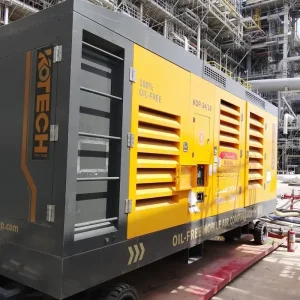
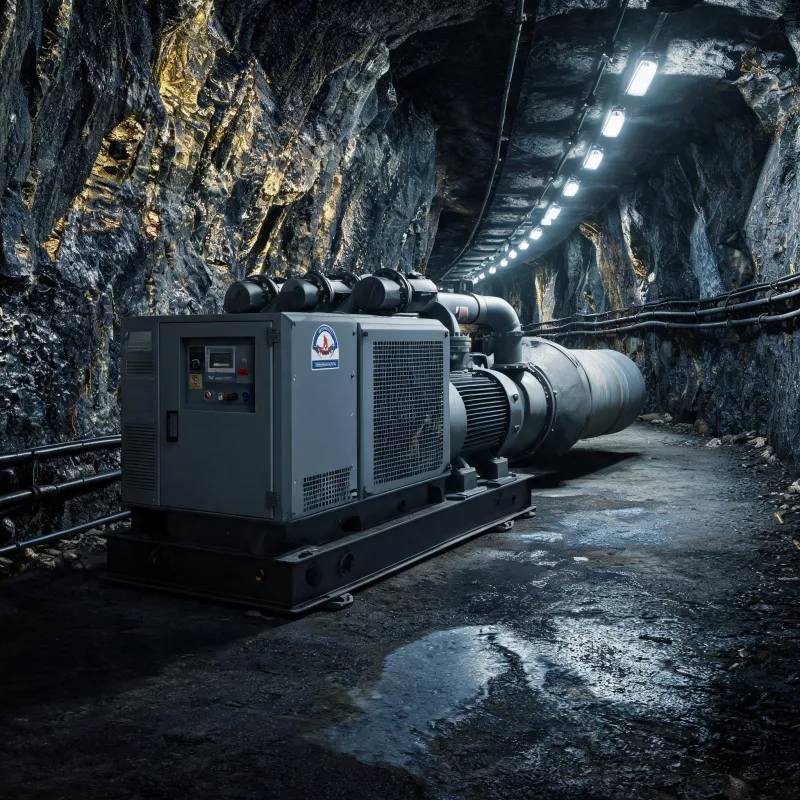
An oil-free compressed air system is non-negotiable for ventilation and methane extraction at 3000m deep South African gold mines. This system is not suitable for low-budget artisanal operations that cannot cover upfront and maintenance costs.
Applicable Safety & Compliance Standards
South African deep mining regulations and global best practice mandate zero oil carryover for any compressed air system used in methane extraction. Any contamination from lubricated compressors creates an ignition source in methane-rich air streams.
IEA 2024 data confirms gold mines deeper than 2500m have 4.2 times higher average methane emission rates than mines less than 1000m deep. At 3000m, the pressure and methane concentration are high enough that even trace oil contamination can trigger catastrophic ignition.
The South African Department of Mineral Resources (DMR) updated its mine ventilation standards in 2022 to require zero oil carryover for all methane extraction systems operating below 2000m. This aligns with global OSHA and IADC safety requirements for deep gaseous mining.
Common Compliance Violations & Risks
Another common violation is skipping quarterly oil carryover testing. Many mines assume new oil-free systems stay zero-oil indefinitely, but seal degradation can introduce contamination within 18 months of continuous operation.
This system does not eliminate all risk. It only reduces ignition risk to compliant levels when properly maintained.
On-Site Control & Mitigation Measures
Install continuous oil carryover sensors at the compressor outlet and the extraction line inlet.
Schedule quarterly third-party testing of air quality to confirm zero oil carryover. Keep all test records on-site and accessible to DMR inspectors at all times.
At 3000m depth, barometric pressure increases, so under-sizing will cause inconsistent extraction and trapped methane.
Documentation & Regulatory Acceptance
All new installations require a pre-acceptance test conducted by a DMR-accredited third party. The test report must include oil carryover measurements, airflow capacity, and pressure rating verified for 3000m depth operation.
Keep a digital log of all maintenance activities, sensor calibrations, and test results. DMR inspectors require 3 years of continuous records to validate ongoing compliance.
Annual third-party audits are mandatory for all systems operating below 2000m. Non-compliance results in an immediate suspension of mining operations until corrections are made.
Exception Approval Boundaries
Only two scenarios qualify for temporary exception from this requirement. Second, for temporary exploration drilling that lasts less than 30 days, with a dedicated ventilation bypass system.
No exceptions are granted for active production mines operating at 3000m depth. The risk of catastrophic explosion is too high to justify the cost savings of lubricated systems.
Common Myths
- Myth: New oil-free compressors never need oil carryover testing.
Fact: Seal degradation can introduce trace oil within 18 months of continuous operation.
- Myth: Lubricated compressors are acceptable if you change oil often.
Fact: Even new lubricated compressors produce small amounts of oil carryover that increase explosion risk.
- Myth: Exceptions are available for small production mines at 3000m.
Fact: No exceptions are granted for active production operations at this depth.
Glossary
- Oil carryover: Trace amounts of lubricating oil that exit the compressor with compressed air
- Methane extraction: Process of removing trapped methane from deep mine workings to reduce explosion risk
- Lower explosive limit: The minimum concentration of methane in air that can ignite
Compliance Notes
- Maintain 3 years of continuous test and maintenance records for inspections
- Complete annual third-party audits by DMR-accredited providers
- Install continuous oil carryover monitoring with automatic system shutdown