
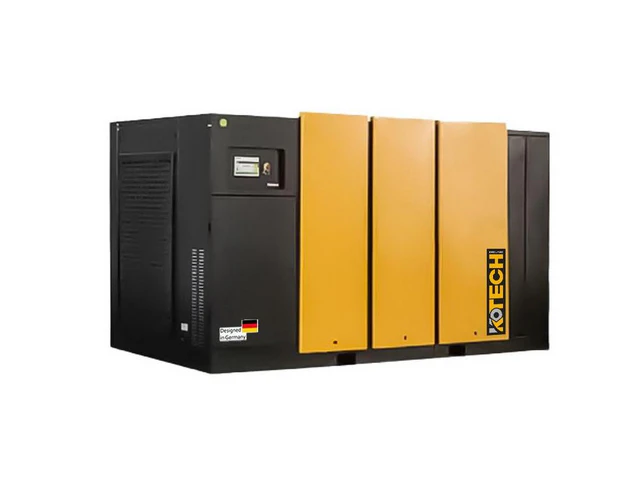
Cutting Your Mine's Air Compressor Energy Bill: The Definitive Guide
The Hard Truth: Mining’s Air Compressor Energy Drain
The energy bill for compressed air in a mining operation is often an eye-watering line item, frequently overlooked as a fixed cost of doing business. This mindset is outdated and expensive. We’re talking about a utility that can gobble up a significant chunk of your total electricity consumption. The good news? This isn’t a problem without solutions; it’s an opportunity for substantial savings.
The Numbers Don’t Lie: Industry Trends & Savings Potential
Let’s cut right to it: compressed air systems are notorious energy hogs. For a large-scale mining operation, that translates into millions of dollars annually. That’s real money that could be reinvested or contribute directly to your bottom line.
The potential for savings isn’t just theoretical. Modern Variable Speed Drive (VSD) compressors, for instance, offer significant efficiency gains. Most mining operations have highly fluctuating air demands, making VSD technology a clear winner. Beyond that, a more insidious drain is leakage. Identifying and fixing these leaks is low-hanging fruit for immediate savings.
Why Traditional Approaches Fall Short
Many mining sites still operate on a “run-to-failure” or reactive maintenance schedule for their air compressors. They buy the cheapest unit, run it until it breaks, then replace it. This approach ignores the total cost of ownership. The purchase price of a compressor is a fraction of its lifetime operating cost, with energy consuming the lion’s share. Sticking to fixed-speed compressors when demand fluctuates, failing to properly size systems, or neglecting regular maintenance are all common pitfalls that lead to enormous energy waste and unnecessary downtime. It’s a cycle of inefficiency that’s tough to break without a strategic shift.
When Energy Saving Doesn’t Pay Off: Boundary Conditions
While energy efficiency is almost always a good investment, there are specific scenarios where certain advanced solutions might not be the immediate priority. For example, a full heat recovery system for your compressed air might not make sense if your mine site has absolutely no use for the recovered heat – no adjacent buildings needing warmth, no process water preheating requirements, or no other thermal applications. In such cases, the ROI for heat recovery could be too extended to justify the upfront capital. The key is understanding your actual demand profile and potential for heat utilization before investing.
Actionable Strategies for Transformation
Transforming your mining air compressor system isn’t about throwing money at the problem; it’s about smart, strategic investments.
1. Conduct a Professional Compressed Air Audit
This is your starting point. A detailed audit by a qualified expert will identify leaks, pressure drops, improper sizing, artificial demand, and inefficient controls. It provides a baseline and a roadmap for targeted improvements. You can’t fix what you don’t measure.
2. Embrace Variable Speed Drive (VSD) Technology
They precisely match motor speed to demand, drastically reducing energy consumption during partial load conditions. This isn’t just about efficiency; it also reduces wear and tear, extending compressor lifespan.
3. Implement Smart Controls and Centralized Management
Moving beyond individual compressor controls to a master control system can orchestrate multiple compressors for optimal efficiency. These systems can manage pressure bands, sequence compressors, and even predict demand, preventing wasteful cycling and artificial demand. Integrating IoT sensors allows for real-time monitoring and data analysis, providing insights for continuous improvement and predictive maintenance.
4. Leverage Heat Recovery Systems
Instead of venting this heat, capture it. It can be used for space heating in offices or workshops, preheating boiler feedwater, or even warming process water. This turns a waste product into a valuable resource, further offsetting energy costs.
5. Optimize Air Treatment and Distribution
Often overlooked, inefficient dryers, filters, and undersized piping contribute to pressure drops and energy waste. Upgrading to modern, energy-efficient dryers (e.g., desiccant dryers with advanced controls or refrigerated dryers with VSD) and ensuring properly sized, leak-free piping minimizes pressure loss, allowing compressors to run at lower pressures and consume less energy.
6. Prioritize Leak Detection and Repair Program
As mentioned, leaks are a massive drain. Implement a regular leak detection program using ultrasonic leak detectors. Once identified, prioritize repairs. This is one of the quickest and most cost-effective ways to realize immediate energy savings.
7. Consider Energy-as-a-Service (EaaS) Models
For mines with high upfront capital constraints, EaaS models are gaining traction. Here, a third-party company installs, operates, and maintains the energy-efficient compressed air system, and you pay for the compressed air consumed, often at a lower rate than your previous costs. It shifts CapEx to OpEx and guarantees performance.
The Payoff: Beyond Just Energy Savings
Investing in these technologies and skills isn’t just about a lower electricity bill. It leads to increased system reliability, reduced downtime, lower maintenance costs, and a smaller carbon footprint – all critical factors for modern mining operations. The transformation isn’t just technological; it’s operational, cultural, and ultimately, financial.




