Optimizing Compressed Air for Mining Profitability
In mining, every piece of equipment carries immense weight, both literally and operationally. Industrial air compressors are no exception; they’re indispensable for everything from powering pneumatic tools and drilling rigs to ventilation and material handling. But let’s be honest, many operations treat them as an afterthought until something breaks. That’s a costly mistake. Our core conclusion here is simple: proactive, informed management of your compressed air systems is not just good practice; it’s a direct lever for operational efficiency and profitability.
Here are the key insights that should guide your strategy:
- Right-Sizing is Critical: Oversized or undersized units lead to wasted energy or insufficient power; a precise load assessment is non-negotiable.
- Sustainability is a Mandate: Environmental regulations and corporate responsibility demand lower carbon footprints, making energy-efficient compressed air systems a strategic investment.
The Unseen Costs: Why Your Current Setup is Leaking Profit
Many mining companies focus intensely on fuel for heavy machinery, but often overlook the substantial energy drain from their compressed air systems. It’s a silent killer of budgets.
The problem isn’t just the electricity bill. It’s also the ripple effect of inadequate air supply or unexpected failures. When a compressor goes down, it can bring an entire drilling operation to a grinding halt.
Navigating Modern Challenges: Efficiency & Sustainability Demands
The mining industry is under increasing pressure to operate more efficiently and sustainably. This isn’t just about optics; it’s about regulatory compliance and investor expectations. Modern compressed air technology offers significant pathways to meet these demands. Variable Speed Drive (VSD) compressors, for instance, adjust their motor speed to match air demand, drastically reducing energy consumption compared to traditional fixed-speed models that run at full power regardless of actual need.
Furthermore, heat recovery systems are gaining traction. They capture the waste heat generated by compressors and repurpose it for other mine site needs, such as heating water or buildings. This dual benefit reduces both energy consumption and carbon footprint, aligning with broader sustainability goals.
Beyond Horsepower: Selecting the Right Compressor Technology
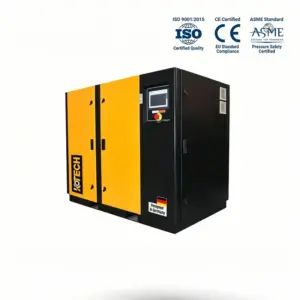
Choosing an industrial air compressor for mining isn’t just about the horsepower rating. It’s a complex decision influenced by air demand profiles, environmental conditions, and specific application requirements. For instance, underground mining operations often require oil-free compressors to prevent contamination of the air supply, a critical health and safety concern. Surface mining, while less restrictive on oil content, still benefits from robust, weather-resistant designs.
The type of compressor – rotary screw, reciprocating, or centrifugal – must align with the operation’s needs. Rotary screw compressors are workhorses for continuous, high-volume air demand, common in large-scale drilling or pneumatic conveying. Reciprocating compressors, on the other hand, might be better suited for intermittent, high-pressure applications. And for really massive, stable air demands, centrifugal compressors offer unparalleled efficiency.
Understanding Air Quality Requirements
Air quality is paramount, especially in sensitive mining applications. ISO 8573-1 standards define air purity classes for particulates, water, and oil. For general tools, Class 4 or 5 might suffice. But for critical processes like instrumentation or breathing air, Class 1 or 2 is often mandatory, requiring advanced filtration and drying systems like refrigerated or desiccant dryers. Over-specifying air quality is wasteful, but under-specifying can be disastrous.
Real-World Deployment: Best Practices & Pitfalls to Avoid
Once you’ve selected the right compressor, proper deployment and ongoing management are key. Here’s where the rubber meets the road. Regular leak detection and repair programs are non-negotiable. Using ultrasonic leak detectors can quickly identify these costly escapes.
Another area where operations often fall short is proper sizing of the compressor to the actual demand. An oversized compressor cycles on and off too frequently, leading to increased wear and tear and wasted energy during unloaded periods. An undersized unit, conversely, struggles to meet demand, causing pressure drops that hinder tool performance and slow down operations. A professional air audit, including data logging of demand profiles, is the only way to truly right-size your system. This isn’t just theory; it’s a fundamental principle we apply rigorously.
Boundary Conditions: When VSD Isn’t Always King
While Variable Speed Drive (VSD) compressors are often lauded for their energy-saving capabilities, they aren’t always the optimal choice. For operations with consistently high, stable air demand – such as a large-scale ventilation system running 24/7 at near full capacity – a fixed-speed unit might actually offer a lower upfront cost and a simpler maintenance profile, with minimal energy savings from a VSD in such a steady-state scenario. It’s about matching the technology to the application, not just chasing the latest trend.
Future-Proofing Your Investment: Maintenance & Monitoring Strategies
Predictive maintenance is rapidly becoming the gold standard in mining, and for good reason. Instead of waiting for a component to fail (reactive maintenance) or replacing parts on a fixed schedule (preventative maintenance), predictive strategies use real-time data to anticipate potential failures. This means monitoring vibration, temperature, pressure, and energy consumption, often through IoT-enabled sensors and cloud-based analytics platforms.
Implementing a robust predictive maintenance program for your compressed air systems can significantly extend equipment lifespan, reduce unexpected downtime, and optimize maintenance scheduling. For example, detecting an abnormal vibration signature can indicate an impending bearing failure, allowing for a planned replacement during a scheduled shutdown rather than a catastrophic, unplanned halt.
Leveraging Digital Tools for Performance
Modern compressor systems often come with integrated control panels that offer detailed operational data. It empowers maintenance teams to move from guesswork to data-driven decisions, a shift that is critical for sustained operational excellence in mining.