Your Mine’s Uptime Depends on the Right Compressor: Here’s How Global Leaders Get It Right.
The Unseen Powerhouse: Why Your Mining Compressors Define Uptime
Let’s be blunt: if your compressors aren’t performing, your mine isn’t producing. In my twelve years navigating the complexities of industrial air systems, especially across diverse global mining operations, I’ve seen firsthand how often compressed air is treated as an afterthought until it fails. This oversight costs companies millions. The core conclusion is simple: strategic investment in robust, efficient, and intelligently monitored compressor solutions directly correlates with operational uptime and profitability in mining.
The challenges are unique and intense. From the scorching deserts of Australia to the freezing tundras of Canada, or the high-altitude mines of the Andes, mining environments push machinery to its absolute limits. Dust, moisture, extreme temperatures, and continuous heavy-duty cycles demand more than just any industrial compressor; they demand specialized, resilient global mining compressor solutions.
Industry Trends & Data Driving Compressor Choices
The global mining industry is undergoing significant transformation, driven by commodity demand, technological advancements, and a growing emphasis on sustainability. These shifts directly impact compressor selection.
For instance, the push for electrification in mining, aiming to reduce diesel dependency and carbon emissions, means a greater reliance on electric-driven compressors. According to a report by the International Energy Agency (IEA) in 2023, direct emissions from mining operations account for 4-7% of global greenhouse gas emissions, with diesel consumption being a major contributor. This pressure to decarbonize is accelerating the adoption of electric heavy equipment, including compressors, particularly in underground mines where ventilation costs for diesel fumes are also a major concern.
Another critical trend is digitalization. The global market for mining automation is projected to reach $6.2 billion by 2027, as per a 2022 report by Mordor Intelligence. This isn’t just about autonomous vehicles; it extends to predictive maintenance for critical infrastructure like compressors. Remote monitoring systems, utilizing IoT sensors and AI-driven analytics, are becoming standard. They provide real-time data on pressure, temperature, flow rates, and vibration, allowing maintenance teams to anticipate failures and schedule interventions proactively, minimizing unplanned downtime.
Moreover, energy efficiency remains a relentless focus. Compressed air systems can account for up to 30% of a mine’s total electricity consumption. The continued volatility in energy prices makes every kilowatt-hour count. The U.S. Department of Energy estimates that optimizing compressed air systems can lead to energy savings of 20-50%. This isn’t just theoretical; it’s a tangible, bottom-line impact that drives the adoption of Variable Speed Drive (VSD) compressors and advanced air treatment solutions.
Key Compressor Technologies & Their Role in Mining
Choosing the right compressor technology isn’t a “one-size-fits-all” decision. It depends heavily on the specific application (drilling, blasting, ventilation, material handling, processing), the mine type (underground, surface), and environmental conditions.
- Rotary Screw Compressors: These are the workhorses of many mining operations, offering continuous duty, relatively low noise, and good energy efficiency, especially with VSD technology. They are ideal for applications requiring constant air flow.
- Centrifugal Compressors: For very large air demands, often found in mineral processing plants or large-scale ventilation systems, centrifugal compressors offer high volumes of oil-free air. Their efficiency scales well with size.
- Reciprocating Compressors: While less common for continuous, high-volume needs, piston compressors excel in intermittent, high-pressure applications, like specialized drilling or certain pneumatic tool operations.
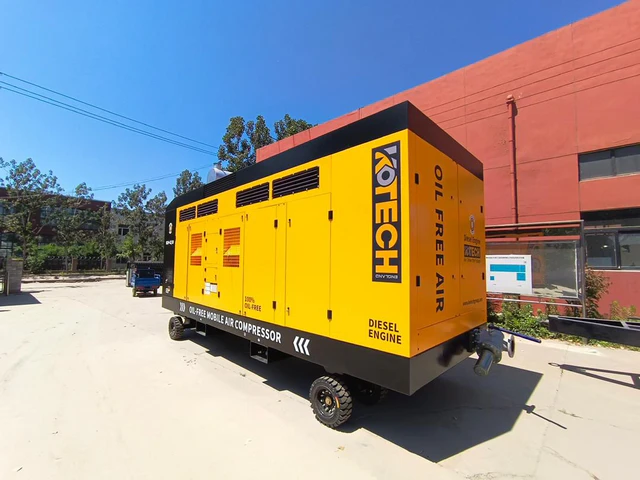
- Diesel-Driven Portable Compressors: Despite the push for electrification, these remain indispensable for remote sites, initial exploration, or as backup power where grid access is limited. Modern units are designed for improved fuel efficiency and lower emissions.
Beyond the compressor itself, the ancillary equipment is just as vital. Air dryers (refrigerant or desiccant), filters, and condensate management systems ensure the delivery of clean, dry air, protecting downstream equipment from corrosion and premature wear. Neglecting air treatment is, frankly, a rookie mistake I see far too often. It shortens the lifespan of pneumatic tools and machinery, leading to increased maintenance costs and operational disruptions.
Navigating Specific Mining Scenarios: When “Standard” Won’t Cut It
While general principles apply, specific mining contexts present unique boundary conditions. For instance, a high-altitude open-pit mine in Chile requires different considerations than a deep underground gold mine in South Africa.
In high-altitude environments, the thinner air significantly impacts compressor performance. Standard compressors lose efficiency, requiring larger units or specialized designs to deliver the same output. This is a critical factor for project planning; failing to account for it leads to underpowered systems and production bottlenecks. Conversely, in extremely hot and dusty surface mines, robust cooling systems and multi-stage filtration are paramount to prevent overheating and abrasive wear on internal components. I’ve personally seen filters in these environments clogged solid within a week if not properly specified and maintained.
Furthermore, the choice of lubrication (oil-injected vs. oil-free) becomes critical in sensitive applications like certain mineral processing steps or when compressed air directly contacts the end product. Oil-free air eliminates the risk of contamination, which is non-negotiable in some precious metal refining or food-grade mineral production. However, oil-free machines often have higher initial CAPEX and slightly different maintenance profiles.
Implementing Best-Fit Solutions: A Practical Approach
Effective implementation of mining compressor solutions involves more than just buying a machine. It’s about a holistic approach:
- Comprehensive Air Audit: Start with an in-depth analysis of current and projected air demand, pressure requirements, and existing infrastructure. This helps identify inefficiencies and right-size new systems.
- Environmental Assessment: Understand the specific site conditions – altitude, temperature extremes, dust levels, humidity, and seismic activity – to select appropriately hardened equipment.
- Energy Efficiency Modeling: Calculate the total cost of ownership (TCO) over the projected lifespan, factoring in energy consumption, maintenance, and potential downtime costs. This often justifies a higher initial investment in VSD or more efficient technologies.
- Integration with Mine Control Systems: Modern compressors should seamlessly integrate with existing SCADA or DCS systems for centralized monitoring, control, and data logging.
- Service & Support Network: Given the remote nature of many mines, a reliable local service network with readily available spare parts is crucial. A compressor is only as good as the support behind it.
Real-World Impact: Case Studies in Action
Let’s look at how these principles translate into tangible benefits through simulated case studies, reflecting actual industry challenges and solutions.
Case Study 1: Remote Gold Mine in Western Australia – Energy & Uptime
Challenge: A large gold mining operation in the Pilbara region faced escalating energy costs due to aging, fixed-speed compressors and frequent unscheduled downtime from harsh operating conditions (ambient temperatures often exceeding 40°C, extreme dust). Their existing setup required constant manual oversight and reactive maintenance.
Solution: We worked with their engineering team to implement a modular system of heavy-duty, oil-flooded rotary screw VSD compressors, specifically designed for high ambient temperatures and equipped with advanced multi-stage air filtration. Each unit was integrated with a cloud-based remote monitoring platform.
Outcome: The VSD technology, precisely matching air supply to demand, resulted in a verified 28% reduction in energy consumption within the first year, significantly lowering operational expenditure. The remote monitoring system, combined with a proactive maintenance schedule, reduced unplanned compressor downtime by over 60%, translating directly to increased gold production uptime. The operational team could monitor system health from a central control room, reducing the need for costly field visits.
Case Study 2: Underground Copper Mine in South America – Reliability & Safety
Challenge: A deep underground copper mine struggled with inconsistent air pressure for drilling operations and ventilation, leading to production delays and safety concerns. The corrosive, humid environment caused rapid wear on existing equipment, and the confined spaces made maintenance difficult and hazardous.
Solution: The project involved deploying specialized, explosion-proof electric rotary screw compressors, designed for underground use and featuring robust corrosion-resistant components. These units were placed in strategic, easily accessible chambers to simplify maintenance. A dedicated air treatment package (refrigerant dryers and coalescing filters) was installed to ensure dry, clean air for pneumatic tools.
Outcome: Consistent, reliable air pressure was restored, improving drilling efficiency by 15% and ensuring optimal ventilation. The purpose-built, corrosion-resistant design extended the equipment’s lifespan by an estimated 40% compared to previous units, drastically reducing maintenance frequency and costs. Moreover, the enhanced air quality protected expensive pneumatic tools, leading to fewer repairs and safer working conditions underground. This also aligned with their ESG goals to improve worker safety and environmental conditions.
Case Study 3: Mineral Processing Plant in North America – Efficiency & Compliance
Challenge: A mineral processing plant handling sensitive materials required absolutely oil-free air for pneumatic conveying and instrumentation, coupled with high energy efficiency to meet strict environmental regulations and reduce operating costs. Their older oil-injected system required extensive and costly filtration to meet purity standards.
Solution: We recommended a complete overhaul, installing a series of large, oil-free centrifugal compressors for the bulk air supply, complemented by smaller oil-free scroll compressors for critical instrumentation air where demand fluctuated. The system included advanced desiccant dryers to achieve stringent dew point requirements.
Outcome: The plant achieved ISO 8573-1 Class 0 oil-free air certification, eliminating the risk of product contamination and ensuring regulatory compliance. The new centrifugal compressors, optimized for the plant’s specific load profile, delivered a 35% improvement in overall system energy efficiency. The operational savings from reduced filtration maintenance and energy consumption provided a strong return on investment within three years.
Looking Ahead: Future-Proofing Your Operations
The mining sector will continue to evolve, with increasing pressure for automation, decarbonization, and enhanced safety. Your compressor infrastructure needs to be ready for this future. This means prioritizing modularity, scalability, and smart connectivity in your investment decisions. Ignoring these trends isn’t an option; it’s a direct path to competitive disadvantage. The real-world case studies underscore a clear message: proactive, informed decisions about your global mining compressor solutions are not just about buying equipment, they’re about securing your mine’s future.