Mastering Air Compression for Oil & Gas Drilling Success
Key Insights:
- Unreliable air compression is a top driver of costly downtime on drilling rigs. Investing in robust, fit-for-purpose solutions is non-negotiable for operational continuity.
- Variable Speed Drive (VSD) compressors offer significant energy savings, particularly in applications with fluctuating air demand, a common scenario in drilling and well services.
- The choice between electric and diesel-driven units hinges on site power availability and environmental regulations, with electric options gaining traction where grid access is feasible.
- Proactive maintenance and remote monitoring are essential to mitigate risks and extend equipment lifespan in extreme oil and gas environments.
- Specialized air quality requirements (e.g., instrument air) demand dedicated filtration and drying systems to protect sensitive rig instrumentation.
The Unseen Powerhouse: Why Air Compressors Make or Break Drilling Operations
For anyone who’s spent time on a rig, you know that reliable air isn’t a luxury; it’s fundamental. From pneumatic tools and mud logging to air drilling and instrument air, compressed air systems power countless critical functions. A failure here doesn’t just slow things down; it can halt an entire operation, leading to astronomical costs. The core judgment? Compromising on air compression is a direct path to operational headaches and budget overruns.
The challenges are immense. Remote locations, extreme temperatures, corrosive atmospheres, and the relentless demand for uptime push equipment to its limits. This isn’t just about moving air; it’s about delivering consistent, high-quality air under duress, protecting sensitive equipment, and ensuring personnel safety.
Industry Trends & The Cost of Compromise
The oil and gas sector continues to navigate complex market dynamics, pushing for greater efficiency and reliability. This growth underscores the ongoing demand for advanced, resilient solutions.
However, the true cost of an inadequate air compressor solution often goes unnoticed until it’s too late. When we talk about air compressors, we’re really talking about risk mitigation and profit protection.
Another key trend is the increasing focus on environmental compliance. Stricter regulations on emissions and noise mean that older, less efficient diesel-driven units are being scrutinized. Operators are actively seeking solutions that offer a smaller environmental footprint without sacrificing power or reliability.
Decoding Air Compressor Types for Drilling Applications
Choosing the right air compressor for a drilling rig or wellsite involves more than just horsepower. It’s about matching technology to the specific application, environment, and operational demands.
Rotary Screw Compressors: The Workhorses of the Rig
Rotary screw compressors are dominant in the oil and gas industry due to their continuous duty cycle, relatively compact footprint, and robust design. They are excellent for providing utility air for pneumatic tools, general rig operations, and even some air drilling applications. Their simplicity and reliability make them a go-to choice.
Reciprocating Compressors: High Pressure, Specific Needs
When high pressure is the primary requirement, reciprocating (piston) compressors often step in. These units are crucial for specialized tasks like air drilling, where pressures can reach 350-1000 psi or more, or for nitrogen generation. While they might require more maintenance than rotary screws, their ability to deliver extreme pressures is unmatched for certain applications.
Centrifugal Compressors: For Large-Scale & Instrument Air
Centrifugal compressors are typically reserved for very large air volumes, often seen in gas processing plants or larger well service operations. They are highly efficient when operating at full load but can be less efficient with fluctuating demand. They also play a role in providing instrument air, where absolutely oil-free air is critical for sensitive controls and instrumentation.
Variable Speed Drive (VSD) Technology: A Game Changer
Traditional compressors operate at a fixed speed, consuming full power even when air demand is low. VSD compressors, by contrast, adjust their motor speed to match the exact air demand, leading to substantial energy savings.
For drilling rigs, where air demand can fluctuate wildly depending on the drilling phase, VSD units offer not only energy efficiency but also better pressure control, reducing wear and tear on the system.
Electric vs. Diesel: Powering Your Operations
The power source for your compressor is a critical decision.
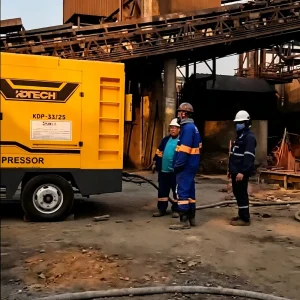
- Diesel-Driven Compressors: These remain the standard for remote drilling sites where grid power is unavailable or unreliable. They offer unparalleled mobility and self-sufficiency. However, they come with higher fuel costs, increased emissions, and more complex maintenance requirements.
While electric compressors offer significant environmental benefits, their adoption is limited in truly remote areas without reliable grid access, often necessitating diesel-driven units as the only viable option. Similarly, smaller, shallower well operations might find the upfront investment in advanced VSD systems less justifiable if their power grid is unstable or fuel costs are exceptionally low, making a robust fixed-speed diesel unit a more pragmatic choice.
Critical Considerations for Optimal Compressor Selection & Deployment
Selecting the right air compressor solution for your drilling rig or well isn’t a one-size-fits-all proposition.
Environmental Fortification
Drilling environments are harsh. Compressors need heavy-duty enclosures, specialized filtration for dust and corrosive gases, and robust cooling systems to handle extreme temperatures. Offshore rigs demand marine-grade coatings and explosion-proof components.
Air Quality & Treatment
Not all air is created equal. Instrument air, vital for pneumatic controls and sensitive sensors, requires stringent filtration and drying to remove moisture and oil contaminants. This often involves coalescing filters, particulate filters, and desiccant or refrigerated dryers. Utility air for tools might have less strict requirements, but clean, dry air always extends equipment life.
Redundancy and Reliability
Uptime is paramount. Many operations opt for redundant compressor systems or at least a robust backup unit. A modular, containerized approach allows for quick deployment and easier maintenance or replacement, minimizing downtime.
Maintenance & Serviceability
Ease of maintenance is a huge factor. Access to critical components, availability of spare parts, and a strong service network are crucial. Remote monitoring systems are becoming standard, allowing operators to track performance, predict maintenance needs, and diagnose issues from afar, preventing minor glitches from becoming major breakdowns.
The Path Forward: Smart Air Compression for Future Drilling
As the oil and gas industry continues to evolve, so too must its supporting technologies. The demand for more efficient, environmentally friendly, and reliable air compressor solutions will only intensify. Integrating advanced analytics, predictive maintenance, and remote operation capabilities will be key to unlocking maximum value from these essential assets.
Ultimately, success in drilling and well services hinges on a comprehensive understanding of your air compression needs, a commitment to quality equipment, and a proactive approach to maintenance. It’s about ensuring the unseen powerhouse performs flawlessly, every single time.