
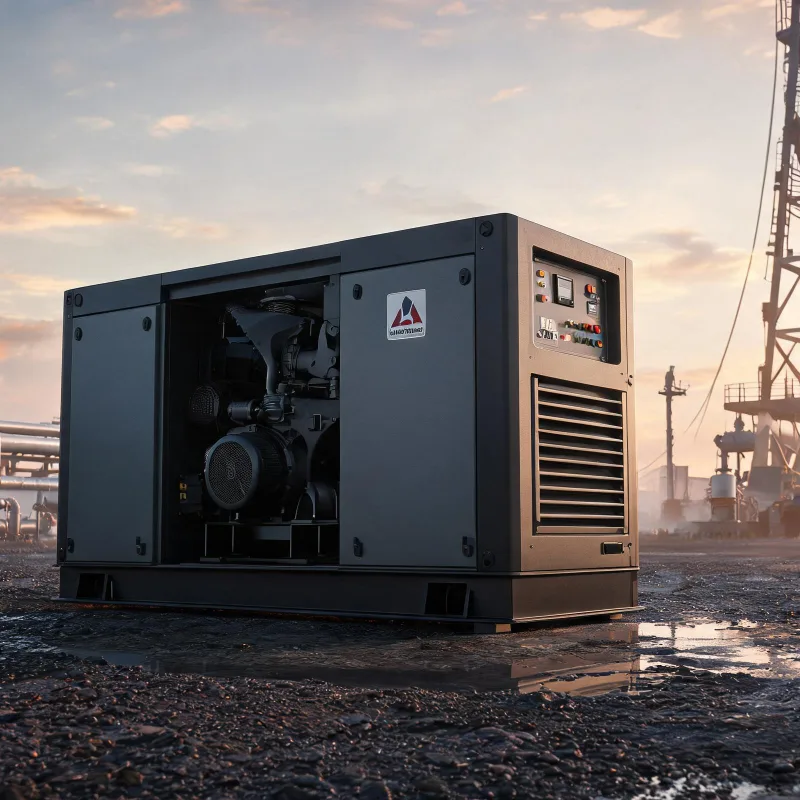
Core Compressed Air Uses for Oil and Gas Facilities
Key Insights:
- Untreated compressed air does not meet OSHA standards for worker breathing air
- New EPA 2024 rules will cut 1.3 Bcf of annual methane emissions from compressed air system leaks
Compressed air is an essential utility for nearly every oil and gas facility, powering most critical day-to-day processes.
Core Operational Applications
Pneumatic Instrumentation and Control Valves
Most automated control systems for flow, pressure and temperature regulation rely on pneumatic actuators. Unlike electronic alternatives, pneumatic devices work reliably in explosive, high-temperature hazardous environments where electronics face failure risk.
Drilling and Well Completion
Air drilling uses compressed air to power downhole tools and circulate cuttings out of wellbores for both onshore and offshore operations. It also supports coiled tubing work and well intervention, powering pull-down forces and tool positioning.
On-Site Nitrogen Generation
Most on-site membrane nitrogen generators use filtered compressed air as a feedstock to produce low-cost nitrogen for pipeline purging, storage blanketing and well abandonment. This eliminates the need for delivered liquid nitrogen, cutting logistics costs for remote sites.
Boundary Conditions: When Compressed Air Is Not Suitable
Not every use case at an oil and gas facility is appropriate for standard compressed air. OSHA requires Grade D breathing air for these applications. Standard process compressed air almost always contains trace hydrocarbons, oil carryover and carbon monoxide that exceed legal exposure limits. Only when compressed air goes through multi-stage filtration, carbon adsorption and continuous monitoring does it meet OSHA requirements for breathing use.
Current Trends Shaping Compressed Air Use
The EPA 2024 revised leak reduction rules require facilities to repair leaks in compressed air systems connected to natural gas-pressurized processes.
Actionable Best Practices
Install dryers and filtration matched to your most demanding application: pneumatic instrumentation requires a -40°F pressure dew point to prevent ice clogging in cold climates. Schedule quarterly leak inspections. Even a 1/4 inch leak can waste more than 100,000 cubic feet of compressed air per year. All equipment installed in hazardous areas must carry the proper Class I Division 2 rating to avoid ignition risk.
Common Myths
- Myth: Untreated compressed air can be used for breathing air
- Fact: Only multi-stage treated air meets OSHA safety standards
- Myth: All compressors work for every oil and gas application
- Fact: Off-grid sites need different power than connected facilities
Use Cases
- Upstream: Well drilling, pneumatic control, well intervention
- Midstream: Pipeline purging, gas processing, valve actuation
- Downstream: Refining process control, blanketing, nitrogen generation
Buyer Guide
- Match compressor type to your on-site power access
- Size for future expansion to avoid premature replacement
- Select filtration based on your most demanding application
- Choose units rated for Class I Division 2 hazardous areas




