
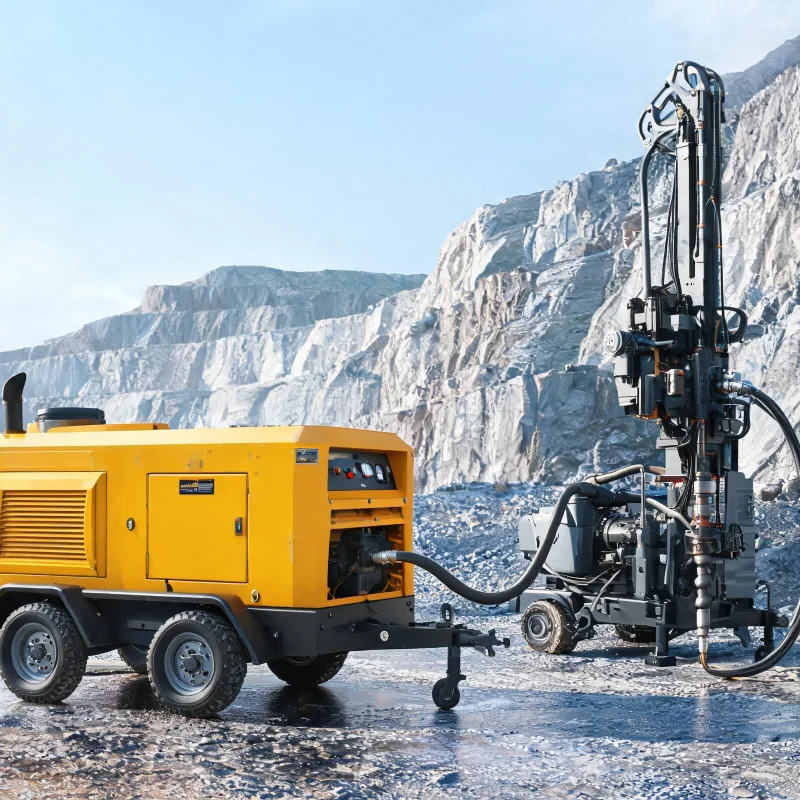
Only fit this equipment for remote, mobile blast hole drilling operations. It is not a universal solution, but it outperforms alternatives when team needs are aligned early.
When to Avoid This Compressor Type
This type of compressor is not suitable for fixed, permanent blast hole drilling rigs connected to stable grid power. It also does not make financial sense for small-scale mining operations with annual production under 100,000 tons of ore.
If your site is within 1 mile of a reliable grid connection, a stationary electric unit will almost always deliver lower long-term energy and maintenance costs. Stick to that option instead of investing in a mobile diesel unit.
Cross-Stakeholder Target Conflicts
Every mining blast hole drilling project has three core stakeholder groups with competing priorities. Frontline drill crews need enough pressure and flow to handle hard rock drilling at varying depths. Maintenance teams need easy access to parts and simple service intervals to cut unplanned downtime. Procurement managers need to hit initial budget targets and keep total cost of ownership low.
No single compressor checks every box for every group, so you have to separate non-negotiables from nice-to-haves early.
Non-Negotiable Hard Metrics per Role
Each role has hard requirements that cannot be compromised on without risking project failure. For drill crews, the non-negotiable is a minimum 250 psi operating pressure to clear blast hole cuttings efficiently at depths over 15 meters. This is not a random number: most hard rock blast drilling operations require this pressure threshold to avoid re-drilling.
For maintenance teams, the non-negotiable is accessible routine service points and a local parts distributor within 24 hours of the site.
For procurement teams, the non-negotiable is meeting the 10-year total cost of ownership cap set for the project.
Common Negotiable Tradeoffs
Once non-negotiables are locked, most other requirements are open to compromise. A drill crew may accept a slightly smaller tank if the unit meets pressure and flow requirements and can be refueled on-site during shift breaks.
Maintenance teams may accept a slightly heavier unit if it has standardized engine parts that are already kept in the site’s parts inventory.
Unified Acceptance Checkpoints
Align all stakeholders on a short list of acceptance checks before the unit arrives on site. First, test operating pressure at maximum drilling depth to confirm it meets drill crew requirements. Second, run a 4-hour full load test to confirm fuel efficiency matches the vendor’s specification for procurement. Third, complete a routine 100-hour service mock-up to confirm service accessibility for maintenance.
All three checks must pass before you sign off on delivery. This avoids post-purchase arguments that delay project startup.
Practical Communication Talking Points
Frame tradeoffs around shared project goals to reduce friction. When talking to procurement about a slightly higher upfront cost, tie it to avoided downtime costs that the team already agrees on. When talking to drill crews about a smaller tank, frame it around faster mobilization between drill sites that cuts non-drilling time per shift.
This keeps the conversation focused on project success rather than individual role preferences.
ROI Notes
The upfront investment in alignment pays for itself within the first 12 months of operation.




