
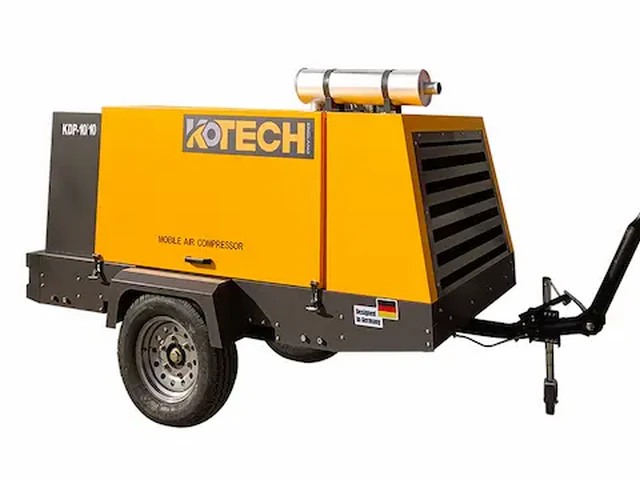
Unlocking Efficiency: Intelligent Monitoring in Mining Air Compressor Design
In the challenging world of mining, where every minute of downtime costs serious money, the traditional “run-to-failure” approach for air compressors is simply unsustainable. We’re talking about machines that are the lungs of an operation, powering everything from drilling rigs to ventilation systems. The stakes are high, and the demand for maximum uptime is relentless. That’s why an Intelligent Monitoring Mining Air Compressor System Design isn’t a luxury; it’s fundamental to competitive operations.
Here are the key insights:
- Drastically Reduce Unscheduled Downtime: Real-time data and predictive analytics shift maintenance from reactive to proactive, preventing costly failures.
- Optimize Energy Consumption: Smart systems identify inefficiencies, leading to significant power savings, a major operational expense.
- Enhance Safety and Compliance: Continuous monitoring identifies potential hazards before they escalate, improving workplace safety and regulatory adherence.
- Lower Total Cost of Ownership (TCO): Predictive maintenance extends asset life, reduces spare parts inventory, and minimizes labor costs.
- Boost Operational Visibility: Centralized data platforms provide a holistic view of compressor health across multiple sites, enabling informed decision-making.
The Imperative for Smart Mining Air Compressor Systems
Let’s be blunt: if you’re still relying solely on scheduled maintenance or waiting for a compressor to break down before you act, you’re leaving money on the table. Mining operations are inherently harsh environments – dust, extreme temperatures, heavy loads. These conditions accelerate wear and tear on critical equipment like air compressors. Unscheduled downtime isn’t just an inconvenience; it can halt production, jeopardizing contracts and profitability. An intelligent monitoring system directly addresses this by providing the foresight to intervene before minor issues become catastrophic failures. It’s about operational resilience.
Quantifying the ROI: Data-Driven Insights for Mining Operations
The business case for intelligent monitoring is compelling, backed by hard numbers. Implementing these systems isn’t just about feeling good; it’s about significant financial returns.
For mining, where equipment is often remote and highly specialized, these percentages translate into millions of dollars annually.
Furthermore, air compressors are notorious energy hogs. Intelligent monitoring, through optimized load management and early leak detection, can slash this consumption significantly.
Anatomy of an Intelligent Monitoring System
Designing an intelligent monitoring system for mining air compressors involves several interconnected components. It starts at the machine level with robust sensor technology. We’re talking about vibration sensors, temperature probes, pressure transducers, flow meters, and current/voltage monitors. These aren’t your typical off-the-shelf sensors; they need to be industrial-grade, often intrinsically safe, and capable of withstanding the rugged mining environment.
Next comes data acquisition and connectivity. This is where Industrial IoT (IIoT) comes into play.
The analytics engine sifts through terabytes of data, identifying anomalies, predicting potential failures, and optimizing operational parameters. This isn’t just threshold alarming; it’s about recognizing subtle patterns that indicate impending issues, like a slight increase in bearing temperature coupled with specific vibration frequencies. Finally, the system includes a user-friendly Human-Machine Interface (HMI) or dashboard, accessible via web or mobile apps, providing operators and managers with actionable insights, alerts, and detailed performance reports. This integrated approach ensures comprehensive oversight.
Real-World Considerations and When Intelligence Falls Short
While the benefits are clear, implementing intelligent monitoring isn’t a silver bullet for every scenario. One significant boundary condition is the age and existing infrastructure of your compressor fleet. Retrofitting older, purely mechanical compressors with a full suite of IIoT sensors and connectivity can be prohibitively expensive, sometimes nearing the cost of a new, smart-enabled unit. In such cases, a phased approach focusing on critical parameters or replacing end-of-life assets with intelligent models might be more pragmatic.
Another factor is data security. Only when a comprehensive security framework is in place should you consider full-scale deployment. Furthermore, the success of these systems hinges on the quality of data and the expertise to interpret it. A sophisticated system generating volumes of alerts without skilled personnel to act on them is just noise. It requires an investment in both technology and talent.
Implementing Intelligent Monitoring: A Practical Roadmap
Rolling out an intelligent monitoring system requires careful planning. Based on our experience, here’s a practical roadmap:
- Assess Your Current Fleet and Pain Points: Identify which compressors are most critical, have the highest failure rates, or consume the most energy. This helps prioritize deployment and target the biggest opportunities for improvement.
- Define Clear Objectives and KPIs: What are you trying to achieve? Reduce unscheduled downtime by X%? Improve energy efficiency by Y%? Specific, measurable goals are crucial for demonstrating ROI.
- Select the Right Technology Partner: Look for vendors with proven experience in mining and industrial IoT. Their solutions should be scalable, secure, and integrate well with existing operational technology (OT) systems.
- Start Small, Scale Smart: Pilot the system on a few critical compressors. This allows you to fine-tune the technology, train your team, and demonstrate early wins before a wider rollout.
- Ongoing Training and Adaptation: Technology evolves, and so should your team’s skills. Continuous training ensures your personnel can leverage the system’s full potential.
By following these steps, mining operations can strategically transition from reactive maintenance to a highly efficient, predictive model. This not only safeguards your assets but fundamentally changes how you manage your compressed air infrastructure, turning it into a competitive advantage.




