Optimizing Open-Pit Mining with Integrated Air Compressor Systems
- Reduced Total Cost of Ownership (TCO): Integrated systems cut down on installation, maintenance, and energy expenditures significantly over the equipment lifecycle.
- Enhanced Operational Uptime & Reliability: Cohesive design minimizes system failures and streamlines diagnostics, keeping critical mining processes running.
- Improved Site Safety: Fewer connection points and automated controls reduce human intervention, lowering accident risks in harsh environments.
- Optimized Energy Efficiency: Smart controls and precise sizing of components lead to substantial power savings, directly impacting profitability.
- Simplified Compliance & Scalability: Modern integrated units often meet stringent environmental regulations and offer easier expansion for future mine development.
The Undeniable Shift: Why Integrated Systems are Now Standard
In open-pit mining, the right air compressor system isn’t just equipment; it’s a strategic asset. Integrated solutions are now non-negotiable for operational efficiency and cost control, directly impacting mine profitability and safety. The days of piecemealing separate components are largely behind us. Modern mining demands a holistic approach to compressed air.
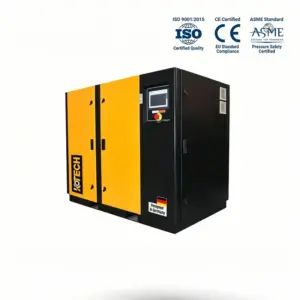
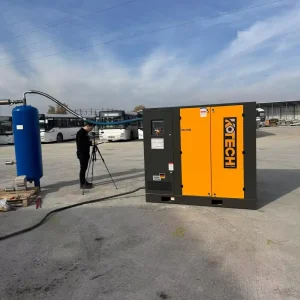
For years, mine managers wrestled with disparate air compressors, dryers, filters, and control units. This patchwork approach led to excessive energy waste, frequent maintenance headaches, and significant operational downtimes. Today, the industry has largely converged on integrated air compressor systems as the superior model. These systems combine multiple components—compressor, air receiver, dryer, and filtration—into a single, compact package, often housed within a robust, weather-resistant enclosure. This design philosophy directly addresses the brutal demands of an open-pit environment, from extreme temperatures to dust and corrosive elements.
Quantifying the Advantage: Hard Data & ROI
The move towards integrated systems isn’t driven by trend alone; it’s backed by compelling economic arguments. The initial capital outlay for an integrated system might seem higher compared to individual components. However, the long-term total cost of ownership (TCO) tells a different story.
Downtime is a mine killer. Every hour a drill isn’t running or a pneumatic tool is idle translates directly into lost production and revenue. Integrated compressor systems significantly mitigate this risk by offering factory-tested compatibility, fewer leak points, and centralized control systems that simplify troubleshooting and predictive maintenance.
Furthermore, energy consumption is a major operational expense for any mine. Integrated systems, often equipped with variable speed drives (VSDs) and intelligent controls, precisely match air supply to demand, eliminating wasteful idling and pressure drops common in older, less sophisticated setups. This translates directly to significant savings on electricity bills, a critical factor given fluctuating energy prices.
Beyond the Basics: Operational Efficiencies & Safety Gains
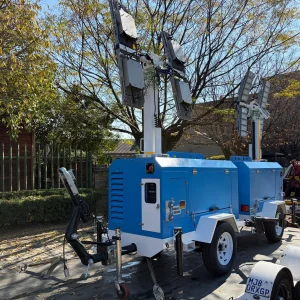
Beyond the financial benefits, integrated compressor solutions offer substantial operational and safety improvements. Their compact footprint is a major advantage in open-pit environments where space, especially near active benches or processing plants, is at a premium. These units are often skid-mounted or containerized, allowing for easy relocation as mining phases change. This mobility ensures that compressed air is always available where and when it’s needed most, whether for drilling rigs, pneumatic tools, or processing equipment.
Safety is paramount in mining. Integrated systems, with fewer external pipes and cables, reduce trip hazards and potential leak points. Centralized control panels simplify operation and monitoring, minimizing the need for personnel to interact with individual components in potentially hazardous areas. The robust enclosures also protect internal components from harsh weather and physical damage, further enhancing reliability and safety. The reduction of manual interventions for system checks and adjustments is a critical safety benefit.
When Integration Isn’t the Silver Bullet: Boundary Conditions
While integrated air compressor systems offer compelling advantages, they aren’t a universal panacea. For very small, highly intermittent operations with minimal compressed air demands, or in specific niche applications where extremely specialized, isolated components are required for a unique process, a modular, non-integrated approach might still be more cost-effective. For instance, a small exploration site that only needs a portable diesel compressor for occasional rock sampling might find an integrated package overkill. Similarly, if an existing mine has a highly specialized, custom-built pneumatic system already in place and performing optimally, the cost of ripping and replacing it with an integrated solution might not yield sufficient ROI. Integration truly shines in medium to large-scale, continuous open-pit operations where reliability, efficiency, and scalability are critical drivers.
Implementing a Robust System: Practical Steps
Adopting an integrated air compressor system requires careful planning.
Assess Your Actual Air Demand
Don’t guess. Conduct a thorough air audit to determine your peak and average air consumption (CFM or m³/min) and required pressure (PSI or bar). Oversizing leads to wasted energy, while undersizing causes pressure drops and productivity losses. This step is foundational.
Consider Environmental Factors
Open-pit mines are brutal. Evaluate ambient temperatures, dust levels, altitude, and potential for corrosive elements. Your system needs to be engineered to withstand these conditions. Look for heavy-duty enclosures, specialized filtration, and appropriate cooling systems.
Prioritize Aftermarket Support & Service
Even the best integrated system will eventually require maintenance. Choose a supplier with a strong local presence, readily available spare parts, and skilled technicians familiar with mining environments. Downtime waiting for a part or a tech is simply unacceptable.
Integrate with Existing Infrastructure
Ensure the new system can seamlessly connect with your mine’s existing power grid, control systems, and air distribution network. Modern integrated units often come with advanced communication protocols (e.g., Modbus, Ethernet/IP) for easy integration into a central SCADA system.
Evaluate Energy Recovery Options
Many integrated systems offer heat recovery options, which can capture waste heat and repurpose it for other mine processes, such as heating water for wash plants or warming buildings. This can provide additional energy savings and further reduce your operational footprint.