
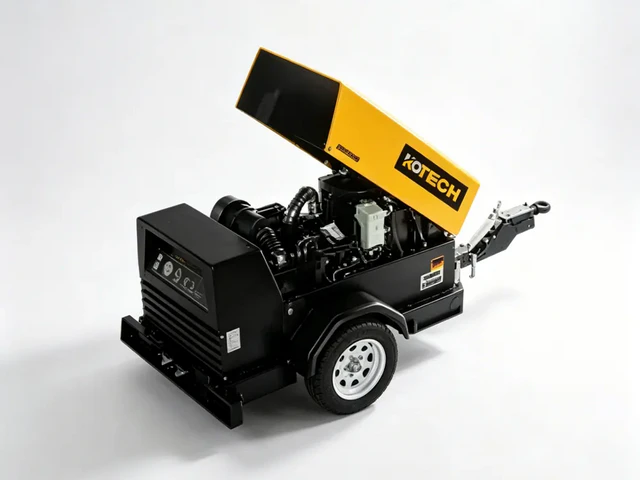
Optimizing Offshore Operations with Two-Stage Air Compressors
**Key Insights for Offshore & Marine Air Compression:**
- **Superior Efficiency:** Two-stage compressors deliver significantly more compressed air per unit of energy, crucial for reducing operational expenditure on energy-intensive offshore platforms.
- **Enhanced Durability:** Designed to handle higher pressure ratios with less stress on components, they ensure longer service life in corrosive marine environments.
- **Critical Reliability:** Minimizing downtime is paramount offshore; two-stage systems offer the consistent, high-pressure air supply vital for safety systems and core operations.
- **Reduced Operating Costs:** Lower energy consumption and extended maintenance cycles directly translate to substantial savings over the equipment’s lifecycle.
- **Adaptability to Harsh Conditions:** These units are engineered to withstand extreme temperatures, vibrations, and corrosive atmospheres inherent to marine and offshore applications.
The stakes are incredibly high when you’re operating hundreds of miles from shore. These systems aren’t merely an option; they’re a foundational requirement for any serious operation in these demanding environments.
The Unmatched Edge of Two-Stage Compression in Marine Environments
Offshore rigs and marine vessels face a unique confluence of challenges: extreme weather, corrosive saltwater, constant vibration, and the absolute necessity of uninterrupted operation. A two-stage air compressor directly addresses these issues, providing a robust, energy-efficient, and reliable air supply that single-stage units simply cannot match for critical applications. The core advantage lies in its design: air is compressed in two distinct cylinders, allowing for a cooler, more efficient process that handles higher pressures with less strain.
It also translates directly into energy savings.
Why Offshore Demands Dual-Stage Power: Key Performance Metrics
Offshore operations require consistent, high-pressure air for a multitude of tasks: operating pneumatic tools, powering jack-up rig systems, ballast tank purging, dive support, and critical safety systems. These aren’t intermittent demands; they often require continuous, high-volume output.
Consider the pressure requirements. Most offshore pneumatic equipment operates at 125-175 psi. A single-stage compressor struggles to maintain this efficiently, leading to overheating, increased wear, and premature failure. A two-stage unit, however, handles these pressures with relative ease. The initial compression stage raises the air to an intermediate pressure, then an intercooler reduces its temperature before the second stage boosts it to the final desired pressure. This cooler compression means less thermal stress on components, extending their lifespan dramatically in an environment where maintenance access is difficult and costly.
Moreover, the volumetric efficiency is critical. For instance, a drill rig might require thousands of CFM for various operations. A two-stage compressor delivers a higher CFM output per horsepower, meaning you get more work done with less energy input. This directly impacts operational expenditure (OPEX) and supports broader decarbonization efforts within the maritime sector, a trend increasingly emphasized by bodies like the IMO.
Navigating the Harsh Realities: Operational Challenges and Solutions
Operating an air compressor offshore isn’t like running one in a controlled factory environment. We’re talking about saltwater spray, high humidity, extreme temperatures, and constant motion. These conditions accelerate corrosion, degrade seals, and impact electrical components.
A well-designed two-stage offshore air compressor must feature robust, marine-grade construction. This includes specialized coatings (like epoxy or polyurethane), stainless steel components, and NEMA 4X or IP65 rated enclosures to protect against water and dust ingress. Vibration isolation is also paramount; continuous engine or wave-induced vibration can loosen connections and cause structural fatigue. Units certified by classification societies like ABS, DNV, or Lloyd’s Register are engineered with these factors in mind, ensuring they meet rigorous safety and performance standards.
Another often overlooked challenge is space and weight. Offshore platforms and vessels have finite real estate. Modular, compact designs that allow for easier installation and maintenance are becoming increasingly vital. Manufacturers are responding with vertically stacked or skid-mounted units that minimize footprint without compromising performance.
Beyond the Basics: Advanced Features and Future Trends
The world of industrial compressors, even offshore, isn’t static. We’re seeing significant advancements driven by both technology and environmental regulations.
One major trend is **predictive maintenance and remote monitoring**. Modern two-stage compressors are often equipped with sensors that track vibration, temperature, pressure, and oil quality in real-time. This data can be transmitted to shore-based operations centers, allowing for proactive maintenance scheduling and preventing catastrophic failures.
**Variable Speed Drive (VSD) technology** is another key innovation. VSD compressors adjust their motor speed to match air demand, drastically reducing energy consumption during periods of lower load. This is particularly beneficial for operations with fluctuating air requirements, optimizing efficiency across a broader operational spectrum. It also means less wear and tear on the motor and other components.
Finally, the push for **decarbonization** is influencing compressor design. We’re seeing more electrically driven units replacing diesel-powered ones, especially as offshore platforms transition to greener energy sources or shore power connections. This reduces emissions and noise pollution, aligning with stricter environmental compliance.
Selecting Your System: Critical Considerations and Pitfalls
Choosing the right two-stage air compressor for offshore or marine use involves more than just looking at CFM and PSI ratings. You need a holistic view of your operational needs and the environmental context.
First, **application specificity** is key. Are you powering drilling tools, diving chambers, or general utility air? Each demands different pressure, flow, and air quality (e.g., oil-free for breathing air). For example, breathing air systems require specialized filtration and often redundant compressors to ensure safety.
Second, **certification and compliance** cannot be overstated. Is the unit compliant with NACE standards for corrosion resistance? Does it meet ATEX directives for hazardous areas? What about DNV, ABS, or other maritime classification society approvals? These certifications aren’t just bureaucratic hurdles; they represent a commitment to safety and reliability under extreme conditions.
Third, **serviceability and parts availability**. Offshore, you can’t wait weeks for a spare part. Partner with manufacturers and distributors who have a robust global support network and readily available parts inventory. A unit might be cheap upfront, but if parts are proprietary and hard to source, your total cost of ownership (TCO) will skyrocket with every moment of downtime.
It’s important to recognize that a two-stage compressor isn’t a universal panacea. For very low-pressure, intermittent applications where initial capital expenditure (CAPEX) is the absolute sole driver and space is extremely constrained, a well-maintained, specialized single-stage unit might *theoretically* suffice. However, for any critical, continuous, or high-pressure offshore/marine operation, the long-term benefits of a two-stage system in terms of reliability, efficiency, and reduced TCO far outweigh the initial investment. This isn’t where you want to compromise.
Maintenance and Lifecycle Management for Peak Performance
Even the most robust two-stage air compressor requires diligent maintenance, especially in the harsh marine environment. Preventive maintenance isn’t just a recommendation; it’s a survival strategy.
Regular oil changes with marine-grade lubricants, filter replacements (air, oil, and coalescing), and checking for corrosion are non-negotiable. Pay particular attention to the intercooler and aftercooler; fouling from salt and particulate matter can severely reduce efficiency. Thermal imaging can help identify hotspots indicating potential issues before they become critical.
Furthermore, training your crew on proper operation and basic troubleshooting is vital. Empowering them to perform routine checks and identify early warning signs can prevent minor issues from escalating into major operational failures. Implementing a digital maintenance log system helps track service intervals and component lifecycles, ensuring proactive replacement rather than reactive repairs. This kind of disciplined approach can extend the operational life of your compressor by years, maximizing your return on investment.





