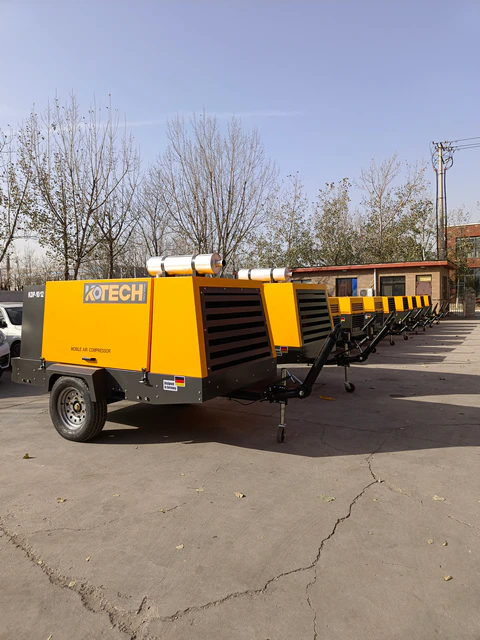
Unlocking Mine Efficiency with Skid-Mounted Air Compressors
Key Insights:
- Skid-mounted compressors are critical for agility: They directly address the dynamic nature of mining, allowing rapid adaptation to changing operational fronts.
- Significant cost reductions are achievable: Flexible deployment slashes relocation expenses and minimizes downtime, directly impacting your bottom line.
- Safety and reliability are enhanced: Purpose-built designs for harsh mining environments improve worker safety and ensure consistent air supply.
- Future-proofing your operations: Investing in mobile, modular air solutions prepares mines for evolving extraction methods and remote site challenges.
Why Skid-Mounted Air Compressors Are Non-Negotiable for Modern Mining Operations
Let’s be direct: if your mining operation isn’t leveraging skid-mounted air compressors for critical tasks, you’re leaving money on the table and sacrificing agility. The ability to rapidly relocate your compressed air source isn’t just a convenience; it’s a fundamental operational advantage that directly impacts productivity and profitability. These robust units are engineered to withstand the brutal conditions of a mine site while offering the unparalleled benefit of mobility.
Addressing Core Mine Site Pain Points Through Mobility
The traditional model of permanent, concrete-slab compressor installations is increasingly outdated. Modern mining demands flexibility. Consider the typical challenges: rapidly advancing underground headings, open-pit expansions, or the need for temporary air supply during exploration or dewatering phases. Dragging hoses over long distances leads to pressure drops and energy waste. Dismantling and reassembling a fixed unit? That’s a logistical nightmare, fraught with downtime and significant labor costs. Skid-mounted systems cut through this complexity, offering a self-contained, ready-to-deploy solution that moves with your operation.
Data-Driven Advantages: Proving the Value of Relocatable Air Systems
The benefits aren’t just theoretical. The financial and operational upsides of agile compressed air solutions are well-documented across the industry.
Operational Cost Savings and Efficiency Gains
One of the most compelling arguments for skid-mounted units is their impact on operational expenditure (OPEX). According to a 2023 report by Mordor Intelligence, the global mining equipment market is experiencing significant growth, driven in part by demand for more efficient and flexible machinery. This flexibility, particularly in air compression, can lead to substantial savings.
Enhanced Safety and Reduced Downtime
Safety is paramount in mining. Manual handling of heavy, complex equipment during relocation is a major hazard. Skid-mounted units, designed for forklift or crane lifting, significantly mitigate these risks. Furthermore, minimizing downtime is crucial. Rapid deployment of a skid-mounted compressor drastically reduces the duration of air supply interruptions, keeping drilling, blasting, and ventilation on schedule.
Fuel Efficiency and Environmental Impact
While not always the primary driver, the environmental aspect is gaining traction. Modern skid-mounted compressors often feature advanced controls and more efficient engines. By positioning the compressor closer to the point of use, you minimize pressure loss in the lines, which translates directly to less energy consumption and lower fuel costs. The International Energy Agency (IEA) in its 2023 report on energy efficiency continually stresses the importance of optimizing industrial processes to meet sustainability targets. Flexible air delivery contributes to this goal by reducing the overall energy footprint.
The Engineering Behind Robust Relocation
What makes these units so effective for easy site relocation? It’s a combination of smart design and robust construction.
Designed for the Toughest Environments
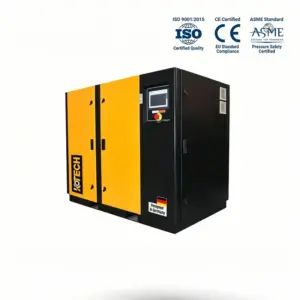
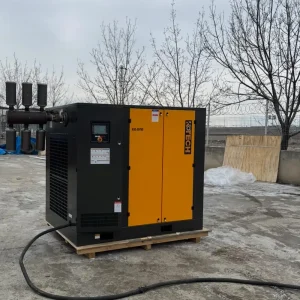
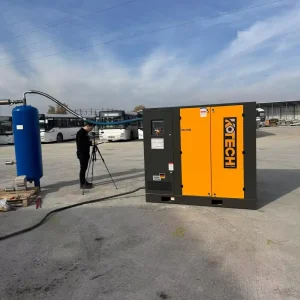
These aren’t your average workshop compressors. Skid-mounted mining air compressors are built on heavy-duty steel frames, often reinforced to withstand impacts, vibrations, and the constant movement inherent in a mine. Critical components are protected from dust, moisture, and extreme temperatures. Integrated lifting points and forklift pockets are standard, ensuring secure and straightforward transport. This ruggedness means they can be dropped into a challenging environment and perform reliably from day one.
Integrated Systems for Rapid Deployment
True mobility isn’t just about the frame; it’s about the entire package. Many modern units come as complete, self-contained systems, including fuel tanks, aftercoolers, filtration, and control panels. This “plug-and-play” capability means less on-site assembly and calibration. You move the unit, connect your air lines, and power it up.
When Skid-Mounted Isn’t the Only Answer: Boundary Conditions
While highly versatile, skid-mounted solutions aren’t a universal panacea. For very large, long-term, fixed-plant applications—think massive processing facilities with consistent, high-volume air demands over decades—a custom-built, stationary compressor house might still be more cost-effective in the long run. The initial CAPEX for a large, permanent installation can be lower per CFM if the demand is truly static and geographically fixed. However, even in these scenarios, portable units often serve as critical backup or supplementary air sources during maintenance or unexpected demand spikes. The key is to assess your operational fluidity and long-term site stability.
Practical Implementation: Maximizing Your Investment
Getting the most out of your skid-mounted air compressors involves more than just buying the right unit. It’s about strategic deployment and maintenance.
Strategic Placement and Network Optimization
Always aim to position the compressor as close as practically possible to the point of use. This minimizes hose length, reduces pressure drop, and improves overall system efficiency. For larger sites, consider a network of smaller, strategically placed skid-mounted units rather than one massive central compressor. This modular approach provides redundancy and allows for targeted air delivery, reducing energy waste.
Regular Maintenance in Harsh Conditions
Even the toughest machines need regular care. Implement a rigorous preventative maintenance schedule. Focus on air filters, oil changes, and checking for leaks, especially given the dusty and often wet conditions of a mine. Access to parts and qualified technicians is crucial. Partner with suppliers who understand the demands of mining and can provide rapid support, regardless of how remote your site might be.
Leveraging Telematics and Remote Monitoring
Modern skid-mounted compressors often come equipped with telematics. Utilize this technology! Remote monitoring allows you to track performance, fuel levels, and identify potential issues before they cause downtime. This is particularly valuable for compressors deployed in remote or difficult-to-access areas of the mine, enabling proactive maintenance and optimizing operational schedules.