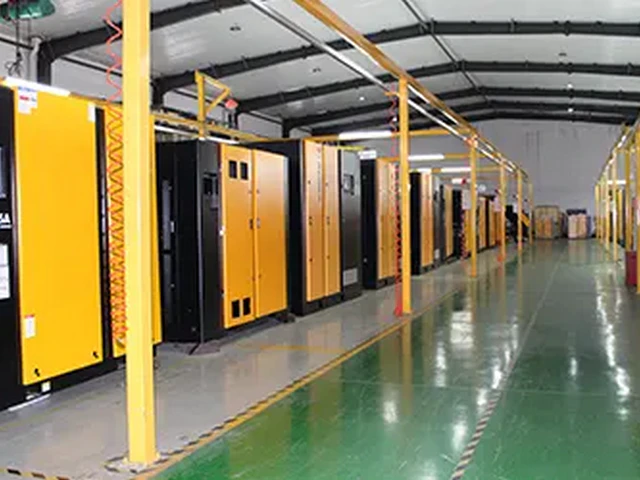
Global Mining Air Compressor Performance: Lessons from Real-World Operations
Key Insights:
- Robust, application-specific design is paramount. Standard industrial compressors rarely withstand mining’s unique stressors.
- Energy efficiency, particularly through Variable Speed Drive (VSD) technology, offers significant operational savings.
- Predictive maintenance and remote monitoring are transforming uptime and reducing unexpected failures.
- Total Cost of Ownership (TCO) must drive procurement decisions, not just initial purchase price.
- Adaptation to extreme environmental conditions (dust, altitude, temperature) is a non-negotiable for global operations.
The Unseen Costs: Why Compressor Reliability is Non-Negotiable
In mining, compressed air isn’t a luxury; it’s the lifeblood of operations, powering everything from drilling rigs and pneumatic tools to ventilation systems and mineral processing. When an industrial air compressor fails, the ripple effect can be catastrophic. We’re talking about more than just a repair bill.
Beyond immediate breakdowns, energy consumption is another silent killer of profit margins. We need to look beyond the upfront cost and really dig into the total cost of ownership.
Global Challenges, Local Solutions: Case Studies Across Continents
The demands placed on mining air compressors vary wildly depending on geography, climate, and the specific type of extraction. Let’s examine how different regions tackle these challenges.
Africa: Extreme Heat & Dust in the Copper Belt
In Africa’s Copper Belt, operating conditions are brutal. Mines in regions like the Democratic Republic of Congo and Zambia contend with soaring temperatures, high humidity, and pervasive dust. These factors are absolute killers for unprotected pneumatic equipment. A case study from a major copper mine revealed frequent filter blockages, premature wear on rotary screw compressors, and overheating issues leading to constant shutdowns. The solution wasn’t just a bigger compressor; it involved implementing multi-stage heavy-duty air filtration systems, oversized coolers, and robust enclosures designed for extreme environments. Maintenance schedules were also significantly shortened, focusing on proactive filter changes and coolant management.
South America: High Altitude & Continuous Operation in the Andes
Venture into the high-altitude gold and silver mines of the Andes, and you face a different beast. At elevations exceeding 4,000 meters (13,000 feet), the air density is significantly lower. This directly impacts compressor performance; a unit rated for sea level will produce considerably less free air delivery (FAD) at high altitudes. A gold mine in Peru, for instance, initially struggled with insufficient air supply for its drilling rigs, leading to slower extraction rates. The fix involved specifying compressors with larger air ends or selecting centrifugal compressors designed for higher volumetric flow, specifically engineered to compensate for the thin air. Furthermore, the round-the-clock nature of many South American operations demands machines built for continuous duty, with advanced remote monitoring to minimize human intervention in challenging terrain.
Australia: Remote Sites & Automation in the Pilbara
Australia’s iron ore mines in the Pilbara region present challenges of extreme remoteness, vast distances, and blistering heat. Here, the focus shifts to self-sufficiency and minimal onsite personnel. One prominent iron ore producer, for example, successfully deployed a fleet of containerized, heavy-duty air compressors equipped with advanced telemetry and predictive maintenance capabilities. This allowed engineers hundreds of kilometers away to monitor performance, diagnose potential issues, and even schedule preventative maintenance before a failure occurred.
Europe & North America: Efficiency & Environmental Compliance
In more developed mining regions like parts of Europe and North America, such as quarrying operations or underground coal mines, the emphasis often includes stringent environmental regulations and energy efficiency. A limestone quarry in Germany transitioned its fixed-speed industrial air compressors to Variable Speed Drive (VSD) models. This change, driven by fluctuating demand for pneumatic tools and rock drills, resulted in substantial energy savings. Furthermore, quieter, electrically driven compressors are increasingly preferred to meet noise pollution standards and reduce local emissions.
Beyond the Spec Sheet: What to Really Look For
When selecting a mining air compressor, don’t just fixate on CFM and PSI. Those are critical, but they’re only part of the story. You need to scrutinize the total package. Look at the build quality – is it truly industrial-grade, or just a dressed-up commercial unit? Consider the serviceability: how easy is it to access filters, belts, and oil? Are spare parts readily available in your region, or will you face long lead times?
Furthermore, assess the environmental ratings. Does it meet IP (Ingress Protection) standards for dust and moisture? Can it operate reliably at your specific ambient temperature range? These details, often overlooked in the initial sales pitch, are what separate a true mining workhorse from an expensive headache.
When Standard Won’t Cut It: Boundary Conditions
It’s crucial to understand that a “one-size-fits-all” approach to mining air compressors is a recipe for disaster. While many suppliers offer robust industrial models, these are not universally applicable. For instance, a standard rotary screw compressor, even a heavy-duty one, will struggle and fail prematurely in extremely deep underground mining applications without specialized cooling, advanced filtration, and often explosion-proof certifications. Similarly, operations requiring exceptionally high-purity air (e.g., certain mineral processing where contamination is critical) will need specialized oil-free compressors and advanced air treatment systems that go far beyond what a typical mine requires. You simply can’t cut corners when the environmental or operational stakes are this high.
Actionable Strategies for Optimized Air Systems
Optimizing your compressed air system in mining isn’t a one-time fix; it’s an ongoing process.
- Conduct Regular Air Audits: Professional audits identify leaks, inefficient usage, and opportunities for energy savings. This should be an annual practice.
- Implement VSD Technology: If your air demand fluctuates, a Variable Speed Drive compressor will pay for itself rapidly through energy savings.
- Invest in Robust Filtration & Air Treatment: Protect your equipment and downstream processes from dust, moisture, and oil contamination. This is especially vital in harsh mining environments.
- Embrace Predictive Maintenance: Utilize IoT sensors and remote monitoring to track compressor health, predict failures, and schedule maintenance proactively. This shifts from reactive repairs to strategic upkeep.
- Train Your Team: Ensure operators and maintenance staff are fully trained on proper compressor operation, basic troubleshooting, and preventive maintenance routines.
Future-Proofing Your Fleet: Emerging Technologies
The future of mining air compressors is increasingly intelligent and sustainable. Electrification is a significant trend, reducing reliance on diesel generators and cutting emissions, particularly for surface operations and even some underground applications where battery-electric vehicles are gaining traction. AI-driven diagnostics are moving beyond simple remote monitoring, using machine learning to analyze vast datasets and predict failures with astonishing accuracy, often weeks in advance. We’re also seeing modular designs that allow for easier scalability and maintenance in remote locations, further improving operational flexibility.
It’s the one that reliably delivers the right quality and quantity of air, under specific operational conditions, at the lowest total cost of ownership. The global case studies underscore this: adaptation, efficiency, and intelligence are the keys to sustained success.