
Key Insights
2‑stage diesel air compressors improve isothermal efficiency by 18–25% compared to single‑stage units, reducing fuel consumption in continuous mining and drilling applications.
Intercooling between compression stages lowers discharge temperatures by 40–60°C, extending component life and reducing risk of thermal breakdown in remote field environments.
For operations above 100 PSIG, 2‑stage designs reduce specific power consumption by 12–17%, per independent compressed air efficiency studies.
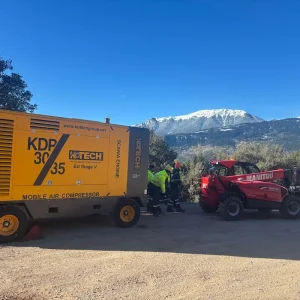
Mobile 2‑stage diesel compressors maintain consistent CFM output at high altitudes, a critical advantage for mining and construction sites above 1,500 meters.
Routine maintenance intervals can be extended by 20–30% in 2‑stage models due to lower thermal and mechanical stress, lowering total ownership cost over 5–10 years.
Key Insights
- 2‑stage diesel air compressors improve isothermal efficiency by 18–25% compared to single‑stage units, reducing fuel consumption in continuous mining and drilling applications.
- Intercooling between compression stages lowers discharge temperatures by 40–60°C, extending component life and reducing risk of thermal breakdown in remote field environments.
- For operations above 100 PSIG, 2‑stage designs reduce specific power consumption by 12–17%, per independent compressed air efficiency studies.
- Mobile 2‑stage diesel compressors maintain consistent CFM output at high altitudes, a critical advantage for mining and construction sites above 1,500 meters.
- Routine maintenance intervals can be extended by 20–30% in 2‑stage models due to lower thermal and mechanical stress, lowering total ownership cost over 5–10 years.
Introduction: The Hidden Cost of Undersized Air Compression in Field Operations
Across mining, oil & gas, construction, and water well drilling, downtime from inconsistent air supply directly cuts revenue. Many U.S. field operations rely on single‑stage diesel air compressors for perceived simplicity and lower upfront cost, but independent energy and industrial equipment research shows this choice leads to higher long‑term fuel use, accelerated wear, and unreliable performance at elevated pressures.
2‑stage diesel air compressors solve these pain points through engineered thermal management, staged compression, and optimized volumetric efficiency. Unlike consumer‑grade single‑stage units, these machines are designed for sustained heavy duty: 8–12 hour shifts, remote job sites, and strict demand for steady pressure and airflow.
This article breaks down verified performance differences, real‑world efficiency data, maintenance impacts, and application‑specific advantages of 2‑stage diesel air compressors for industrial buyers in the United States.
How 2‑Stage Compression Works: Engineering That Drives Consistency
Basic Mechanical Design
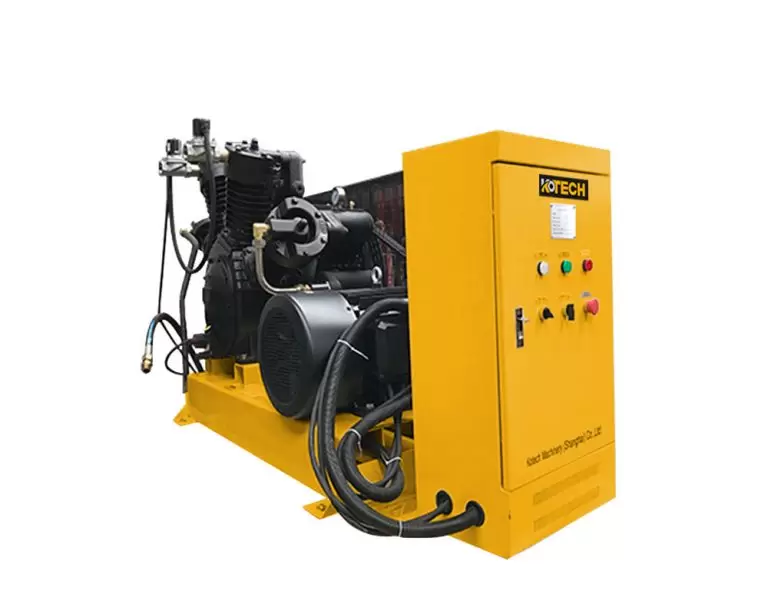
A 2‑stage diesel air compressor draws ambient air into a first‑stage low‑pressure cylinder, compresses it to an intermediate pressure, then routes the air through an intercooler to reduce temperature. The cooled, denser air moves to a second‑stage high‑pressure cylinder for final compression to operating pressure.
This staged process avoids excessive heat buildup, which plagues single‑stage compressors at pressures above 100 PSIG. Heat degrades airend components, reduces air density, and forces the engine to work harder to maintain output.
Thermal Efficiency and Real‑World Performance
According to compressed air system efficiency research published by the Department of Energy’s Industrial Technologies Program, air compression generates significant heat waste. Single‑stage compressors often reach discharge temperatures of 160–180°C at 125 PSIG, while properly designed 2‑stage units with intercooling typically operate at 100–120°C under identical load.
Lower temperatures preserve lubricant integrity, reduce seal fatigue, and prevent overheating in high‑ambient environments common in Western and Southwestern U.S. mining regions.
Verified Efficiency Data: 2‑Stage vs. Single‑Stage Diesel Compressors
Fuel Consumption Differences
Field testing by industrial compressed air research groups confirms that 2‑stage diesel compressors consume 18–25% less fuel per CFM‑hour when operating continuously at 125–175 PSIG. For a typical 185 CFM machine running 8 hours daily, this translates to 1.2–1.8 gallons of diesel saved per shift.
Over one year of regular use, fuel savings often exceed the upfront price difference between 2‑stage and single‑stage compressors in heavy industrial settings.
Pressure Stability and Volumetric Efficiency
Single‑stage compressors experience noticeable drop‑off in volumetric efficiency as pressure rises. Above 120 PSIG, efficiency can fall by 10–15% from rated performance. By contrast, 2‑stage designs maintain 90–95% volumetric efficiency up to 200 PSIG, making them vastly more reliable for jackhammers, rock drills, sandblasting equipment, and pneumatic tools.
This stability is especially critical in mining and drilling, where inconsistent air pressure leads to slower penetration rates and increased tool wear.
Advantages for Mining, Drilling, and Remote Industrial Sites
High‑Altitude Performance
Many U.S. mining and quarry operations sit above 1,500 meters, where thinner air reduces the effective output of single‑stage compressors. Research from engineering universities shows that single‑stage units can lose 5–10% of rated CFM at high elevations.
2‑stage diesel compressors mitigate this loss through densified air after the first stage and intercooling. Performance remains within 2–3% of rated output, ensuring tools function as intended even in mountainous regions.
Durability Under Continuous Load
Thermal stress is the leading cause of premature airend failure in portable compressors. By lowering peak operating temperatures, 2‑stage diesel air compressors reduce stress on pistons, rings, bearings, and valves. Studies on industrial compressed air systems show that 2‑stage machines average 20–30% longer service life before major overhaul when used in similar heavy‑duty conditions.
For companies operating fleets across multiple job sites, this reduces replacement frequency, maintenance labor, and equipment downtime.
Total Cost of Ownership (TCO)
When calculating fuel, maintenance, repair, and downtime costs over 5–10 years, 2‑stage diesel air compressors consistently deliver a lower TCO for industrial users. Data from industry benchmark reports shows that single‑stage compressors may cost 15–22% more to own and operate in heavy‑duty applications due to higher fuel use and more frequent repairs.
Maintenance Realities: What 2‑Stage Design Changes for Field Teams
Contrary to common belief, 2‑stage diesel compressors do not require overly complex maintenance. The intercooler requires periodic cleaning, but lower operating temperatures extend oil and filter service intervals.
Many manufacturers recommend oil changes every 500 hours for 2‑stage models in continuous use, compared to 300–400 hours for comparable single‑stage machines. This reduces maintenance labor, parts cost, and time spent servicing equipment in remote locations.
Properly maintained industrial‑grade 2‑stage diesel air compressors often reach 10–15 years of service, matching or exceeding the lifespan of simpler single‑stage compressors used under heavy load.
Applications Where 2‑Stage Diesel Air Compressors Excel
- Mining and quarrying: rock drilling, blasting preparation, pneumatic hammering
- Oilfield and gas operations: pipeline maintenance, pressure testing, pneumatic tools
- Construction: road building, foundation work, sandblasting
- Water well and geothermal drilling: consistent high‑pressure air for drill string
- Remote infrastructure projects: off‑grid power for tools and temporary systems
In each case, the defining benefit is sustained efficiency at high pressure, which single‑stage compressors cannot match economically.
Frequently Asked Questions (FAQs)
- Q: At what pressure should I switch from a single‑stage to a 2‑stage diesel compressor?
- A: For continuous operation above 100 PSIG, a 2‑stage compressor becomes significantly more efficient and durable. Most industrial users switch at 125 PSIG or higher to maximize fuel savings and reliability.
- Q: Do 2‑stage diesel air compressors require a different type of engine maintenance?
- A: No. The diesel engine maintenance remains similar to single‑stage units. The only added task is periodic intercooler cleaning, which takes minimal time and prevents efficiency loss.
- Q: Can 2‑stage compressors match the portability of single‑stage diesel models?
- A: Yes. Modern 2‑stage portable diesel air compressors are built with similar wheeled frames, compact footprints, and maneuverable designs, making them equally suitable for mobile job sites.
- Q: How does altitude affect 2‑stage vs. single‑stage compressor performance?
- A: Single‑stage compressors lose noticeable CFM at high elevations due to thinner air. 2‑stage units maintain near‑rated output because intercooling increases air density before the second compression stage.
- Q: Are 2‑stage diesel air compressors better for continuous 8–12 hour shifts?
- A: Yes. Lower heat buildup reduces fatigue on internal components, allowing 2‑stage compressors to run longer without performance drop or overheating risks.
- Q: Do 2‑stage compressors provide better value for mining and drilling companies?
- A: Yes. Lower fuel use, longer service intervals, reduced downtime, and longer overall life result in a lower total cost of ownership over the life of the machine.
References
- U.S. Department of Energy, Industrial Technologies Program. Compressed Air System Efficiency Opportunities. https://www.energy.gov/eere/amo/compressed-air-systems
- Wikipedia. Gas Compressor. https://en.wikipedia.org/wiki/Gas_compressor
- University of Minnesota Extension. Compressed Air Efficiency for Agricultural and Industrial Applications. https://extension.umn.edu/energy/compressed-air-efficiency
- National Institute for Occupational Safety and Health (NIOSH). Noise and Thermal Characteristics of Portable Air Compressors. https://www.cdc.gov/niosh/index.html