

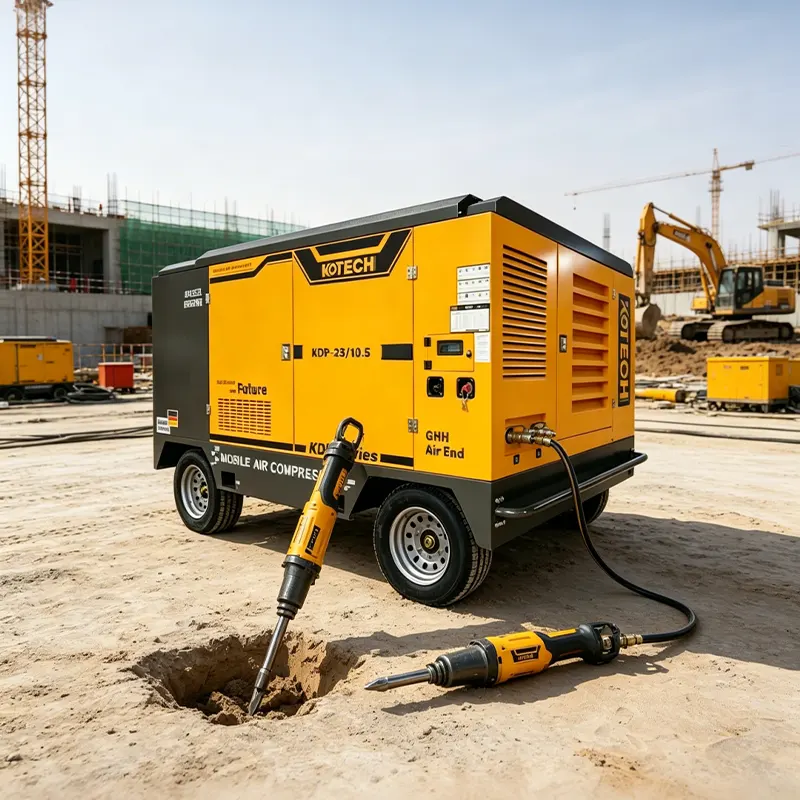
This guide explores diesel air compressors for jack hammer operations, covering core mechanics, supplier selection, operational best practices, and common pitfalls. It helps construction teams choose reliable, high-performance compressors for demolition and infrastructure projects.
Diesel Air Compressor for Jack Hammer Supplier Guide
Related: jack hammer diesel air compressor supplier · construction air compressor for pneumatic tools · diesel-powered air supply for jack hammers · mobile diesel compressor for demolition tools · high CFM air compressor for jack hammers · industrial pneumatic power supplier
A diesel air compressor for jack hammer supplier is a critical component in the construction, demolition, and infrastructure development sectors, providing the essential pneumatic power required for operating heavy-duty jack hammers. These robust, mobile units are designed to deliver a consistent, high volume of compressed air to power pneumatic tools effectively in environments where grid electricity is either unavailable or impractical, solving the primary problem of energy supply in remote or dynamic worksites. From a framework perspective, these suppliers don’t just provide equipment; they offer comprehensive solutions that ensure operational continuity and project adherence. The significance of a reliable diesel air compressor for jack hammer supplier extends beyond mere equipment provision. It encompasses the assurance of performance, durability, and on-site support crucial for demanding applications. These units are engineered to withstand harsh conditions, operate efficiently, and deliver the specific cubic feet per minute (CFM) and pounds per square inch (PSI) necessary for various jack hammer models, making them indispensable for breaking concrete, asphalt, and rock with precision and power. The quality of the supplier directly influences the uptime and longevity of these vital tools. In practical application, the choice of a diesel air compressor for jack hammer supplier is a strategic decision influencing project timelines and budgets. Based on structural analysis, the ideal supplier offers not only a range of high-performance compressors but also expert advice on sizing, maintenance, and compliance with environmental and safety regulations. Their role is pivotal in ensuring that construction teams have immediate access to dependable power, thus mitigating delays and enhancing overall site productivity.
The Core Mechanics: Deconstructing Diesel Air Compressor Systems for Jack Hammers
The core mechanics of a diesel air compressor for jack hammer operation involve a sophisticated interplay of engine power and air compression. These systems typically comprise a robust diesel engine, which drives an air end—either a reciprocating piston compressor or, more commonly for construction applications, a rotary screw compressor. The rotary screw design is favored for its continuous air delivery, higher efficiency, and smoother operation, producing a steady flow of compressed air essential for the sustained impact of a jack hammer.
From a framework perspective, the diesel engine provides the necessary horsepower to turn the rotors within the air end, drawing in ambient air and compressing it as it travels through the helical screws. This compressed air is then directed through an air receiver tank, which acts as a buffer to ensure consistent pressure and volume, even during intermittent tool use. Key components also include advanced filtration systems to protect the jack hammer from debris and moisture, pressure regulation valves to maintain optimal operating PSI, and efficient cooling systems to manage heat generated during compression, all critical for equipment longevity and safety.
Based on structural analysis, the design of these compressors prioritizes ruggedness and mobility. Components are housed within durable enclosures that protect against weather and impact, while heavy-duty chassis and wheels facilitate easy transport across challenging terrain. The integration of intuitive control panels allows operators to monitor performance metrics such as engine RPM, air pressure, and fuel levels, ensuring efficient operation and proactive maintenance. Understanding these fundamental components is crucial for any diesel air compressor for jack hammer supplier aiming to provide superior equipment and support.
Strategic Selection: Identifying the Right Diesel Air Compressor Supplier
Strategic selection of a diesel air compressor for jack hammer supplier is paramount to operational success, focusing on factors beyond just the initial purchase price. The ideal supplier offers equipment that precisely matches the CFM and PSI requirements of the jack hammers being used, ensuring optimal performance without over- or undersizing, which can lead to inefficiency or premature wear.
Based on structural analysis, a top-tier supplier demonstrates a commitment to reliability, offering machines from reputable manufacturers known for their durability and consistent output in demanding environments. They should provide comprehensive specifications that detail engine power, air delivery rates, fuel efficiency, and noise levels, allowing for informed decision-making. Furthermore, a strong local or regional service network is essential, guaranteeing prompt maintenance, repairs, and genuine spare parts availability to minimize downtime.
In practical application, evaluating a diesel air compressor for jack hammer supplier also involves assessing their knowledge of regulatory compliance, particularly concerning emissions standards (e.g., EPA Tier 4 Final). A supplier who understands and adheres to these standards helps ensure your operations remain compliant, avoiding potential fines and environmental impact issues. Their ability to offer rental options, flexible purchasing schemes, and comprehensive technical support further solidifies their value as a long-term partner.
Operational Excellence: Implementing Diesel Air Compressors for Jack Hammer Tasks
Operational excellence in using a diesel air compressor for jack hammer tasks hinges on meticulous planning and adherence to best practices. Before deployment, a thorough pre-operation check must be conducted, ensuring fuel levels are adequate, oil levels are correct, air filters are clean, and all hoses and connections are secure and free from damage. This proactive approach minimizes the risk of on-site breakdowns and ensures consistent power delivery.
From a framework perspective, proper connection of the jack hammer to the compressor is critical. This involves using the correct hose diameter and robust quick-connect fittings to prevent pressure drops and air leaks, which can significantly reduce the hammer’s efficiency. Operators must be trained in the safe handling and operation of both the compressor and the jack hammer, understanding the correct starting and shutdown procedures, emergency protocols, and the importance of maintaining optimal operating pressure as specified by the jack hammer manufacturer.
In practical application, positioning the compressor correctly is also vital. It should be placed on level ground in a well-ventilated area, away from combustible materials, and with sufficient clearance for air intake and exhaust. Continuous monitoring of the compressor’s gauges and indicators during operation allows for immediate identification and rectification of any anomalies. Post-operation, proper cool-down procedures and basic cleaning are essential for extending the lifespan of the unit and preparing it for its next demanding task.
Comparative Performance: Diesel vs. Electric vs. Hydraulic Solutions for Jack Hammers
When selecting a power source for jack hammers, a comparative analysis across diesel, electric, and hydraulic systems reveals distinct advantages and disadvantages depending on the operational context. While this article focuses on the diesel air compressor for jack hammer supplier, understanding alternatives helps clarify its niche.
From a framework perspective, each power solution caters to different site requirements, environmental considerations, and budget constraints. Diesel air compressors excel in mobility and independence from external power grids, making them ideal for remote or expansive construction sites. Electric compressors, conversely, are best suited for indoor or urban environments with ready access to electricity, offering lower noise and zero local emissions.
Based on structural analysis, hydraulic power packs, while highly efficient, typically represent a more complex and specialized system often integrated with larger machinery. The table below outlines a comparison across key performance dimensions:
| Feature | Diesel Air Compressor | Electric Air Compressor | Hydraulic Power Pack |
|————-|———————–|————————-|———————-|
| Complexity | Moderate | Low | High |
| Efficiency | High (on-site power) | High (grid-dependent) | Very High |
| Cost | Moderate-High | Low-Moderate | High |
| Portability | High | Low (requires power) | Moderate |
Avoiding Downtime: Common Pitfalls and Professional Solutions
Avoiding downtime with a diesel air compressor for jack hammer supplier relies on proactively addressing common pitfalls through professional solutions. One frequent mistake is undersizing the compressor, where the unit’s CFM output is insufficient for the jack hammer’s requirements. This leads to reduced tool performance, increased wear on the compressor, and frustrated operators. The solution is rigorous adherence to manufacturer specifications for both the hammer and compressor, ensuring a CFM margin for optimal performance.
From a framework perspective, inadequate maintenance schedules represent another significant pitfall. Neglecting routine checks, oil changes, filter replacements, and separator element servicing can drastically reduce efficiency, increase fuel consumption, and lead to catastrophic component failure. The professional solution involves establishing and strictly following a preventive maintenance program, often provided by a reliable diesel air compressor for jack hammer supplier, which includes regular inspections and genuine part replacements.
In practical application, using contaminated or incorrect fuel types is a critical error that can damage the diesel engine and fuel system. Diesel engines require clean, high-quality diesel fuel, free from water and particulates. The solution is to ensure fuel is sourced from reputable suppliers, stored correctly in clean containers, and that fuel filters are replaced as part of the routine maintenance. Furthermore, a lack of comprehensive operator training can lead to improper startup/shutdown, incorrect pressure settings, and unsafe operation, all avoidable with a robust training program from your supplier or an industry expert.
Further Reading
- Streamlining Global Projects Eliminating Operational Bottlenecks Through Diesel Air Compressor for Jack Hammer Export Architectures
- Mining Air Compressor Solutions for Underground & Surface Mines
- Diesel Air Compressors for Industrial Excellence: Kotech’s Custom Solutions for Mining, Construction & Drilling
- Unlocking Peak Performance The Logic Behind Choosing the Best Small Diesel Air Compressor for Your Workshop
- construction pneumatic power – Why 2‑Stage Diesel
- The Logic Behind 185 CFM Diesel Air Compressor for Construction Site A Structural Analysis
- How 2 Stage Diesel Air Compressor Export to Africa Is Reshaping Industrial Efficiency
Related Reading: Industrial Compressed Air Solutions for Mining Operations
Related Applied Cases
Frequently Asked Questions
- What CFM and PSI requirements do I need for a diesel air compressor to power my jack hammer?
- It depends on your jack hammer model. Most require 90-150 CFM at 90-125 PSI. Always add a 20-30% safety margin to the tool’s rated CFM to ensure consistent performance and avoid overworking the compressor.
- How do I choose a reliable diesel air compressor supplier for jack hammer operations?
- Look for suppliers offering compressors that match your tool’s specs, with robust engines (e.g., Cummins, Deutz), a strong local service network, genuine parts availability, and compliance with emission standards (e.g., EPA Tier 4). They should also provide maintenance and training support.
- What are the advantages of a diesel air compressor over electric or hydraulic options for jack hammers?
- Diesel compressors offer complete independence from grid power, making them ideal for remote sites. They deliver continuous high-volume air for extended use, unlike electric models limited by power cords or generators. Hydraulic systems are more complex and often integrated with larger machinery.
- What maintenance is required to keep my diesel compressor running smoothly with jack hammers?
- Follow a strict schedule: daily pre-operation checks (fuel, oil, filters), regular oil/filter changes, fuel system maintenance, and hose/connection inspections. Use clean, high-quality diesel fuel to avoid engine damage, and replace filters as recommended.
- What common issues can occur when using a diesel compressor with jack hammers, and how do I avoid them?
- Common issues include undersizing (low CFM/pressure), poor maintenance (overheating/wear), contaminated fuel (engine damage), and improper hose connections (leaks/pressure drops). Choose the right size, follow maintenance schedules, use clean fuel, and use correctly sized, secure fittings.
- How does the supplier’s service and support network impact my construction project?
- A supplier with a local service network ensures prompt repairs, genuine parts, and technical support, minimizing downtime during critical projects. They can also help with compliance, operator training, and equipment upgrades, contributing to long-term operational success.