
- It is not suitable for permanent fixed installations with existing on-site compressed air infrastructure
Core Value for Remote Off-Grid Mine Sites
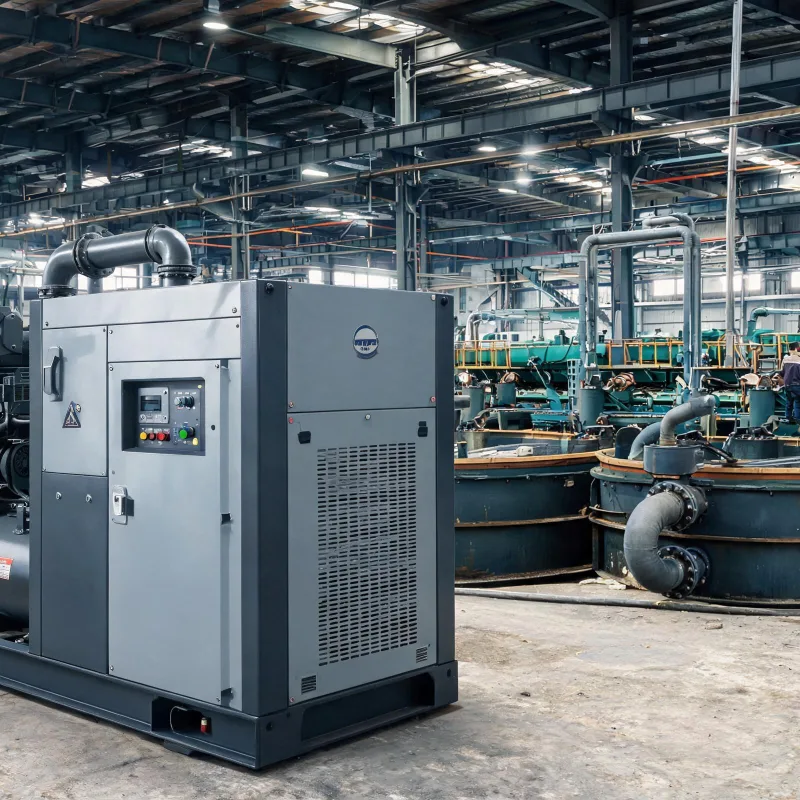
This equipment solves the two biggest pain points for remote mine sites: full portability for moving across site and contamination-free air without grid connection. It is the top choice for most new remote exploration and production operations.
Most remote mines operate without access to a stable utility grid, so any equipment needs to generate its own power. Diesel powertrains match this requirement perfectly, with widely available fuel supply chains even in the most isolated regions. The towable design lets crews move the unit between drill sites, processing areas and maintenance bays without heavy hauling permits.
That kind of downtime adds up fast for remote sites where service and reconfiguration take extra time.
Data-Backed Performance Benefits
Oil-free design eliminates the risk of oil carryover that plagues lubricated compressors. For mining operations that use compressed air for instrumentation, drilling, and product processing, oil contamination can ruin product batches or damage sensitive equipment.
There’s no need to regularly drain, replace and dispose of used lubricant, which is a major logistical cost for remote sites that have to haul out hazardous waste.
To put that in perspective, most new copper and lithium projects in regions like the Western US, the Andes and Western Australia are sited in areas with no grid access, so they rely entirely on self-powered mobile equipment for all core operations.
Boundary Conditions: When This Is Not the Right Fit
This equipment is not suitable for permanent, long-term installations where a fixed compressed air pipeline network is already built out on site. The upfront cost of multiple towable units is higher than a single large fixed compressor for continuous base load demand.
It is also not ideal for small exploration operations with a continuous compressed air demand of less than 100 CFM. For these small projects, a smaller portable lubricated unit will have a lower upfront cost that matches the shorter project timeline.
Best Practices for Deployment
Second, schedule filter changes during planned maintenance shutdowns to avoid unplanned stops. Most units have a 500-1000 hour filter service interval, which is easy to align with regular crew rotation at remote sites.
Third, source units with a local service network that can deliver replacement parts within 72 hours. Even the most reliable unit will need a replacement part eventually, and a 10-day wait for a part can shut down an entire remote operation.




