


This guide explores custom 185 CFM diesel air compressors designed for oil field applications, covering engineering for extreme environments, key customization factors, and strategic implementation steps. It helps oil and gas operations ensure reliable, compliant pneumatic power.
Custom 185 CFM Diesel Air Compressor for Oil Field
Related: oil field grade 185 CFM diesel air compressor · custom-engineered air compressor for oil and gas · rugged diesel air compressor for drilling operations · oil and gas industry pneumatic power solution · custom pressure-rated diesel air compressor · skid-mounted air compressor for remote oil sites
A custom 185 CFM diesel air compressor for oil field applications represents a specialized piece of equipment engineered to deliver a precise volume of compressed air (185 cubic feet per minute) powered by a diesel engine, specifically tailored for the demanding and often remote environments characteristic of oil and gas operations. This bespoke approach is critical because off-the-shelf compressors often fall short in meeting the unique operational demands, safety regulations, and environmental constraints prevalent within the oil field sector, where reliability and performance directly impact operational continuity and cost-efficiency. The primary problem it solves is the inherent inefficiency and potential for equipment failure that arises from deploying generic air compression solutions in environments requiring robust, adaptable, and highly specific power and air delivery characteristics, ensuring consistent performance for drilling, pneumatic tool operation, and pipeline maintenance.
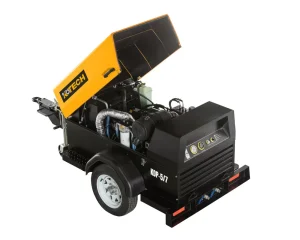
Technical/Structural Breakdown: Engineering for Extremes
Based on structural analysis, a custom 185 CFM diesel air compressor for oil field use integrates several critical sub-systems designed for resilience and performance in harsh conditions, including the diesel engine, the air end, the control system, and the robust skid or trailer mounting. The heart of the unit is typically a Tier 4 Final compliant diesel engine, optimized for fuel efficiency and low emissions, providing the power to drive the air end, which is the core component responsible for compressing atmospheric air.
From a framework perspective, the air end is often a rotary screw type, selected for its continuous, pulse-free air delivery and inherent durability, operating at pressures typically ranging from 100 to 150 psi, though customization allows for higher pressure capabilities if required for specific applications such as high-pressure well testing. The entire assembly is encased within a heavy-duty, weather-resistant enclosure, often sound-attenuated, designed to protect internal components from dust, moisture, extreme temperatures, and potential impact on a dynamic job site.
In practical application, the structural integrity extends to specialized fuel tanks, designed for extended run times without frequent refueling, and integrated filtration systems that ensure clean air intake and oil separation, paramount for preventing contamination of pneumatic tools and processes downstream. Furthermore, advanced vibration dampening and shock absorption mechanisms are integral to maintain operational stability and extend the lifespan of components in environments subjected to constant movement and rough terrain.
Key Components and Their Role in Customization
The customization of a 185 CFM diesel air compressor for oil field operations begins with selecting a diesel engine that precisely matches power requirements while adhering to site-specific emission standards, often involving brands known for their industrial reliability like Kubota, Caterpillar, or John Deere. Engine sizing is not merely about horsepower but also about torque curves and sustained performance under varying loads and ambient temperatures, which directly influences fuel The Logic Behind Custom 185 CFM Diesel Air Compressor for Oil Field A Structural Analysis consumption and operational efficiency.
The air end, being the core compressor, is chosen based on the required CFM and pressure output, with options for single or two-stage compression depending on the application’s demand for higher pressures or greater efficiency at lower pressures. Customization can involve specific rotor profiles and coatings to enhance longevity in corrosive or abrasive environments, common within the oil field where sand, dust, and chemical vapors are often present.
Control systems are a significant area for customization, ranging from basic manual controls to advanced PLC-based systems offering remote monitoring, telematics, and integration with broader site SCADA systems. These intelligent controls allow for precise pressure and flow adjustments, predictive maintenance alerts, and automated shutdown sequences in response to fault conditions, critical for unattended operation and maximizing uptime in remote oil field locations.
Operational Principles and Customization Factors
The operational principles of a custom 185 CFM diesel air compressor revolve around converting the mechanical energy of the diesel engine into pneumatic energy, with the air end compressing air that is then cooled, filtered, and delivered to the point of use. Customization factors here include specialized aftercoolers for removing moisture, particularly in humid environments, and high-capacity air receivers designed to stabilize pressure and provide a buffer for intermittent high-demand applications, preventing rapid engine cycling.
From a practical standpoint, the choice of mounting — whether skid-mounted for stationary deployment or trailer-mounted for mobility — is a fundamental customization based on the oil field’s logistical requirements. Trailer configurations often include heavy-duty axles, robust tires, and enhanced suspension systems capable of traversing challenging terrain, along with integrated lighting and braking systems compliant with road regulations for transportation between sites.
Environmental protection and safety features are paramount customization considerations for oil field compressors. This includes spark arrestors on exhaust systems, emergency shut-off valves, drip pans for containment of potential fluid leaks, and certified lifting points for safe handling. Acoustic enclosures can also be custom-designed to meet stringent noise regulations often found in proximity to populated areas or for operator comfort during extended shifts.
Implementing a Custom 185 CFM Diesel Air Compressor: A Strategic Approach
Step 1: Conduct a Detailed Site and Application Assessment. The initial phase involves a thorough analysis of the specific oil field application, including required CFM, operating pressure, duty cycle, environmental conditions (temperature, altitude, dust), emission regulations, and logistical constraints. This comprehensive assessment forms the bedrock for defining precise customization parameters for the 185 CFM diesel air compressor.
Step 2: Engage with Specialized Manufacturers. Identify manufacturers or fabricators with proven experience in producing custom industrial air compressors for the oil and gas sector. Provide them with the detailed specifications derived from the assessment, ensuring they understand the critical operational demands and safety requirements unique to oil field deployment.
Step 3: Review Design Proposals and Technical Drawings. Scrutinize the manufacturer’s proposed design, including component selections (engine, air end, control system), structural reinforcements, safety features, and maintenance accessibility. Ensure the custom 185 CFM diesel air compressor design fully addresses all identified needs and complies with relevant industry standards like API or ASME.
Step 4: Factory Acceptance Testing (FAT) and On-Site Commissioning. Before deployment, conduct a rigorous FAT to verify performance, pressure output, and all safety features under simulated operational conditions. Upon delivery, oversee on-site commissioning to ensure seamless integration with existing infrastructure and provide initial operator training for optimal custom 185 CFM diesel air compressor utilization.
Comparative Analysis: Custom vs. Standard 185 CFM Diesel Air Compressors
A critical distinction exists between standard, off-the-shelf 185 CFM diesel air compressors and their custom-engineered counterparts, particularly for the demanding oil field environment. Standard units, while offering immediate availability and lower initial cost, often present compromises in efficiency, longevity, and operational suitability when faced with the unique challenges of oil and gas operations.
Based on structural analysis, the table below highlights key comparison dimensions. From a framework perspective, custom units excel in adaptability and long-term cost-effectiveness due to their tailored nature, addressing specific pressure, flow, and environmental resilience requirements. In practical application, while a standard 185 CFM unit might suffice for generic construction tasks, the complexity of oil field operations—requiring specific pressure profiles for well workovers, precise air quality for instrumentation, or robust build for continuous duty in extreme temperatures—makes the custom solution a more strategic investment, reducing downtime and optimizing performance. | Feature | Custom 185 CFM Diesel Air Compressor (Oil Field) | Standard 185 CFM Diesel Air Compressor |
| **Complexity** | High (Engineered to specific requirements) | Medium (Mass-produced, general purpose) |
| **Efficiency** | Optimized (Tailored for specific load profiles) | General (Designed for average use) |
| **Cost** | Higher Initial (Lower total cost of ownership) | Lower Initial (Higher operational costs) |
| **Frequency** | Lower (Built-to-order) | Higher (Readily available) |
| **Durability** | Enhanced (Heavy-duty, application-specific) | Standard (General industrial grade) |
| **Compliance** | Full (Meets specific oil field regulations) | Partial (May require modifications) |
In practical application, while a standard 185 CFM unit might suffice for generic construction tasks, the complexity of oil field operations—requiring specific pressure profiles for well workovers, precise air quality for instrumentation, or robust build for continuous duty in extreme temperatures—makes the custom solution a more strategic investment, reducing downtime and optimizing performance.
Common Pitfalls in Deployment and How to Avoid Them
Pitfall 1: Underestimating Environmental Stressors. A common mistake is failing to adequately account for the full spectrum of environmental challenges in an oil field, such as extreme temperatures, corrosive atmospheres, high dust levels, and remote operational distances. This can lead to rapid component degradation and unexpected failures. Professional advice: Specify components with appropriate ingress protection (IP ratings), choose materials resistant to corrosion, and ensure oversized filtration systems are integrated into the custom 185 CFM diesel air compressor design.
Pitfall 2: Neglecting Maintenance Accessibility and Training. Often, custom designs prioritize performance over ease of maintenance, or operators are not adequately trained on the specialized features of a bespoke unit. This results in extended downtime and potential damage from improper servicing. Professional advice: Demand detailed maintenance manuals, ensure key service points are easily accessible, and implement a robust training program for on-site personnel covering the specific custom 185 CFM diesel air compressor model.
Pitfall 3: Insufficient Power and Air Delivery Matching. Deploying a custom 185 CFM diesel air compressor without precisely matching its output to the actual peak and average demand of all connected pneumatic tools and systems is a frequent misstep. This can result in either inefficient overcapacity or critical under-delivery, impacting operational efficiency. Professional advice: Conduct a thorough pneumatic load study before specifying the unit, considering future expansion plans, and incorporate variable speed drive (VSD) technology if intermittent demand fluctuations are anticipated for the custom 185 CFM diesel air compressor.
Related Reading: Oil & Gas Air Compressor Solutions for Drilling & Production
Further Reading
- Optimizing Global Industrial Finishing The Strategic Imperative of Diesel Air Compressors for Painting Export
- How 2 Stage Diesel Air Compressor Export to Africa Is Reshaping Industrial Efficiency
- Oil & Gas Air Compressor Solutions for Drilling & Production
- How 185 cfm Silent Diesel Air Compressors Are Reshaping Industrial Efficiency
- compliant diesel air compressor – How 300 cfm Diesel
- The Logic Behind 500 CFM Heavy Duty Diesel Air Compressors A Structural Analysis for Industrial Efficiency
- How Diesel Air Compressor Spare Parts Wholesale Optimizes Operational Continuity
- The Logic Behind Low Fuel Consumption Diesel Air Compressor A Structural Analysis
Related Applied Cases
Frequently Asked Questions
- Why choose a custom 185 CFM diesel air compressor over a standard model for oil field use?
- Oil field operations demand compliance with strict emission, safety, and environmental standards that standard compressors often don’t meet. Custom units are engineered with specialized features like spark arrestors, corrosion-resistant components, and remote monitoring to address these needs, reducing downtime and operational risks.
- What key features should I prioritize in a custom oil field air compressor?
- Prioritize Tier 4 Final/Stage V compliant engines, heavy-duty corrosion-resistant construction, multi-stage filtration for dusty environments, safety systems (spark arrestors, emergency shut-offs), and remote monitoring capabilities for unattended remote sites.
- How does the customization process work for oil field air compressors?
- It begins with a detailed site assessment (pressure, flow, environmental conditions, regulations). The manufacturer then designs the unit with tailored components (engine, air end, controls), conducts factory acceptance testing (FAT), and supports on-site commissioning and operator training.
- Can custom 185 CFM compressors be adapted for different oil field applications?
- Yes. They can be configured for specific tasks like well workovers (high-pressure), drilling (continuous duty), or pipeline maintenance (mobile trailer-mounted). Adjustments include pressure ratings, mounting options (skid/trailer), and control systems to match operational needs.
- What safety and compliance standards must oil field air compressors meet?
- They must comply with local emission standards (e.g., EPA Tier 4), oil and gas industry safety regulations (e.g., API standards), and site-specific requirements like explosion-proof components, spark arrestors, and leak containment systems.
- How do custom compressors perform in extreme oil field environments (high/low temps, dust)?
- Custom units are built with oversized cooling systems for high temps, cold-start packages for arctic conditions, and high-efficiency air filters for dusty sites. Enclosures protect components from moisture, corrosion, and impact, ensuring reliable operation year-round.