
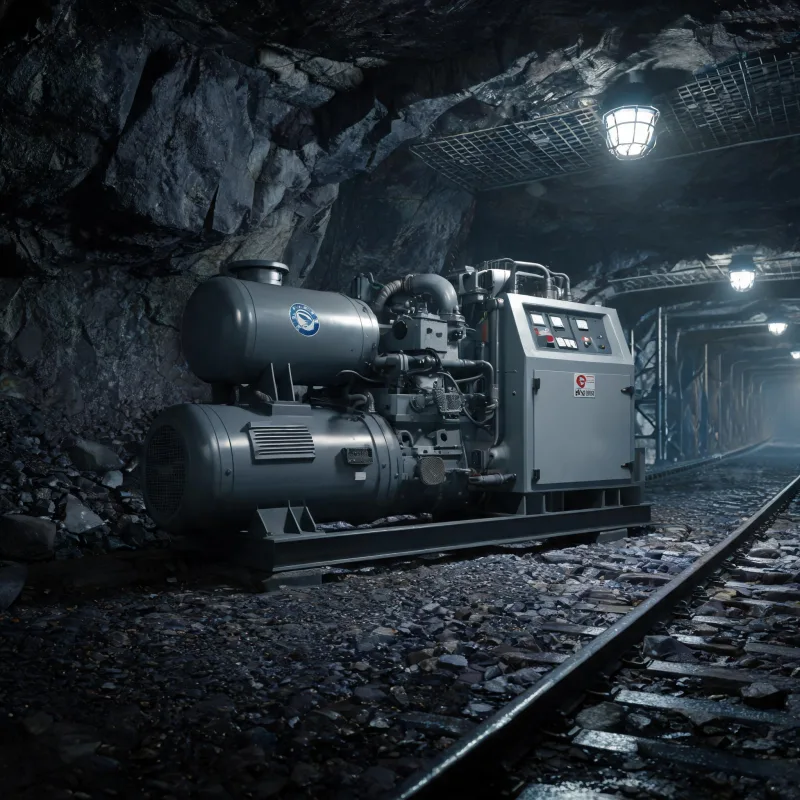
Practical, MSHA-Aligned Mining Air Compressor System Design for Emergency Air Supply Use Cases
- Emergency-focused mining air compressor designs require 2x redundant power sources, per 2024 MSHA mandate updates, to maintain supply during grid outages and post-blast electrical failures.
- All external air intake points must be positioned a minimum of 15 meters upwind of blast zones and diesel exhaust outlets to avoid contaminating emergency supply.
Core Design Mandate for Emergency Use Cases
Emergency air supply compressor systems cannot share design specs with standard operational mining compressed air setups. They require independent piping, power, and filtration to remain functional during catastrophic site events. Per 2024 MSHA mandates, emergency air systems must deliver 0.27 cubic meters per minute of clean, Grade D breathing air per person at a minimum pressure of 550 kPa. This requirement applies to both permanent refuge chamber hookups and portable respiratory mask connection points across all underground mining zones.
Validated Performance Data to Guide Sizing
Sizing calculations are the most common point of failure for emergency air compressor designs. Most teams default to sizing for the listed maximum occupancy of on-site refuge chambers, without accounting for temporary personnel surges during rescue operations.
Edge Cases and Limitations
The above sizing and redundancy rules do not apply to underground mines with operating depths exceeding 1,200 meters. At those depths, air compression heat buildup and pressure loss require 2.2x redundancy rather than the standard 2x, and intake points must be located at ground level rather than sub-surface to avoid methane contamination risks. No single compressor model works for all site types. Artic mines with average winter temperatures below -30°C require heated compressor enclosures and synthetic lubricants that function at extreme low temperatures.
Actionable Implementation Steps
Step 1: Redundancy Setup
Install two separate compressor units, one powered by the site grid and a second powered by on-site diesel generators with a minimum 96-hour fuel supply. Add a third portable backup compressor stored 300 meters away from the primary unit to avoid blast damage. All units must have automatic switchover functionality that activates within 10 seconds of primary system pressure loss, per MSHA requirements. Manual switchover systems are no longer approved for underground mining use as of 2024.
Step 2: Piping and Filtration
Run dedicated copper piping for emergency air lines, separate from operational pneumatic tool lines. Install 3-stage HEPA + carbon filtration at both intake and outlet points to remove silica dust, diesel particulate, and methane. All piping must be pressure tested to 1.5x the maximum operating pressure during installation, and marked with high-visibility yellow paint to distinguish it from operational compressed air lines.
Step 3: Testing Protocol
Run monthly 2-hour pressure tests, and quarterly 72-hour full load tests to validate supply capacity. Log all test results for MSHA audit compliance.
Cost Optimization Notes
For small surface mining sites with less than 50 on-site personnel, you may qualify for a MSHA variance that allows you to use a single redundant compressor unit rather than two, as long as you maintain a 120-hour portable air supply stockpile on site.




