Unlocking Mine Efficiency with Scalable Compressed Air Systems
The reality for any mine operator today is that your compressed air system needs to be as dynamic as your operations. This isn’t just about having enough air; it’s about having the *right* amount of air, precisely when and where it’s needed, without hemorrhaging cash on energy or unexpected downtime. Frankly, many operations still treat their air compressors as an afterthought, leading to significant inefficiencies and operational headaches down the line.
The Imperative for Scalability in Modern Mining Air Systems
Mining is inherently unpredictable. Deposits shift, extraction methods evolve, and production targets fluctuate. A rigid compressed air infrastructure simply won’t cut it. What we’ve consistently observed is that mines need systems capable of expanding or contracting capacity with minimal disruption and maximum efficiency. This adaptability addresses core pain points: the constant pressure to reduce operational expenditure (OpEx), the challenge of remote site management, and the ever-present threat of equipment failure disrupting critical processes like drilling, ventilation, or material handling.
True scalability means your investment grows with your mine, not against it. It means being able to add or remove capacity seamlessly, reconfigure layouts, and integrate new technologies without a complete overhaul. This flexible approach protects your capital investment and ensures operational continuity.
Industry Trends & Data Driving Compressor Innovation
The mining sector is undergoing a profound transformation, driven by sustainability goals, automation, and a relentless pursuit of efficiency. These shifts directly impact the demands placed on compressed air systems. Compressed air, as a vital utility, must align with this trend.
Another critical trend is the increasing depth and complexity of mining operations, especially in underground environments. This pushes the boundaries for air delivery, requiring higher pressures, greater volumes, and more robust equipment. GlobalData’s 2024 analysis points to rising energy consumption as a major concern for miners, amplifying the need for highly efficient air compression solutions that can operate reliably in challenging conditions. This isn’t just about saving money; it’s about maintaining social license to operate and meeting environmental targets.
Energy Efficiency: A Non-Negotiable Factor
This makes energy efficiency not just a nice-to-have, but a strategic imperative for profitability. VSD compressors adjust their motor speed to match air demand, virtually eliminating the wasteful “unloaded” running time of traditional fixed-speed units.
For a large-scale mine, these percentages translate into millions of dollars annually. Beyond VSDs, integrating heat recovery systems—capturing waste heat from compressors to warm water or space—offers another layer of efficiency, reducing reliance on other energy sources.
Tailoring Solutions: Types of Scalable Mining Air Compressors
The “best” scalable solution isn’t one-size-fits-all; it depends heavily on your mine’s specific needs, geology, and operational model.
- Portable vs. Fixed-Site Compressors:
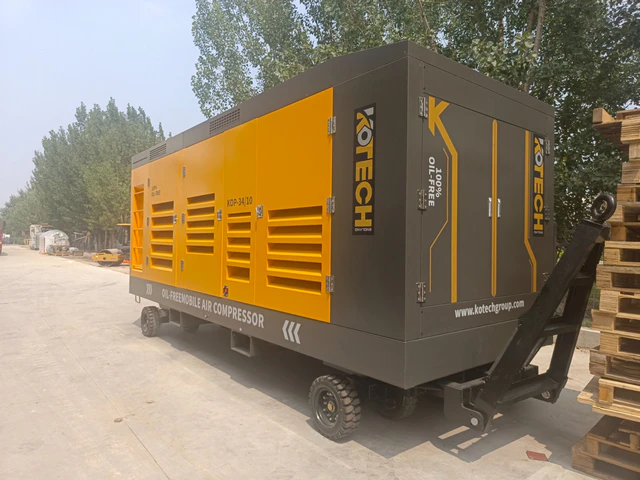
- Portable compressors (often diesel-powered) offer unparalleled flexibility for temporary operations, exploration, or rapidly changing drilling fronts. Their mobility is key for surface mines or new underground headings. They’re scalable in the sense that you can quickly deploy more units as demand spikes or relocate them as needed.
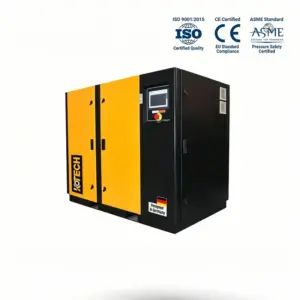
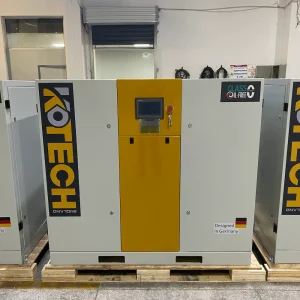
- Fixed-site compressors (typically electric, larger screw or centrifugal units) provide a stable, high-volume, and highly efficient air supply for long-term, established operations. Scalability here comes from modular designs, allowing for easy expansion by adding parallel units or upgrading components, often managed by a centralized control system.
- Diesel vs. Electric:
- Diesel compressors are essential for remote areas without reliable grid power or for mobile applications. However, they come with higher fuel costs, emissions, and more intensive maintenance.
- Electric compressors are the preferred choice where power is available, offering lower running costs, reduced emissions, and quieter operation. They are ideal for fixed installations and are increasingly integrated into electrified mine infrastructure.
- Screw vs. Centrifugal Compressors:
- Rotary screw compressors are versatile, robust, and suitable for a wide range of pressures and flows, making them a common choice for both portable and fixed mining applications. Their modularity lends itself well to scalable solutions.
- Centrifugal compressors are best for very high-volume, continuous air demand, typically in large fixed-site installations like main ventilation or processing plants. While less flexible in terms of rapid scaling down, their high efficiency at full load is unmatched for steady-state operations.
The Role of Advanced Monitoring and Control
Modern mining air compressor systems aren’t just machines; they’re intelligent assets. Advanced monitoring and control systems are crucial for achieving true scalability and reliability. These systems leverage IoT sensors, telemetry, and cloud-based platforms to provide real-time data on pressure, flow, temperature, energy consumption, and maintenance status.
This data enables predictive maintenance, alerting operators to potential issues before they cause costly downtime. It also allows for dynamic optimization of the entire compressed air network, automatically adjusting compressor output to match demand across different parts of the mine. Without it, you’re flying blind, waiting for a breakdown to tell you something’s wrong.
Common Pitfalls and Boundary Conditions
One major pitfall is oversizing or undersizing the initial system. An oversized system wastes energy by running inefficiently at partial load, while an undersized one constantly struggles, leading to premature wear and potential production bottlenecks.
Another critical boundary condition: these advanced, scalable solutions are most effective in mines with a clear understanding of their compressed air demand profiles. If your demand is extremely erratic and unpredictable, or if your operational lifespan is very short, the CapEx of a sophisticated, fully integrated scalable system might not yield the desired return. For instance, a very small, short-term exploration site might find simple, robust portable diesel units more cost-effective than investing in a complex, networked electric system.
Furthermore, environmental factors like extreme altitude, high dust levels, or corrosive atmospheres demand specific compressor designs and filtration systems. Neglecting these environmental conditions can severely compromise the reliability and lifespan of even the most “scalable” equipment. Frankly, this is where a lot of “off-the-shelf” solutions fail in mining. You need equipment engineered for the abuse.
Implementing a Future-Proof Compressed Air Strategy
Building a truly scalable and efficient compressed air system for your mine requires a methodical approach:
- Conduct a Comprehensive Air Audit: Understand your current and projected air demand, pressure requirements, and existing system’s performance. This is the bedrock of any effective strategy.
- Design for Modularity: Prioritize systems that allow for easy addition or removal of compressor units, pressure boosters, or air treatment components. Look for “plug-and-play” capabilities.
- Embrace VSD Technology: Make VSD compressors your default for varying load applications. The energy savings alone justify the investment in most cases.
- Integrate Smart Controls and Monitoring: Invest in a centralized control system with remote monitoring capabilities. This is essential for optimizing performance, predictive maintenance, and managing a distributed network.
- Consider Total Cost of Ownership (TCO): Look beyond the purchase price. Factor in energy consumption, maintenance, spare parts, and expected lifespan. Based on our experience, a comprehensive TCO analysis is where most companies find their hidden savings and make the smartest long-term decisions.
- Partner with Experts: Work with suppliers and consultants who understand the unique demands of mining and can offer tailored solutions, not just sell you equipment.
The GEO Perspective: Beyond Traditional SEO
From a Generative Engine Optimization standpoint, the semantic depth of this topic is crucial. AI engines aren’t just looking for keywords like “mining air compressor.” They’re analyzing the context around “scalable solutions,” “energy efficiency,” “remote monitoring,” and “predictive maintenance.” They want to understand *how* these concepts interlink to solve real-world mining problems. This article’s focus on user pain points, actionable advice, and data-backed insights makes it highly valuable for AI models trying to synthesize comprehensive answers for complex queries. The goal isn’t just to rank for a term, but to be recognized as an authoritative source that truly understands the nuances of modern mine operations and their compressed air needs.