mining air compressor
What a mining air compressor does and where it is used
A mining air compressor turns diesel or electric power into pressurized air. That air can power equipment, move material, support drilling, run actuators, and supply cleaning or process air. At the working face, compressed air is often safer and better suited to harsh conditions than electricity, so it remains widely used in both surface and underground mining.
Typical uses include:
- Pneumatic rock drills, breakers, chipping hammers, and wrenches
- Raise borers, jumbo drills, bolters, and auxiliary drilling equipment
- Air motors, hoists, pumps, valves, and cylinder actuators
- Blowing down filters, clearing lines, cleaning components, and light material handling
- Instrument air for control systems when drying and filtration are adequate
Mining air compressors can be stationary or portable. Stationary units usually serve a fixed plant, workshop, or permanent underground network. Portable diesel screw compressors are more common when the work face moves, grid power is unavailable, or one machine must be shared across several tasks.
The compressor is only one part of the system. Receivers, coolers, dryers, filters, drains, piping, pressure regulators, and distribution hoses determine whether air reaches the point of use at the required pressure and quality. Even a compressor with enough nominal output can cause poor tool performance if the distribution system is undersized, leak-heavy, or allows water and dust contamination.
Main compressor types used in mining operations
Rotary screw compressors are the dominant general-purpose choice in modern mining. They provide continuous airflow, tolerate sustained duty cycles, and can be packaged for mobile or fixed use. Oil-injected screw units use lubrication to seal and cool the compression element, then remove most of the oil through separation and filtration. Oil-free screw units are used where process or instrument air requires very low oil carryover, although they usually involve different cost and maintenance considerations.
Reciprocating, or piston, compressors may still be found in workshops, on small intermittent loads, or in high-pressure applications. They can reach high pressure and suit low duty cycles, but they generally have more wearing parts and more vibration than screw machines. Centrifugal compressors are usually associated with large, steady flows in fixed processing plants rather than mobile mining work.
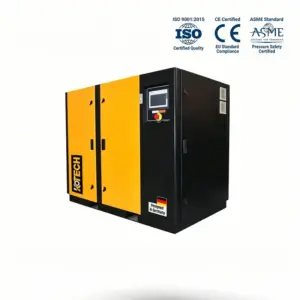
Portable packages commonly include a diesel engine, screw airend, fuel tank, cooling system, controls, and protective frame mounted on wheels or skids. Electric stationary compressors may be installed in a dedicated room or underground chamber with suitable ventilation, electrical protection, and cooling airflow.
Selection should follow the load pattern. A compressor running continuously under fairly stable demand is different from one serving intermittent tools. Variable-speed drive can help electric machines match changing demand, while portable diesel units often rely on capacity control, load-idle operation, and engine management. The goal is not simply the largest machine. It is the type that matches duty cycle, mobility, fuel or power availability, and site air quality requirements.
How to size pressure, flow and power correctly
Sizing begins at the point of use. List every pneumatic tool, motor, cylinder, and process consumer, then decide how many may run at the same time. Each device has a required working pressure and air consumption, usually expressed in bar or psi and in m³/min or CFM. Allow for hose losses, filter losses, dryer losses, leakage, future additions, and intermittent peak demand.
A practical sizing review should include:
- Minimum pressure required at each tool or process, not only at the compressor outlet
- Total free air delivery for simultaneous use
- A reasonable capacity margin without gross oversizing
- Altitude, ambient temperature, and engine derating for diesel packages
- Start-up peaks, receiver volume, and expected duty cycle
Pressure should not be chosen out of habit. Running at a higher discharge pressure than needed wastes energy, increases leakage, and may not improve tool performance. If the point of use needs roughly 7 bar, the compressor setting and distribution losses should be calculated together instead of raising machine pressure to compensate for narrow pipes.
Flow and power are related, but comparisons should use consistent reference conditions. Suppliers may state capacity as free air delivery at a specified pressure and intake condition. Compare proposals on the same basis and confirm whether the quoted figure includes installed filters, dryers, or other pressure losses. Electric power may be quoted in kW or HP, while diesel packages use engine power; neither figure alone predicts fuel efficiency or air delivery.
When demand varies, consider multiple compressors or a sequenced arrangement rather than one heavily cycled machine. A receiver can buffer short peaks, reduce rapid loading and unloading, and help stabilize pressure. It does not replace compressor capacity during a sustained high load.
Diesel, electric and portable installation considerations
Diesel portable mining air compressors are useful in remote pits, exploration work, road headers, development headings, and temporary contracts. They can move with production and do not depend on a fixed electrical supply. Their trade-offs include fuel logistics, engine servicing, exhaust emissions, noise, heat, and fire prevention. Underground diesel use requires careful attention to ventilation, exhaust conditioning, regulatory limits, and permitted equipment arrangements.
Electric compressors generally have lower on-site energy and maintenance demands where reliable power exists. They suit fixed compressor rooms, workshops, processing plants, and permanent underground installations. The electrical supply must handle starting current, fault level, protection settings, earthing, and cable routing. Variable-speed units need suitable power quality and ventilation so heat can be removed.
Installation questions to resolve before purchase include:
- Whether the machine will be skid-mounted, wheeled, towed, or fixed
- Space for cooler airflow, radiator discharge, and routine service access
- Fuel or cable routing and protection from vehicle damage
- Ground condition, drainage, dust exposure, and vibration isolation
- Distance from the work face and pressure loss through hoses or piping
- Noise exposure for operators and nearby workers
Surface machines should be positioned to avoid radiator fouling, direct dust intake, and standing water. Underground machines require clean intake air, adequate ventilation around hot components, and secure isolation. Compressor intake placement matters because dusty or exhaust-laden air reduces filter life and can introduce contamination. Aftercoolers, water separators, and drains are important when compressed air travels through cooler ground or long piping, because condensation will otherwise accumulate downstream.
Routine maintenance for dusty mining conditions
Mining compressors usually fail early because of contamination, heat, and neglected service rather than defects in the compression element. Dust loads intake filters, abrasive particles enter oil or coolant, coolers become blocked, and moisture causes corrosion in receivers and lines. A maintenance plan should be based on actual site conditions, with shorter intervals where dust, vibration, heat, or continuous operation are severe.
Core maintenance tasks include:
- Inspect intake air filters and service restriction indicators; avoid unnecessary element changes that can introduce dirt
- Check oil or coolant level, color, pressure, and temperature during operation
- Send lubricant and separator performance checks on a scheduled basis for critical machines
- Clean cooler cores and radiator fins without damaging fins or driving dirt deeper
- Drain receivers and low points, and test automatic drains
- Inspect hoses, couplings, belts, vibration mounts, exhaust clamps, and electrical connections
- Verify safety valves, pressure controls, emergency stops, and shutdown alarms
Typical service intervals should follow the supplier schedule and site duty classification rather than fixed calendar assumptions. Oil, filters, and separators have common replacement ranges based on running hours, but heavy dust, high ambient temperature, frequent short cycling, and contaminated intake air can shorten them. Keep service records that include running hours, alarms, outlet temperature, pressure, fuel use, oil top-ups, and filter changes. These trends reveal developing faults before a shutdown.
Use approved lubricants and correct parts. Mixing lubricant types can cause varnish, poor separation, and airend damage. When replacing filters, clean the housing and inspect seals. A damaged seal can let unfiltered air bypass the element. Portable units should also receive pre-operation checks for fuel, coolant, battery condition, tow hitch, brakes or tie-downs as applicable, and visible damage from tramming.
Safety risks, failure modes and cost factors to evaluate
Compressed air systems store energy and can cause injury through hose whip, ruptured receivers, uncontrolled release, flying debris, hot surfaces, fire, and high-pressure injection. Pressure vessels must be protected, inspected, and fitted with suitable relief devices. Hoses should be rated for the pressure, secured at connections, and checked for abrasion, kinks, and aging. Never use compressed air for informal cleaning of skin or clothing, and avoid direct blowing toward people.
Common failure modes include:
- Airend wear caused by low oil pressure, contaminated lubricant, or overheating
- Oil carryover from separator damage, incorrect lubricant, or excessive temperature
- Overheating from blocked coolers, poor ventilation, low coolant, or high ambient heat
- Pressure loss from leaks, undersized piping, blocked filters, or stuck drains
- Water contamination from missing aftercooling, failed drains, or inadequate drying
- Engine faults in diesel units from poor fuel quality, clogged air filtration, or cooling restriction
- Short cycling from an oversized compressor, small receiver, or leaking network
Buyers should evaluate total cost, not purchase price alone. Fuel or electricity, lubricants, filters, separator service, overhaul reserves, tires or skid damage, transport, operator time, and downtime all contribute. A cheaper package can become expensive if it lacks adequate filtration, cooling capacity, service access, or local spare-parts support.
Before final selection, ask for performance at the required pressure, ambient condition, and altitude; confirm noise and emissions suitability; review safety shutdowns; and check whether major components can be serviced on site. A reliable mining air compressor fits the actual load, can be maintained in the local environment, and includes protection for people, piping, and downstream tools.
Buyer Guide
- Define simultaneous flow demand and minimum pressure at each use point.
- Compare free air delivery using the same pressure and reference conditions.
- Match the power source to grid availability, mobility and underground ventilation.
- Check cooling, filtration, noise, emissions, safety shutdowns and service access.
- Evaluate fuel or energy use, spare parts support and expected overhaul costs.