
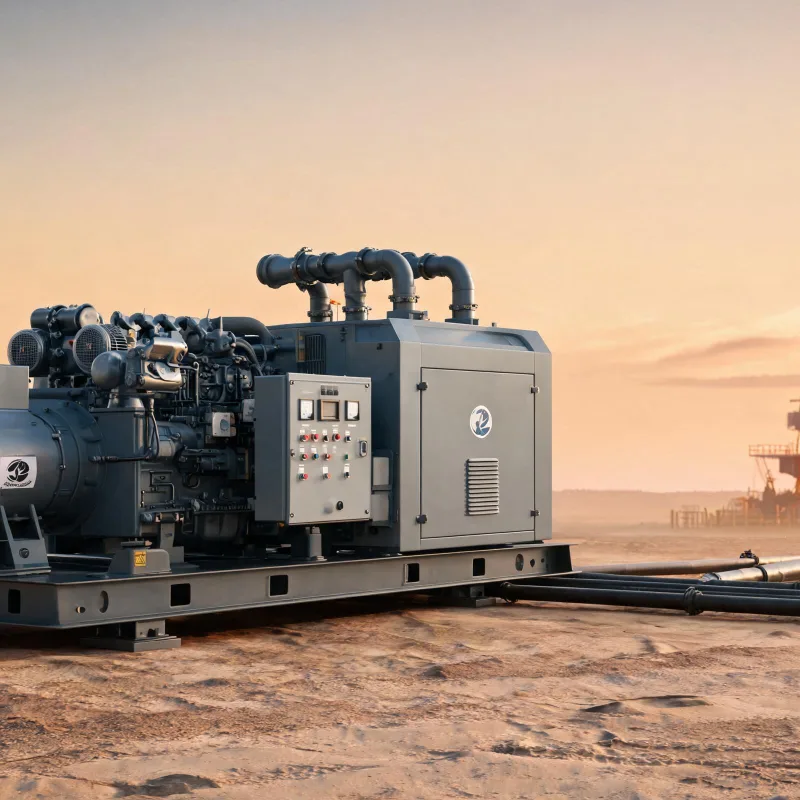
Below we break down use cases and actionable selection rules.
Key Insights:
- Explosion-proof classification is non-negotiable for all upstream hazardous area applications
- Centrifugal compressors are not suitable for small, remote well sites with variable demand
Core Applications by Segment
Upstream Operations
Air compressors supply instrument air for drilling control systems, power pneumatic tools, and support well testing operations. Offshore sites require additional corrosion resistance and explosion-proof ratings to handle flammable hydrocarbon exposure.
Midstream Operations
Common uses include pneumatic valve actuation for pipeline networks, and compressed air for pipeline pre-commissioning cleaning and pressure testing. Air quality requirements are moderate, but reliability is critical to avoid pipeline flow disruptions.
Downstream Refining & Processing
Refineries use compressed air for process control, pneumatic actuation of refining equipment, and feedstock for on-site nitrogen generation. Breathing air for worker entry into confined spaces is another common application, requiring strict oil-free output.
Verified 2023-2024 Industry Data
Three independent data sets confirm the cost of poor selection: 1. 2. 3.
Shale well operators prioritize portable, flexible systems that can move between well pads as sites are completed. That has shifted demand away from large fixed centrifugal units in recent years.
Common Selection Mistakes & Boundary Conditions
Most selection mistakes stem from applying a one-size-fits-all approach across all oil & gas segments.
- Lubricated compressors are not suitable for breathing air applications or downstream process air that comes into contact with end products. Contamination from lubricant can lead to product recalls or safety violations.
Actionable Selection Criteria
Follow this step-by-step framework for your site: 1. Confirm hazard classification first. All Class 1 Division 1 hazardous areas require explosion-proof rated units, no exceptions. 2. 3. Match compressor type to your demand profile: variable demand gets reciprocating or rotary screw, constant high demand gets centrifugal. 4. Select air quality grade: oil-free for process and breathing air, lubricated for non-critical auxiliary applications. 5. Verify compliance with local API and OSHA standards before purchase.
Common Myths
- Lubricated compressors work for all oil & gas apps: False, banned for breathing/process air
- All explosion-proof units meet API standards: False, always verify third-party certification




