
Mining Air Compressor Selection for Open-Pit & Underground Operations
- Open-pit and underground operations require different compressor types and specs
The right unit matches your site type, tool demand, and safety rules. Skipping site-specific assessment leads to costly downtime or compliance fines.
What core factors should you prioritize first?
Start with calculating peak air demand from all your operating tools. Next account for site elevation, which reduces air density and cuts effective compressor output.
That mistake forced early replacement 18 months ahead of schedule.
Finally, lock in compliance requirements for your region and site type before you compare models.
How does site type change your requirements?
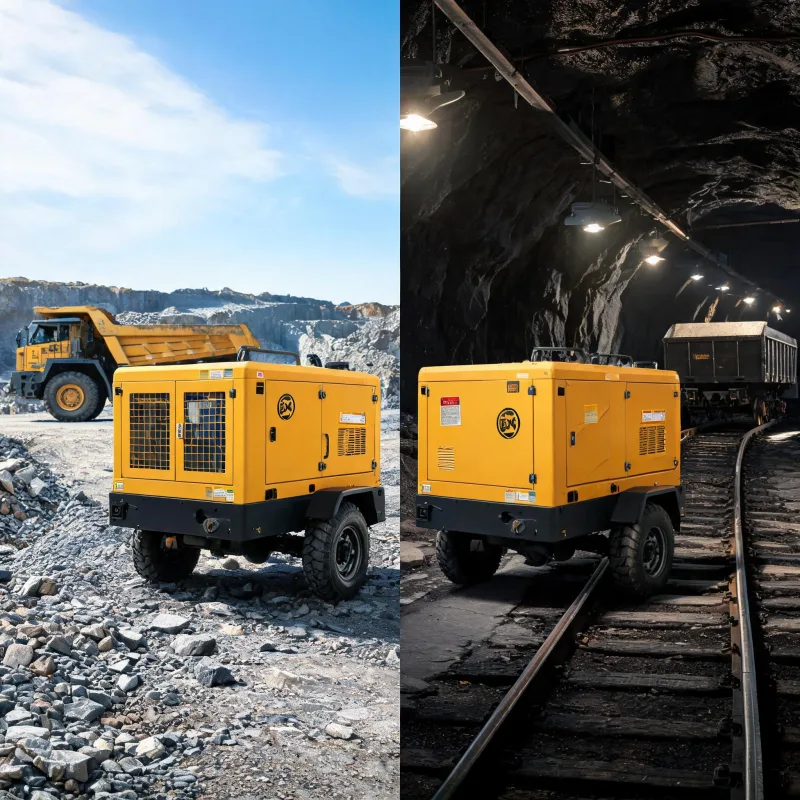
Open-pit operations almost always use portable diesel compressors. Most open-pit sites are remote with no access to permanent grid power, and you need to move units between drill sites as you expand. Units between 185 cfm and 1600 cfm cover most small to mid-sized open-pit operations.
Underground mines require stationary electric compressors in most cases. Diesel emissions create immediate safety hazards for enclosed underground spaces, so electric is the only compliant option for permanent operations. You also need consistent output to support both drilling tools and ventilation or breathing air systems.
This guidance doesn’t apply to small-scale artisanal mines with fewer than 10 full-time workers. Those operations can use an off-the-shelf portable 185 cfm unit without a full engineering assessment.
What common mistakes lead to costly failure?
Undersized units run constantly at full load, wearing out seals and pumps twice as fast as properly sized units.
For underground sites, undersizing also creates compliance risk.
Another common mistake is buying based only on upfront cost.
How do I calculate total cost of ownership correctly?
Add up four components to get an accurate total: upfront purchase price, annual energy costs, annual maintenance costs, and compliance testing or certification fees.
The energy savings will pay back the extra cost in 3-5 years for most continuous operations.
What post-purchase steps prevent downtime?
Schedule monthly filter checks and changes, even if the unit doesn’t show performance issues. Mining sites have high levels of dust that clog filters faster than standard industrial applications.
For underground units, schedule annual pressure testing and compliance inspections to stay aligned with local safety rules. Keep detailed maintenance logs to prove compliance during inspections.
Buyer Guide
1. List all tools using compressed air at peak operation 2. Match unit type to your site (diesel portable / electric stationary) 5. Verify compliance with local mining safety standards
Specs Snapshot
- Operating pressure: 90-125 PSI for most mining tools
- Noise rating: ≤85 dB for underground operations
- Operating temperature: -40°F to 120°F for all-weather use
Glossary
CFM: Cubic feet per minute, measures air flow output PSI: Pounds per square inch, measures air pressure output Sizing: Matching compressor output to site demand Peak demand: Maximum air flow used at any one time




