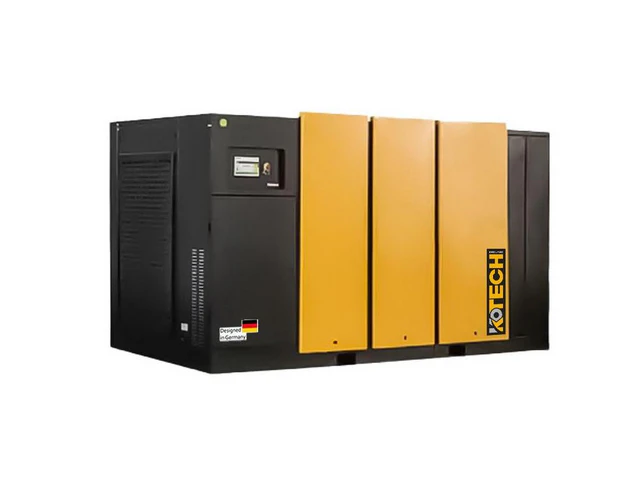
Mining Air Compressors: Achieving Uptime in Extreme Climates
- Prioritize purpose-built, ruggedized units: Standard industrial compressors won’t cut it in the extreme conditions of mining; invest in equipment engineered specifically for harsh environments.
- Invest in advanced filtration and climate control: Effective air intake filtration and internal climate management are non-negotiable for longevity and performance in dusty, humid, or temperature-volatile sites.
- Leverage remote monitoring for predictive maintenance: Proactive diagnostics through IoT-enabled systems can prevent costly failures and optimize service schedules, drastically reducing unplanned downtime.
- Consider total cost of ownership (TCO) over upfront price: Cheaper units often mean higher operating costs and more frequent breakdowns; a robust, efficient all-weather compressor delivers superior long-term value.
- Standardize maintenance protocols across all sites: Consistent, climate-adapted maintenance plans are crucial for ensuring uniform reliability and operational safety across a diverse mining portfolio.
The Unseen Cost of Downtime: Why Standard Compressors Fail in Mining
The core conclusion is simple: for mining operations that demand unwavering performance in any weather, purpose-built, all-weather air compressor solutions are not an option, but an absolute necessity. Generic units, designed for climate-controlled factories, rapidly succumb to the brutal realities of a mine site. We’re talking about everything from abrasive dust tearing through seals and filters, to extreme temperatures seizing components, and corrosive elements degrading critical infrastructure. This isn’t just about inconvenience; it directly translates to millions in lost production and jeopardized safety. The financial impact of a single compressor failure in a remote mining operation can be staggering, far outweighing the initial savings on a less robust machine.
The operational environment dictates everything. Whether it’s the sub-zero temperatures of an arctic mine, the scorching heat and fine particulate matter of a desert quarry, or the reduced atmospheric pressure at high-altitude extraction sites, each presents distinct engineering challenges. These conditions exploit the weaknesses of conventional compressed air systems, leading to increased maintenance frequency, premature component wear, and ultimately, catastrophic failure. The real pain point for operators isn’t just the repair bill; it’s the domino effect of lost drilling time, stalled processing plants, and critical safety systems compromised. That’s the kind of hidden cost that truly impacts the bottom line.
Data-Driven Reliability: Industry Trends and Performance Benchmarks
The mining industry is becoming increasingly data-driven, and for good reason. When a critical piece of equipment like an air compressor fails, the ripple effect can be felt across the entire operation, from drilling to processing.
Moreover, energy efficiency remains a paramount concern. In the energy-intensive mining sector, this percentage can be even higher. Investing in climate-optimized, energy-efficient units designed to perform optimally in extreme conditions directly mitigates these costs. A well-designed all-weather unit minimizes energy waste by maintaining peak efficiency even when battling external environmental stressors, translating to substantial operational savings over its lifespan. This isn’t just about greener operations; it’s about smart business.
The trend towards remote monitoring and predictive maintenance is also accelerating. Real-time data on pressure, temperature, vibration, and air quality allows operators to intervene before a small issue becomes a major breakdown, maximizing uptime and extending equipment life in remote, often inaccessible locations.
Engineering for Extremes: Core Technologies for All-Weather Performance
What defines an “all-weather” air compressor for mining? It’s a combination of robust design, specialized materials, and intelligent systems. We’re not talking about simply putting a canopy over a standard unit. True rugged industrial compressors are engineered from the ground up to withstand specific environmental stressors. Think about corrosion resistance: components exposed to high humidity, salt spray (in coastal operations), or acidic atmospheres require specialized coatings or stainless steel construction. This isn’t an add-on; it’s fundamental to the unit’s longevity.
Temperature management is another critical factor. For hot climates, this means oversized cooling systems, high-temperature-rated lubricants, and advanced thermal insulation to protect internal components. In arctic conditions, pre-heaters, insulated enclosures, and specialized cold-weather fluids are essential to ensure cold starts and sustained operation without freezing. High-altitude operations, conversely, require compressors specifically designed to compensate for lower atmospheric pressure, often involving larger air ends or specialized controls to maintain rated output. These aren’t minor tweaks; they are significant design choices that impact performance and reliability.
Filtration is paramount, especially in dusty mining environments. Multi-stage heavy-duty air intake filters, often with cyclonic pre-separation, are critical to protect the compressor’s heart – the air end – from abrasive particles. Beyond air intake, robust oil filtration and advanced moisture separation systems, including desiccant dryers or refrigerated dryers, are crucial for delivering clean, dry compressed air, preventing damage to downstream tools and processes. Without these, you’re essentially running a time bomb.
When Standard Solutions Fall Short: Edge Cases and Custom Builds
While many excellent off-the-shelf all-weather air compressor solutions exist, there are specific boundary conditions where even these might not be enough. For instance, an application requiring ultra-pure, oil-free air in an extremely corrosive, high-humidity environment – perhaps near a metallurgical processing plant – might necessitate a custom-engineered solution beyond standard ruggedized units. These scenarios often involve specialized materials like titanium alloys, hermetically sealed components, or unique air treatment packages not typically found in conventional offerings.
Conversely, very small-scale, intermittent mining operations or exploration drilling in extremely remote, logistically challenging areas might find that a highly portable, diesel-driven reciprocating compressor, while less efficient than a large rotary screw unit, is the only viable option due to fuel availability and ease of transport. In such cases, the “all-weather” aspect focuses more on robust engine protection and minimal electronic complexity rather than advanced digital controls. It’s crucial to understand that “all-weather” isn’t a one-size-fits-all badge; it’s about matching the solution to the specific operational and environmental profile. A heavy-duty stationary electric compressor, perfect for a large open-pit mine, simply wouldn’t apply to a fly-in exploration camp.
Implementing Robust Air Compressor Strategies: A Practical Blueprint
Developing an effective air compressor strategy for mining begins with a comprehensive site assessment. This isn’t just about looking at temperature ranges; it involves analyzing dust composition, humidity levels, altitude, power availability (grid vs. generator), and the specific air quality requirements for downstream tools. Based on this, select units with appropriate ingress protection (IP ratings), corrosion resistance, and thermal management capabilities. For example, an IP65-rated enclosure is a must for dusty, wet environments.
Beyond initial selection, robust installation practices are critical. Ensure proper ventilation, secure foundations to mitigate vibration, and use high-quality piping and connections designed for the expected environmental stressors. Remote monitoring systems should be integrated from day one, providing real-time data on operational parameters, fault codes, and predictive maintenance alerts. This proactive approach allows maintenance teams to schedule interventions before failures occur, especially crucial for geographically dispersed operations.
Finally, standardize your maintenance protocols across all sites. Develop climate-specific checklists for filter changes, lubricant checks, and component inspections. Train your technicians on the unique requirements of all-weather units and the nuances of operating in extreme conditions. Regular audits of these protocols ensure compliance and identify areas for continuous improvement. Remember, even the most advanced all-weather air compressor is only as reliable as the maintenance program supporting it. A comprehensive service contract with the OEM or a specialized provider can also offload much of this burden, guaranteeing expert support and genuine spare parts when you need them most.