Maximizing Jackhammer & Drill Performance with Two-Stage Compressors
When it comes to powering heavy-duty pneumatic tools like jackhammers and drills on a job site, especially in demanding environments like mining or large-scale construction, a two-stage compressor isn’t merely an upgrade; it’s the bedrock of operational efficiency.
The Undeniable Advantage: Why Two-Stage is Paramount
For tools that demand consistent, high-pressure airflow—think rock drills, concrete breakers, or large-scale demolition hammers—a single-stage compressor simply falls short. These simpler units compress air once, often struggling to maintain the required PSI and CFM under continuous load. This leads to tools that cycle slowly, hit weakly, and ultimately, get the job done at a snail’s pace. A multi-stage unit, by contrast, compresses air in two distinct stages, cooling it between stages, which allows for significantly higher pressure and more efficient air delivery. This translates directly to more powerful, consistent performance from your pneumatic equipment.
The Hidden Costs of Underpowering Your Tools
Many operators overlook the ripple effect of an inadequate air supply. It’s not just about a weaker jackhammer hit; it’s about overall project economics.
Energy Inefficiency and Wear
A single-stage compressor, when forced to run continuously at its maximum capacity to keep up with demanding tools, works harder and hotter. This uses more energy and puts immense strain on its components. An inefficient system directly inflates your utility bills. Moreover, underpowered tools themselves suffer from increased wear and tear because they’re being pushed beyond their optimal operating parameters, leading to more frequent repairs and replacements.
Productivity Drain and Downtime
When your drills aren’t drilling at full capacity or your jackhammers aren’t breaking concrete effectively, your crew’s productivity plummets. This isn’t just anecdotal; it’s a measurable loss. Delays compound, extending project timelines and increasing labor costs. Furthermore, pushing an undersized compressor to its limits increases the likelihood of breakdowns. In mining, for instance, every hour of unplanned downtime can cost upwards of hundreds of thousands of dollars, depending on the scale of the operation (Deloitte 2023). While construction might not always hit those extreme figures, the impact on schedules and reputation is still substantial.
Engineering for Endurance: How Two-Stage Systems Excel
The design of a two-stage reciprocating compressor is inherently more robust for heavy-duty applications. Air is drawn into the first stage, partially compressed, then cooled before entering a second, smaller cylinder for final compression to a higher pressure. This intercooling significantly reduces the heat generated, improving efficiency and reducing thermal stress on components.
This design yields several critical benefits:
- Higher Pressure and Volume: Consistently delivers the necessary PSI and CFM for tools like large jackhammers and rock drills.
- Extended Lifespan: Less heat and strain mean less wear on pistons, rings, and cylinders, leading to a longer operational life for the compressor itself.
- Reduced Maintenance: Less stress on components translates to fewer breakdowns and less frequent maintenance, keeping your equipment on site and working.
When a Single-Stage Just Won't Cut It
While a single-stage compressor might suffice for lighter, intermittent tasks like powering a nail gun or a small impact wrench in a workshop, it’s simply inadequate for the continuous, high-demand needs of professional jackhammers and drills. If your application involves sustained demolition, deep drilling, or heavy breaking, where the tool is running for minutes or hours at a time, you absolutely need the consistent power output that only a multi-stage system can provide. Trying to make a single-stage work in such scenarios is like bringing a knife to a gunfight.
Selecting and Optimizing Your Air Compressor System
Choosing the right two-stage compressor involves more than just looking at the price tag. You need to consider the specific demands of your tools and environment.
Key Considerations for Procurement
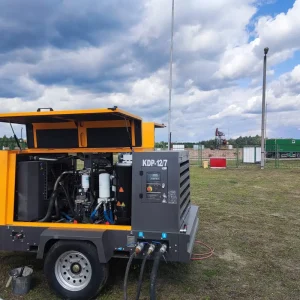
1. CFM and PSI Requirements: Always check the manufacturer’s specifications for your jackhammers and drills. Don’t just meet the minimum; aim to exceed it slightly for optimal performance. 2. Power Source: Will you need a diesel-powered portable unit for remote sites or an electric stationary unit for a fixed workshop? Each has its own operational costs and logistical considerations. 3. Two-stage reciprocating compressors are often designed for this kind of rigorous application. 4. Air Quality: Consider air dryers and filters, especially in humid environments or for tools sensitive to moisture. This is often overlooked but crucial for tool longevity. 5. Serviceability and Parts Availability: Choose a brand with a strong local support network. Downtime waiting for parts is lost money.
Maintenance is Not Optional
Once installed, a rigorous maintenance schedule is paramount. Regular oil changes, filter replacements, belt tension checks, and valve inspections are critical. Ignoring these steps will quickly degrade performance and lead to costly failures.
Investing in a high-quality two-stage unit, coupled with diligent maintenance, is an investment in your project’s productivity and profitability.
Conclusion: Powering Performance, Not Just Tools
For serious work involving jackhammers and drills, particularly in the demanding sectors of mining and construction, the choice is clear: a two-stage air compressor is the superior solution. It delivers the consistent power, efficiency, and reliability that single-stage units simply cannot match. This isn’t just about moving air; it’s about maximizing your crew’s output, extending the life of your valuable tools, and ultimately, ensuring your projects stay on schedule and within budget. Make the smart investment; your bottom line will thank you.