
Selecting the Right Air Compressor for Your Mining Operation
The Core Truth: Why Your Mining Air Compressor Choice is Non-Negotiable
In the mining industry, an industrial air compressor isn’t just another piece of equipment; it’s the lifeline of your operation, powering everything from rock drills and ventilation to safety systems and processing plants. Getting this choice wrong isn’t merely inconvenient; it risks catastrophic downtime, worker safety, and significant financial losses.
Market Dynamics & Operational Imperatives: Data-Driven Insights
The global mining equipment market is dynamic, reflecting increasing demand for minerals and a persistent drive for operational efficiency. This growth underscores the pressure on mining companies to optimize every aspect of their operations.
Energy consumption remains a major concern, directly impacting the bottom line. The International Energy Agency (IEA) highlighted in its 2022 report on critical minerals that mining operations are inherently energy-intensive. Ignoring this is leaving money on the table.
Furthermore, safety and uptime are paramount. The financial impact of unplanned downtime in mining can be staggering. A reliable air compressor is fundamental to preventing such losses, keeping operations running smoothly, and ensuring worker safety in hazardous environments.
Navigating the Harsh Realities: Underground vs. Surface Demands
The fundamental distinction in mining air compressors lies in their intended application: underground or surface. Each environment presents a unique set of challenges that demand specialized engineering and operational considerations.
Underground: The Subterranean Gauntlet
Underground mining is a world of extreme conditions. Space is at a premium, temperatures often soar, and the presence of dust, humidity, and potentially explosive gases (like methane in coal mines) is a constant threat. This environment dictates compressors that are:
- Explosion-Proof and Certified: Compliance with standards like ATEX (Europe) or MSHA (USA) is non-negotiable. This means specialized electrical components, enclosures, and often flame-retardant materials.
- Compact and Maneuverable: Designed to fit through narrow shafts and operate in confined spaces, often requiring skid-mounted or modular designs.
- Robust Filtration: Handling high levels of dust and particulate matter is critical to protect internal components and ensure air quality.
- Heat Management: Efficient cooling systems are vital to prevent overheating in enclosed, high-temperature environments.
- Remote Monitoring Capable: Given the inaccessibility, IIoT-enabled systems for real-time performance tracking and predictive maintenance are invaluable.
These units often prioritize reliability and safety features over sheer portability, as they are typically installed for longer durations.
Surface: Powering the Open Pit
Surface mining, while less constrained by space, presents its own set of challenges, including extreme weather variations, high dust loads, and the need for significant air volumes for large-scale operations like drilling, blasting, and material handling. Surface mining air compressors require:
- Heavy-Duty & Weatherized: Built to withstand scorching summers, freezing winters, heavy rain, and corrosive dust.
- High Free Air Delivery (FAD): Capable of supplying large volumes of compressed air to power multiple tools and processes simultaneously.
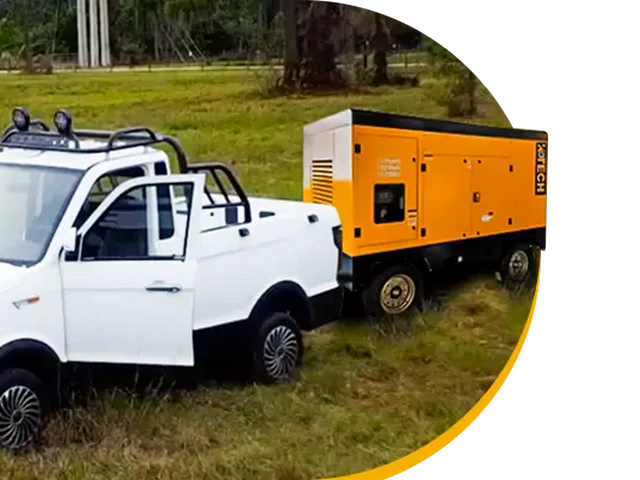
- Portability & Mobility: Often trailer-mounted or self-propelled for easy relocation across vast open-pit sites.
- Sound Attenuation: Noise reduction is increasingly important due to environmental regulations and worker comfort.
- Energy Efficiency at Scale: Given the large capacities, VSD technology is crucial for optimizing energy consumption against fluctuating demand.
These compressors are typically more accessible for routine maintenance but must be designed for continuous, demanding outdoor operation.
Beyond the Purchase Price: Total Cost of Ownership (TCO) & Advanced Features
Focusing solely on the initial capital expenditure for a mining air compressor is a short-sighted approach. The true economic impact comes from its Total Cost of Ownership (TCO), which encompasses energy consumption, maintenance, parts, labor, and potential downtime losses over its lifespan.
Energy Efficiency: The Silent Profit Driver
A VSD compressor adjusts its motor speed to match air demand, significantly reducing energy waste during periods of lower load. For many mining operations, air demand fluctuates wildly. Investing in VSD units can lead to substantial energy savings, often recouping the higher upfront cost within a few years. Proper sizing, air leak detection, and efficient air treatment (dryers, filters) also play a critical role in minimizing energy waste.
Maintenance & Uptime: The Reliability Equation
Downtime is the enemy of profitability. Modern industrial mining air compressors integrate advanced features to enhance reliability and facilitate predictive maintenance:
- IIoT and Remote Monitoring: Sensors gather real-time data on pressure, temperature, vibration, and energy consumption. This data can be transmitted to a central control room or even off-site, allowing for proactive intervention and preventing unexpected failures.
- Modular Design: Facilitates quicker component replacement and easier servicing, reducing maintenance windows.
- Robust Components: Heavy-duty air ends, industrial-grade motors, and corrosion-resistant materials extend operational life in harsh conditions.
Air Quality: Protecting Tools and Processes
The quality of compressed air is often overlooked but critical. Contaminants like moisture, oil, and particulates can damage pneumatic tools, compromise processes, and even pose health risks. Integrated air treatment systems—including aftercoolers, coalescing filters, and refrigerated or desiccant dryers—are essential to deliver clean, dry air suitable for the application.
When Standard Won’t Cut It: Identifying Boundary Conditions
While many robust, off-the-shelf industrial mining air compressors exist, there are specific boundary conditions where standard solutions simply won’t suffice. For example, operations at extremely high altitudes (e.g., above 15,000 feet) require specialized engineering to compensate for lower atmospheric pressure, impacting compressor performance. Similarly, if your mine extracts minerals that release highly corrosive or unique gas compositions, standard materials may degrade rapidly, necessitating custom-built units with specialized alloys or coatings. Only when these unique environmental or chemical factors are rigorously assessed can you avoid costly mismatches. In these niche cases, engaging a vendor capable of custom engineering is not a luxury, but a necessity.
Practical Selection Strategies for Your Mining Operation
Selecting the right industrial mining air compressor involves a systematic approach:
- Comprehensive Needs Assessment:
- Air Demand: Precisely calculate your maximum and average Free Air Delivery (FAD) requirements (CFM or m³/min) and required pressure (PSI or Bar) for all pneumatic tools and processes.
- Environmental Factors: Detail ambient temperature ranges, humidity, dust levels, altitude, and any potential explosive atmospheres.
- Regulatory Compliance: Identify all relevant local, national (e.g., MSHA), and international (e.g., ATEX, CE) safety and environmental standards.
- Space Constraints: Measure available footprint and headroom, especially for underground installations.
- Technology Evaluation:
- Compressor Type: Rotary screw (most common), reciprocating (for high pressure/intermittent use), or centrifugal (for very large, continuous demands).
- Drive Type: Fixed speed vs. Variable Speed Drive (VSD) – VSD is almost always preferred for fluctuating demand.
- Air Treatment: Determine necessary air quality (ISO 8573-1 class) and select appropriate dryers and filters.
- Total Cost of Ownership (TCO) Analysis:
- Compare initial purchase price with projected energy consumption costs, maintenance schedules, and expected lifespan.
- Factor in potential downtime costs and the value of remote monitoring and predictive maintenance capabilities.
- Vendor Selection:
- Choose reputable manufacturers with a proven track record in the mining sector.
- Assess their service network, parts availability, and technical support capabilities.
- Inquire about warranties and long-term service agreements.
- Installation & Commissioning:
- Ensure proper installation by qualified technicians to optimize performance and safety.
- Thorough commissioning and testing are crucial before full operational deployment.
By following these steps, you can secure an industrial air compressor that not only meets your operational needs but also contributes positively to your mine’s overall safety, efficiency, and profitability.




