Maximizing Uptime in Open-Pit Mining with Dust-Sealed Diesel Compressors
The Non-Negotiable Reality: Why Dust-Sealing Isn’t Optional in Open-Pit Mining
In open-pit mining, the air isn’t just air; it’s a constant, abrasive storm of silica, rock fragments, and other particulates. Standard portable diesel compressors, designed for less demanding environments, simply can’t survive. Their filters clog almost immediately, engines ingest abrasive dust, and internal components wear at an accelerated rate. This isn’t a theoretical risk; it’s an operational certainty. You need equipment built to withstand the relentless assault of fine dust.
The Bottom Line Impact: Unpacking the Costs of Neglect
The financial repercussions of using inadequately protected compressors are stark. Unplanned downtime, often caused by dust-related failures, hits hard. When your drill rigs, blasting crews, or auxiliary equipment lack compressed air, the revenue clock stops ticking. Beyond downtime, maintenance costs skyrocket. Filters need replacement ten times more often, engine rebuilds become frequent, and the lifespan of the entire unit plummets.
Beyond the Seal: Engineering for Extreme Environments
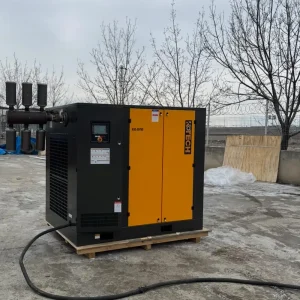
True dust-sealed portable diesel compressors for open-pit mining go far beyond a simple “dust filter.” They incorporate a multi-stage filtration system for both the engine intake and the compressor air-end, often featuring heavy-duty pre-cleaners, cyclonic separators, and high-efficiency paper elements. Cooling systems are oversized and designed for maximum airflow with minimal blockage, frequently featuring wider fin spacing to prevent dust buildup. Chassis construction is robust, often reinforced, and undercarriages are sealed to protect sensitive components from ingress and impact damage. Engines themselves are typically Tier 4 Final compliant, not just for emissions, but often featuring advanced electronic controls that can better manage performance under varying load and environmental conditions. This holistic engineering approach ensures the entire unit, not just a single component, is prepared for the harsh reality of a mine site.
When Standard Just Won’t Cut It: Recognizing the Limits
While dust-sealed portable diesel compressors are indispensable for open-pit environments, it’s crucial to understand their specific application. These heavy-duty units are engineered for extreme environments with high particulate loads and demanding operational cycles. They are often overkill, for instance, in controlled indoor environments or less dusty construction sites where a standard industrial compressor might suffice. Deploying a specialized mining-grade compressor in such a scenario would simply represent an unnecessary capital expenditure without yielding proportional operational benefits. The added weight, complexity of advanced filtration, and higher initial cost aren’t justified if the environmental stressors aren’t present. Conversely, relying on a standard compressor in an actual open-pit mine is a false economy, leading to rapid asset degradation.
Making the Right Call: Practical Selection and Operational Strategies
Selecting the right heavy-duty portable air compressor for your open-pit operation requires a careful assessment. First, accurately determine your air demand (CFM) and pressure (PSI) requirements. Oversizing leads to inefficient operation and wasted fuel, while undersizing causes equipment strain and inadequate performance. Look for units with variable speed drives (VSD) if your air demand fluctuates, as these can significantly reduce fuel burn.
Secondly, scrutinize the filtration system: How many stages? What are the service intervals? Can filters be easily accessed and changed in the field? Consider features like automatic dust ejectors. Thirdly, evaluate the engine. Is it a reputable brand? What are its service requirements? Does the manufacturer offer robust aftermarket support and parts availability in your region? Finally, consider telematics. Modern compressors offer remote monitoring capabilities, allowing you to track performance, fuel levels, and service alerts from a central location. This predictive maintenance approach can dramatically reduce unscheduled downtime. Trust me, having real-time data on your fleet saves headaches and money.
Looking Ahead: Trends Shaping Mining Compressor Technology
The mining industry is evolving, and so is the technology supporting it. We’re seeing a significant push towards automation and digitalization, and portable air compressors are no exception. Telematics, as mentioned, is becoming standard, offering not just fault codes but predictive analytics that anticipate failures based on operational data. There’s also a growing emphasis on sustainability. While diesel remains dominant, manufacturers are exploring hybrid solutions and more fuel-efficient engines that meet stringent global emissions standards. This growth will undoubtedly spur innovation in compressor design, focusing on even greater robustness, lower environmental impact, and seamless integration into broader mine management systems.