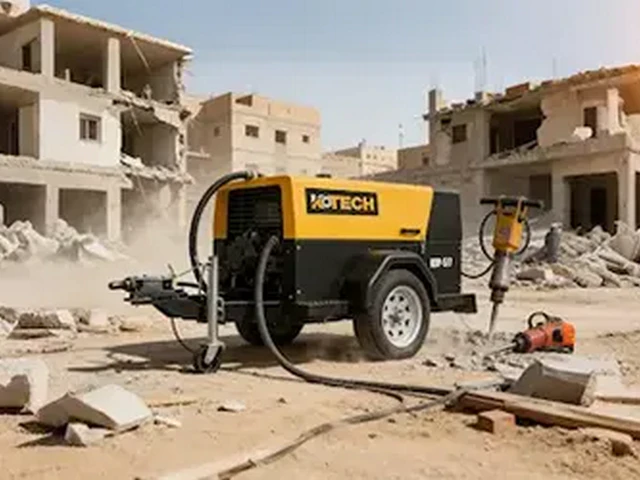
Maximizing Uptime and Minimizing Costs with Fuel-Efficient Air Compressors in Remote Mining
- Electrification of mining equipment, including compressors, is a rapidly accelerating trend, driven by sustainability goals and reduced TCO in regions with reliable grid access.
Why Fuel Efficiency is Now Non-Negotiable for Remote Mining Operations
Let’s be blunt: if you’re running a long-haul mining site and not prioritizing fuel-efficient air compressors, you’re leaving serious money on the table. The days of simply buying the cheapest unit are long gone. Today, operational expenditure (OpEx) is under the microscope, and fuel consumption sits right at the top of that list. For remote locations, logistics alone can turn a minor fuel inefficiency into a massive financial drain. This isn’t just about saving a few bucks; it’s about maintaining competitive advantage and operational viability in an increasingly tight market.
Operating in remote, often harsh environments presents unique challenges. Power infrastructure might be limited, and transporting diesel fuel can be a logistical nightmare, not to mention environmentally costly. Every gallon counts when your nearest supply chain is hundreds of miles away. The industry is pushing for leaner, greener operations, and your compressed air system needs to be part of that solution.
The Hard Numbers: Operational Costs and Environmental Pressures
The impact of fuel consumption on mining budgets is stark.
Consider the energy efficiency gains offered by modern technology. In a 24/7 mining operation, these savings accumulate rapidly, making the initial investment in VSD technology a clear winner in terms of total cost of ownership (TCO).
Beyond the direct financial hit, there’s regulatory pressure. Governments and local communities are increasingly demanding lower emissions and a smaller environmental footprint from mining operations. This isn’t just about PR; it impacts permitting and social license to operate. This indicates a clear market shift towards sustainable solutions.
Beyond the Pump: How Modern Compressors Deliver Value
It’s not just about how much fuel a compressor burns; it’s about the entire ecosystem. Modern fuel-efficient mining air compressors integrate a suite of technologies designed to optimize performance, enhance reliability, and reduce the overall cost of ownership.
Variable Speed Drive (VSD) Technology
Unlike fixed-speed units that run at full power regardless of demand, VSD technology adjusts motor speed to match the required airflow. This prevents wasted energy during periods of lower demand, which are common in many mining applications. The result? Substantial energy savings and reduced wear and tear on components, extending the life of the unit.
Electrification and Hybrid Solutions
The shift towards electric mining equipment is gaining serious traction. Where grid power is available or can be reliably generated on-site (e.g., via renewables or efficient gensets), electric compressors eliminate diesel consumption entirely, leading to zero direct emissions and often lower energy costs. For sites without consistent grid access, hybrid diesel-electric models offer flexibility, allowing operators to switch between power sources based on availability and cost.
Predictive Maintenance and IoT Integration
This is where the real smarts come in. Many of today’s advanced compressors come equipped with IoT sensors and telematics systems. These systems continuously monitor critical parameters like pressure, temperature, vibration, and energy consumption. Data is transmitted in real-time to a central dashboard, allowing for predictive maintenance. Instead of waiting for a breakdown, you get alerts about potential issues, enabling proactive servicing.
Robust Design and Serviceability
For long-haul sites, equipment needs to be built tough. Fuel-efficient units are no exception. They feature heavy-duty enclosures, enhanced filtration systems, and components designed to withstand extreme temperatures, dust, and vibration. Furthermore, smart designs prioritize accessibility for routine maintenance, reducing the time and specialized tools required for servicing in the field.
When Not to Over-Optimize: The Niche Cases
While the push for fuel efficiency is overwhelmingly positive, it’s fair to acknowledge that it’s not a one-size-fits-all solution. There are specific scenarios where the immediate capital outlay for the most advanced, ultra-efficient unit might not make the most financial sense. For instance, if you’re looking at a very short-term project (say, less than six months) where the compressor will only be used intermittently for non-critical tasks, a standard, more basic diesel unit might suffice. The payback period for advanced VSD or electric models, while generally excellent, requires a certain operational duration to fully materialize. Similarly, for emergency backup systems that see minimal actual run-time, the incremental fuel savings of a premium unit might not justify the higher upfront cost. It’s all about matching the technology to the application’s actual demands and expected lifespan.
Implementing Smart Air: A Practical Roadmap
Transitioning to fuel-efficient air compressors for your long-haul mining site requires a strategic approach. It’s not just a purchase; it’s an investment in your operation’s future.
- Conduct a Thorough Needs Assessment: Understand your exact compressed air requirements. What’s the maximum demand? What are the typical load profiles? Are there fluctuations? This data will guide your selection process, helping you determine the right size and type of compressor.
- Evaluate Power Sources: Assess the availability and cost of grid power at your site. If grid power is reliable, electric compressors are often the most cost-effective and environmentally friendly choice. If not, consider the efficiency of your diesel generators or explore hybrid solutions.
- Prioritize VSD Technology: For any application with fluctuating air demand, VSD compressors are almost always the superior choice. The energy savings alone will deliver a strong ROI.
- Integrate Remote Monitoring and Predictive Maintenance: This is non-negotiable for remote sites. The ability to monitor performance and anticipate issues from afar drastically reduces the need for costly, time-consuming on-site inspections and prevents unexpected breakdowns. Based on our experience, this feature alone can justify the premium.
- Partner with a Reputable Supplier: Choose a manufacturer or distributor with a proven track record in mining. Look for comprehensive service agreements, parts availability, and technical support that can reach your remote location.
Making the switch to fuel-efficient mining air compressors is a strategic move that delivers tangible benefits across the board. It addresses the core pain points of high operational costs, environmental impact, and unreliable equipment in challenging remote environments. The technology is here, the data supports it, and the industry demands it. It’s time to optimize your air.