
Effective air compressor deployment is non-negotiable for modern mining. It’s about more than just power; it’s about uptime, energy efficiency, and adaptability in the harshest environments. We'll dive into what truly drives success, from selecting the right technology to implementing smart monitoring, ensuring your mine’s productivity never falters.
Optimizing Mining Air Compressor Deployments for Global Success
Key Takeaways
- Air compressors are vital for mining, impacting productivity and costs.
- VSD compressors offer significant energy savings (up to 35%) for variable air demand.
- IoT and remote monitoring enable predictive maintenance, reducing downtime.
- Modular/containerized units speed up deployment and offer relocation flexibility.
- Environmental factors (altitude, dust) and power supply dictate optimal compressor choice.
- Conduct air audits, prioritize efficiency, digitalize, and maintain systems diligently.
Related: Industrial air compression for mining · heavy-duty air systems · mine site compressed air solutions · subterranean compressed air · surface mining compressor installations · pneumatic systems in mining · operational efficiency in mining · remote mine infrastructure · VSD compressor technology · total cost of ownership mining · predictive maintenance air compressors.
Key Insights:
- Energy efficiency is paramount: Air compressors can account for up to 30% of a mine’s total electricity consumption; optimizing selection and operation dramatically cuts OpEx.
- Uptime is king: Remote, harsh mining environments demand robust, reliable systems with proactive maintenance strategies to prevent costly operational stoppages.
- Modular and containerized solutions reduce deployment time: Rapid installation and relocation capabilities are critical for dynamic mine sites, minimizing project delays.
- Data-driven insights are transforming operations: IoT-enabled compressors allow for predictive maintenance and real-time performance optimization, moving beyond reactive repairs.
- Environmental factors dictate specific equipment choices: Altitude, temperature extremes, and dust levels significantly impact compressor performance and longevity, requiring tailored solutions.
The Unseen Powerhouse: Why Mining Air Compressors Define Operational Success
When we talk about mining operations, the big machinery – haul trucks, excavators, crushers – always grab the headlines. But behind every efficient blast, every pneumatic tool, and every critical ventilation system, there’s a meticulously deployed industrial air compressor silently doing the heavy lifting. From my 12+ years in this business, I’ve seen firsthand that a poorly specified or badly installed compressed air system can cripple a mine’s productivity faster than almost anything else. It’s not just a utility; it’s the lifeblood for many critical processes. The real pain point for mine operators is the constant battle against downtime and escalating energy costs. These aren’t minor inconveniences; they directly impact the bottom line.
Consider a blast hole drilling operation. Without consistent, high-pressure air, those drills don’t just slow down; they stop. That ripples through the entire production chain. Or think about the remote locations many mines operate in. Getting a technician to fix a compressor can take days, sometimes weeks, costing millions in lost production. This isn’t theoretical; it’s the daily reality for countless mine managers.
Market Dynamics & Efficiency Imperatives: What the Data Says
The global mining equipment market is projected to hit nearly $190 billion by 2030, according to a 2023 report by Grand View Research. This growth isn’t just about bigger machines; it’s about smarter, more efficient ancillary systems, with air compressors playing a crucial role. Energy consumption remains a primary concern across the industry. Compressed air systems are notoriously power-hungry. In fact, some studies, like one from the US Department of Energy in 2022, indicate that compressed air can consume up to 30% of a plant’s total electricity bill. For a large-scale mine, that’s a staggering operational expenditure.
This is why the push for Variable Speed Drive (VSD) compressors isn’t just a trend; it’s an economic necessity. VSD technology allows the compressor to adjust its motor speed to match air demand, rather than running at full capacity and bleeding off excess pressure. Companies adopting VSD solutions often report energy savings upwards of 35% compared to fixed-speed units, as highlighted in a 2023 industry whitepaper by Atlas Copco. This isn’t just about saving a few bucks; it’s about making a mine viable in a volatile commodity market.
Furthermore, the adoption of IoT and digital monitoring in industrial air compression is accelerating. Mordor Intelligence’s 2024 analysis predicts a significant uptake, driven by the desire for predictive maintenance capabilities. Real-time data on pressure, temperature, flow rates, and vibration allows mine operators to anticipate failures, schedule maintenance proactively, and avoid catastrophic breakdowns. This shift from reactive to predictive maintenance is a game-changer for remote mining sites.
Beyond Horsepower: Decoding Optimal Air System Architectures
Selecting the right air compressor for a mining application goes far beyond simply matching CFM and PSI. You need to consider the specific environment. Is it a high-altitude open-pit mine in the Andes, where atmospheric pressure impacts compressor efficiency? Or a deep underground coal mine with explosive gas risks, demanding intrinsically safe or explosion-proof designs? These aren’t minor details; they’re critical design parameters.
The choice between rotary screw, centrifugal, or reciprocating compressors depends heavily on the application. Rotary screw compressors are workhorses for continuous duty, offering consistent flow for general utility air, pneumatic tools, and ventilation. Centrifugal compressors shine in applications requiring very high volumes of oil-free air, often found in processing plants or large-scale material handling. Reciprocating compressors, while less common for primary mine air, can be ideal for intermittent, high-pressure tasks like specialized rock drilling or booster applications. Each has its place, and a smart deployment often involves a mix of technologies.
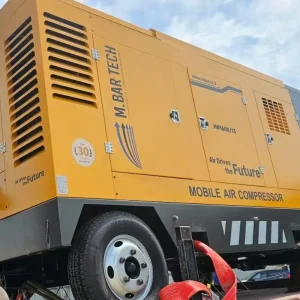
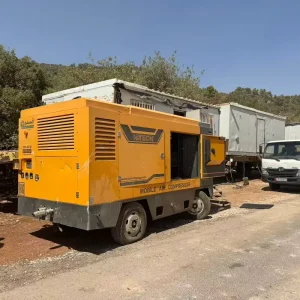
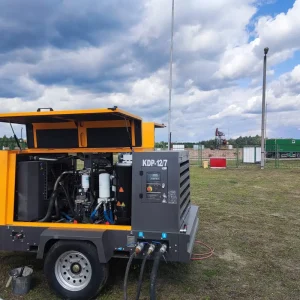
Then there’s the question of fixed versus portable units. Portable air compressors offer flexibility for exploration drilling, temporary operations, or as backup units, but they come with their own maintenance and fuel considerations. Fixed installations provide stability and greater energy efficiency for long-term, high-demand applications. Integrating these systems effectively means understanding the mine’s lifecycle and operational fluidity.
When Standard Won’t Cut It: Understanding Deployment Limitations
While VSD compressors offer significant energy savings, they aren’t a universal panacea. For instance, in applications where air demand is consistently at or near 100% capacity, a fixed-speed compressor might actually be more cost-effective due to its lower initial capital cost. The efficiency gains of VSD technology diminish when there’s no variable load to optimize against. This is a common misstep I’ve observed: assuming newer technology is always better without a thorough load analysis.
Similarly, while containerized compressor solutions are fantastic for rapid deployment and protection in harsh environments, they might not be the best fit for every scenario. In highly constrained underground spaces, a modular, skid-mounted system that can be assembled piece-by-piece might be the only viable option. Or, in a permanent surface plant with ample space and a long operational horizon, a custom-built compressor house could offer superior long-term maintenance access and noise abatement. It really boils down to balancing upfront costs, installation complexity, and long-term operational flexibility.
Another boundary condition is the power supply itself. Many remote mines rely on diesel generators, which have their own efficiency curves and fuel costs. Electrifying compressor fleets might seem like an obvious win for sustainability, but if the grid infrastructure isn’t robust or renewable energy sources aren’t integrated, the benefits can be offset by grid instability or continued reliance on fossil fuels for power generation.
Actionable Roadmap: Deploying for Peak Mine Performance
To achieve a truly successful mining air compressor deployment, you need a strategic, multi-faceted approach. First, conduct a comprehensive air demand audit. Understand exactly where and when compressed air is needed, what pressure and volume are required, and identify any leaks in the system. Many mines operate with significant air leakage, which is literally money blowing away.
Next, prioritize energy efficiency. Invest in VSD compressors where load profiles are variable. Implement heat recovery systems where possible – the heat generated by compressors can be repurposed for space heating or process water heating, further reducing energy costs. This isn’t just about being green; it’s about smart economics.
Embrace digitalization. Deploy IoT sensors and remote monitoring platforms. This enables predictive maintenance, allowing you to schedule repairs during planned downtime rather than reacting to catastrophic failures. It also provides invaluable data for optimizing system performance over time. This kind of data-driven insight is what separates leading mines from the rest.
Consider modular and containerized solutions for flexibility. These units, pre-assembled and tested off-site, drastically cut installation time and labor costs on site. They’re also easier to relocate as mine plans evolve, offering a long-term asset rather than a fixed installation tied to a single location.
Finally, don’t overlook the importance of ongoing training and maintenance protocols. Even the most advanced system will fail without proper care. Regular filter changes, oil analyses, and adherence to manufacturer service schedules are non-negotiable for maximizing uptime and extending equipment life. It’s an investment, not an expense.
Expert Insights
"In mining, compressed air isn't a luxury; it's a necessity that often gets overlooked until there's a problem. From my perspective, the real 'success stories' aren't just about powering drills or ventilation, but about the seamless integration of these systems into a mine's broader digital and sustainability strategy. It's about data telling you when to act, not reacting to a crisis. That's where the smart money is."
Further Reading
- Key Insights on Choosing the Right Mining Air Compressor
- Comprehensive Mining Air Compressor Solutions for All Projects
- Air Compressor Solutions for Mining & Mineral Processing Plants
- Cost-Effective Mining Air Compressor Solutions for Remote Sites
- Mining Air Compressor Deployments – Mining Air Compres
- Advanced Compressed Air Solutions for Modern Mining Operations
- Diesel & Electric Air Compressor Solutions for Mining Sites
- Mining Air Compressor Systems: Scalable Solutions for Mines
Related Reading: Industrial Air Compressor Solutions for Offshore & Onshore Oilfields
Related Applied Cases