Unlocking Project Efficiency with Advanced Mining Air Compressor Solutions
- Reliability trumps initial cost: Downtime in mining costs significantly more than investing in robust, durable equipment, often reaching six figures per hour for large operations.
- Maintenance strategy dictates lifespan: Proactive, data-driven maintenance extends equipment life, prevents costly failures, and ensures consistent performance.
- Integration with digital tools offers new gains: IoT-enabled compressors provide predictive maintenance, remote monitoring, and performance optimization capabilities.
Choosing correctly means the difference between seamless operations and costly, project-stalling downtime, a decision that directly impacts profitability and safety.
The Unseen Powerhouse: Why Your Air Compressor Strategy Matters
Mining projects, regardless of their scale or geographic location, are relentlessly demanding environments. From powering essential pneumatic tools and critical drilling rigs to facilitating crucial ventilation and dust suppression systems, compressed air functions as an indispensable, albeit often unsung, hero. Overlooking its strategic importance is a rookie mistake, one that frequently leads to significant operational bottlenecks, unforeseen delays, and ultimately, substantial budget overruns that can derail an entire project timeline.
The stakes are higher than ever in an industry where margins can be tight and efficiency is king.
Addressing Core Mining Pain Points with Tailored Solutions
Mining environments present a unique and formidable set of challenges that standard industrial compressors are simply not engineered to handle effectively. The relentless presence of abrasive dust, pervasive moisture, extreme temperature fluctuations, and highly corrosive elements demands specialized, heavy-duty equipment meticulously designed for resilience and sustained performance under duress.
High Energy Consumption & Operating Costs
This particular pain point is arguably the most significant headache for mine operators globally. Energy efficiency isn’t merely a fashionable buzzword; it represents a critical, tangible driver for enhancing overall profitability and ensuring the long-term viability of a mining operation. Modern variable speed drive (VSD) compressors, for instance, represent a significant leap forward in this regard. These sophisticated machines intelligently adjust their motor speed to precisely match the fluctuating demand for compressed air, leading to substantial and quantifiable energy savings.
Reliability & Downtime
In the mining sector, every single minute an air compressor is out of commission translates directly into lost production and rapidly escalating costs. This financial reality makes robust construction, the integration of high-quality, durable components, and the implementation of highly effective cooling systems absolutely non-negotiable for minimizing failures and safeguarding productivity.
Safety & Environmental Compliance
Particularly within the confines of underground mining operations, maintaining optimal air quality and managing noise levels are critically important considerations, directly impacting worker health and operational safety. Low-emission, quieter compressors are not just preferred; they are often essential to create a safer, more tolerable working environment. Furthermore, explosion-proof designs and advanced multi-stage filtration systems are mandatory requirements in areas where hazardous gases or combustible dust may be present. Globally, environmental regulations are progressively tightening, and achieving compliance is no longer an optional consideration; it is, in effect, a fundamental license to operate within the modern mining landscape.
Strategic Selection: Matching Compressors to Project Types
It’s a common misconception that one air compressor fits all. Not all mining projects are created equal, and consequently, neither are their specific air compression needs. A truly comprehensive solution demands a nuanced approach, aligning the equipment precisely with the operational context.
Underground Mining Systems
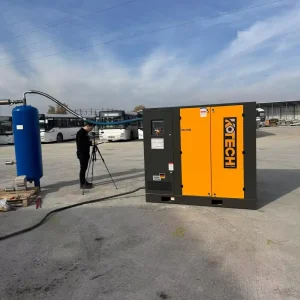
These intricate operations necessitate compact, often skid-mounted or highly portable units that are specifically designed to be maneuvered into tight, confined spaces. In these environments, effective ventilation and exhaust management are paramount concerns, directly impacting worker safety and air quality. Electric-powered compressors are generally the preferred choice, largely to avoid the generation of exhaust fumes, especially within enclosed environments, thereby contributing significantly to a healthier and safer air quality for the workforce. Moreover, redundancy in the air compression system is a key design principle; a single point of failure in such a critical system can effectively halt an entire section of the mine, leading to immense losses.
Surface & Open-Pit Mining
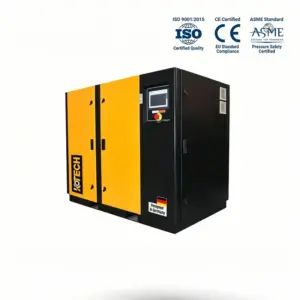
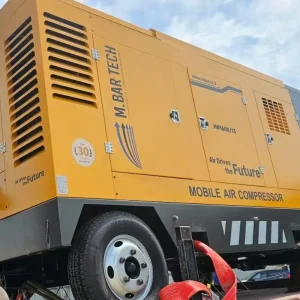
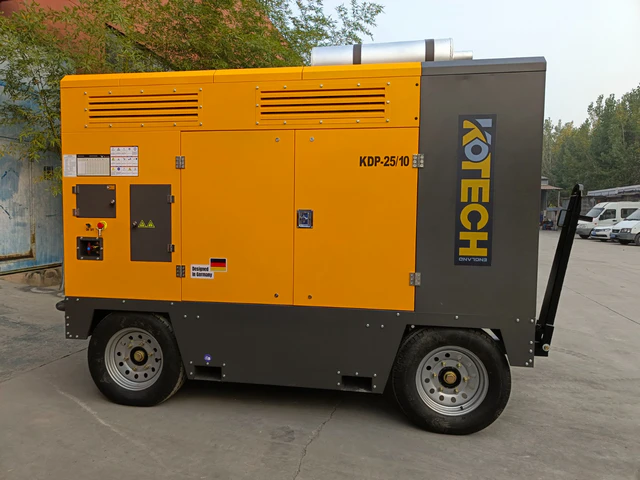
In contrast, surface and vast open-pit mining operations commonly deploy larger, significantly more powerful diesel-driven compressors. Their preference stems from their inherent mobility and independence from fixed grid power infrastructure, which is often lacking or impractical across expansive mining sites. These units must be engineered to withstand the harshest environmental conditions, including extreme weather fluctuations and incredibly heavy dust loads. We’re talking about massive rotary screw air compressors capable of delivering exceptionally high CFM (Cubic Feet per Minute) to simultaneously power multiple drilling rigs and other heavy machinery. Here, the primary focus shifts towards sheer power output, unyielding durability, and the ease of on-site maintenance, often far from specialized workshops.
The Role of Advanced Technology and Predictive Maintenance
The mining sector, a traditionally conservative industry, is slowly but surely embracing the transformative potential of Industry 4.0. This evolution means a growing reliance on IoT-enabled compressors, sophisticated remote monitoring capabilities, and advanced predictive analytics to optimize performance and minimize downtime.
It empowers mine operators to implement scheduled maintenance interventions based on actual wear and tear and anticipated component lifespan, rather than adhering to arbitrary, calendar-based timelines. This proactive approach effectively prevents catastrophic failures, significantly extends the overall equipment life, and optimizes maintenance costs. Honestly, if you’re not actively looking into leveraging this technology for your operations, you’re leaving a substantial amount of money on the table, sacrificing efficiency and risking unplanned downtime.
However, it’s important to acknowledge that this advanced technology isn’t a silver bullet universally applicable to every single operation. Smaller, more remote projects, especially those with limited existing infrastructure or constrained capital budgets, might find the initial investment in such sophisticated systems, along with the ongoing complexities of data management and analysis, simply too prohibitive or disproportionately costly. For these specific scenarios, a robust, mechanically simpler, and easily repairable system might still represent the most practical and economically viable choice, proving that “advanced” isn’t always synonymous with “best” without considering the precise operational context and resource availability.
Implementing a Comprehensive Air Compressor Strategy
Developing a bulletproof air compressor strategy involves far more than merely acquiring the biggest or cheapest unit you can find. It requires a thoughtful, multi-faceted approach.
Conduct a Thorough Needs Assessment
Begin by meticulously mapping out every single pneumatic tool, drill, and system within your operation that requires compressed air. Calculate both your peak and average CFM requirements with precision. Crucially, don’t forget to factor in any anticipated future expansion plans or evolving project demands, ensuring your solution has room to grow.
Prioritize Energy Efficiency
Actively seek out advanced VSD technology, highly efficient motor designs (such as IE3 or IE4 rated motors), and explore viable heat recovery options. While the initial capital cost for such energy-efficient systems might be marginally higher, the lifecycle savings, primarily derived from reduced energy consumption, are often incredibly significant and quickly justify the investment.
Invest in Quality & Durability
In the unforgiving mining environment, heavy-duty construction, the use of corrosion-resistant materials, and the integration of robust, multi-stage filtration systems are not luxuries; they are fundamental necessities. These critical features invariably pay substantial dividends in the form of drastically reduced downtime, significantly lower repair costs, and a much longer, more reliable service life for your equipment.
Establish a Proactive Maintenance Schedule
Implement a rigorous maintenance schedule that is meticulously based on both the manufacturer’s specific recommendations and, ideally, real-time operational data gathered from your systems. Regular oil changes, timely filter replacements, and diligent leak detection protocols are not merely suggestions; they are non-negotiable practices essential for sustained performance and longevity.
Consider Rental Options for Flexibility
For short-term projects, temporary capacity boosts, or operations experiencing fluctuating demand, renting specialized mining air compressors can be a highly cost-effective and strategically flexible solution. This approach allows you to acquire the necessary capacity without the substantial capital expenditure of purchasing, providing agility in resource allocation.