
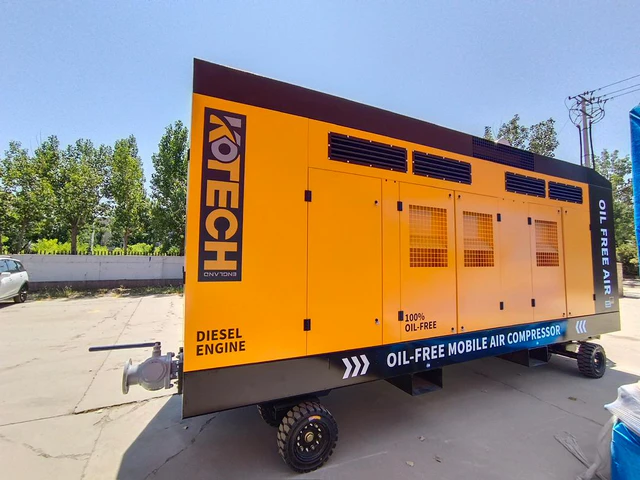
Navigating Global Mining Air Compressor Challenges
The global mining industry, by its very nature, pushes equipment to its absolute limits. When we talk about air compressors in this sector, we’re not just discussing machines that produce compressed air; we’re talking about the lifeblood of operations, powering everything from drills and pneumatic tools to ventilation systems and mineral processing. Frankly, many standard industrial compressors simply won’t cut it when you’re thousands of feet underground or battling extreme desert heat.
Understanding the Bedrock: Why Mining Demands Robust Air Power
Mining operations globally are characterized by their intensity and the sheer volume of material moved. This requires reliable air pressure for critical applications. Think about a typical underground mine: air is vital for rock drills, roof bolters, and continuous miners. On the surface, it’s integral to quarrying, blast-hole drilling, and conveying systems. The demand isn’t just constant; it’s often variable and spikes unpredictably. This variability, coupled with the often corrosive, dusty, and temperature-extreme environments, means that any air compressor system must be over-engineered for resilience.
When a compressor fails in a remote mine, the ripple effect is immediate and costly. Crews stand idle, production halts, and critical safety systems can be compromised. This operational expenditure (OpEx) hit often far outweighs the initial capital expenditure (CapEx) of a premium, purpose-built unit. This is why investment in heavy-duty, reliable, and easily maintainable systems isn’t a luxury; it’s an economic imperative for any serious mining venture looking for sustained profitability.
Global Shifts: Data Driving Compressor Innovation
The mining sector is under increasing pressure to optimize costs and improve sustainability. This pressure translates directly into how compressed air systems are designed and deployed.
Energy consumption remains a monumental concern. Industrial air compressors are notorious power hogs. In mining, where power grids might be unstable or diesel generators are the primary source, this efficiency gap becomes even more pronounced. This drives the demand for Variable Speed Drive (VSD) compressors. VSD technology allows the compressor motor to adjust its speed to match air demand, significantly reducing energy waste during periods of lower usage.
Beyond energy, environmental regulations are tightening. Noise pollution, for instance, is a critical factor, especially in mines near residential areas or with strict occupational health and safety standards. Many modern mining compressor projects now specify enclosed, sound-attenuated units to meet these requirements. Furthermore, the push for electrification in mining, driven by sustainability goals and the desire to reduce diesel dependency, is leading to more electric-powered compressors even in highly mobile applications, where battery-electric solutions are emerging.
Beyond the Blueprint: Real-World Project Challenges & Solutions
High-Altitude Operations: The Andes Copper Belt
In the high-altitude copper mines of the Chilean and Peruvian Andes, air density is significantly lower. This means that a standard compressor designed for sea level will produce less air at altitude or need to work much harder, consuming more energy and suffering increased wear. Projects here often require specialized, oversized compressors or units with specific altitude compensation features. We’ve seen installations where the original sizing calculations were off, leading to chronic air shortages and equipment failures. The solution typically involves specifying compressors with larger air ends or integrating turbo-charged systems to maintain performance. Furthermore, the extreme diurnal temperature swings and UV exposure at these altitudes demand highly durable materials and robust electronics.
Remote Desert Mining: Australian Iron Ore
Australia’s vast iron ore mines present a different set of challenges: extreme heat, pervasive dust, and immense distances. Compressor systems must withstand ambient temperatures often exceeding 45°C (113°F) and operate reliably for months without hands-on maintenance. Dust ingress is a constant threat, requiring multi-stage air filtration systems and robust cooling packages to prevent overheating and premature component wear. Modern solutions involve heavy-duty, industrial-grade filters, often with automatic cleaning cycles, and robust enclosures designed to prevent sand and dust penetration. Remote monitoring, in these isolated locations, is not just beneficial; it’s absolutely essential for early fault detection and scheduled maintenance planning, allowing technicians to be dispatched with the right parts before a critical failure occurs.
Deep Underground Mines: South African Gold & Platinum
Deep-level mining, prevalent in South Africa for gold and platinum, introduces unique demands for compressed air. The sheer depth means high ambient temperatures and humidity, coupled with the need for incredibly long piping runs. Air quality becomes paramount, not just for tools but sometimes for breathable air systems. Projects in these environments often utilize multiple compressor stations strategically placed at different levels to minimize pressure drops and maintain consistent supply. Water-cooled compressors are often preferred over air-cooled units due to high ambient temperatures. Furthermore, the safety implications are immense; fire suppression systems, emergency breathing air, and pneumatic refuge chambers all rely on a constant, clean air supply. The focus shifts to redundancy, with multiple compressors operating in parallel and sophisticated control systems to ensure continuous operation even if one unit fails.
The Unseen Variables: When Standard Solutions Fall Short
While many projects can leverage commercial off-the-shelf (COTS) compressor units, there are specific scenarios where this approach can lead to significant problems. A standard, oil-lubricated rotary screw compressor, for example, is excellent for general industrial use. However, it might not be suitable for applications requiring absolutely oil-free air, such as certain mineral processing techniques or specialized breathing air systems. In these cases, oil-free scroll or reciprocating compressors, or even oil-free rotary screw compressors, are necessary, despite their higher initial cost. Similarly, relying solely on a single, large compressor for critical operations, without adequate redundancy or backup, is a gamble that rarely pays off in mining. Only when the operational criticality is low, or immediate access to spares and service is guaranteed (which is rare in mining), would such a minimalist approach even be considered.
Practical Blueprint: Selecting Your Next Mining Compressor System
Selecting the right air compressor for a mining project is a complex decision that extends beyond mere horsepower and pressure ratings. Here’s a practical blueprint based on our extensive experience:
- Assess True Air Demand and Variability: Don’t just look at peak demand. Understand average demand, minimum demand, and how often spikes occur. This will guide the choice between fixed-speed and VSD units, often pushing towards VSD for significant energy savings.
- Analyze Environmental Conditions: Altitude, ambient temperature range, humidity, and dust levels are non-negotiable considerations. Specify appropriate cooling systems, filtration, and enclosures.
- Evaluate Reliability and Redundancy Needs: For critical applications, N+1 or N+2 redundancy might be necessary. Consider modular systems that allow for maintenance on one unit while others continue operation.
- Prioritize Total Cost of Ownership (TCO): Look beyond the purchase price. Factor in energy consumption (over 10+ years), maintenance costs, spare parts availability, and potential downtime costs. A cheaper unit might be significantly more expensive in the long run.
- Consider Local Support & Spares: Even the best compressor needs servicing. Ensure the manufacturer or distributor has a strong local presence, technical expertise, and readily available spare parts to minimize lead times.
It’s an investment, not just a purchase.





