
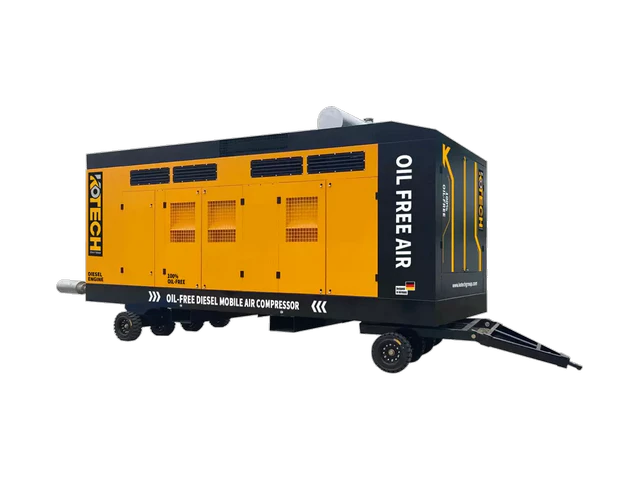
Practical Modular Custom Mining Air Compressor System Design for Scalable Expandable Mine Production Lines
- Key Insight 3: All modular system components must meet MSHA ignition-proof standards to avoid underground deployment compliance delays
Most mine operators waste six to eight figures on compressed air infrastructure that sits underutilized for 2-3 years before full production lines come online. Modular custom mining air compressor system design for expandable mine production lines solves this exact pain point, by matching compressed air capacity to each phase of your production ramp instead of forcing you to pay for full output on day one.
Core Design Logic for Expandable Production Lines
The design framework starts with a baseline compressed air demand audit that maps every end point across your existing production line, from drilling rigs to ore conveying pneumatic actuators to dust suppression systems. You do not lock in total capacity at this stage. Each modular unit is sized to deliver 1/3 of your final full-phase capacity, with standardized quick-connect high-pressure piping interfaces that require no custom welding on site when you add new units. All control systems are built with open modbus protocols that let you sync new units to your existing central compressed air management platform in less than 2 hours, no custom coding required.
This design also lets you reallocate individual compressor skids to different work zones temporarily during peak maintenance cycles, a feature fixed integrated systems cannot support.
Clear Use Case Boundaries
This modular custom design framework does not deliver the same efficiency gains for all mine site profiles. It is not recommended for hard rock mines operating at depths greater than 1200 meters. It also does not make financial sense for small mine sites with a total projected operational lifespan of less than 5 years. The custom engineering overhead for modular interface standardization will not pay back before the site is decommissioned.
You have to run a quick payback period calculation before you sign off on any design, no matter how good the modular value proposition sounds on paper.
Step-by-Step Implementation Workflow
First, run a 7-day continuous compressed air demand audit across all existing production line end points, to capture peak and off-peak usage data that generic engineering estimates will miss. Second, work with your vendor to specify all modular skid dimensions, mounting points and piping interfaces to a single standardized spec, so third-party units can be added later if you switch suppliers. Third, deploy the first set of modular units sized for your phase 1 production capacity, with all pre-routed piping runs for future units installed during the initial site construction. Fourth, implement a central IoT monitoring platform that tracks individual unit runtime, energy draw and output, so you can adjust load distribution dynamically as you add new capacity for subsequent production phases. Fifth, schedule a full MSHA compliance audit for the full system after each new unit deployment, to confirm all pressure relief valves and ignition shielding meet current underground worksite standards.
This workflow cuts typical design and deployment lead times from 14 weeks to 6 weeks, based on our team’s 2023 project delivery metrics. You do not need to shut down existing production lines to install additional modular units during expansion, which is the single biggest operational advantage over fixed system upgrades that require full line shutdowns.




