
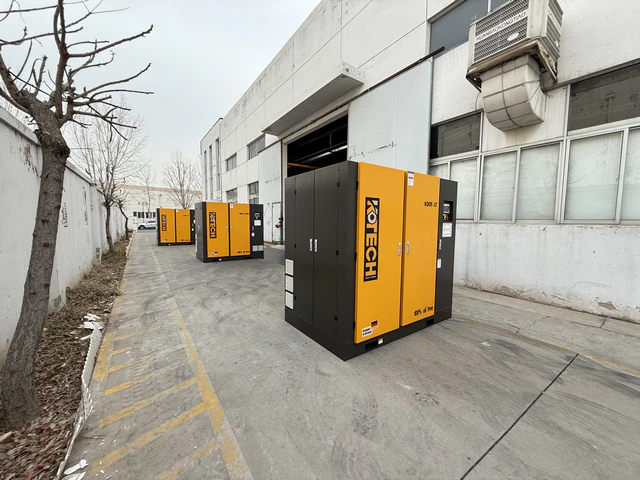
In the demanding world of mining, standard air compressors simply don't cut it. Downtime isn't just an inconvenience; it's a financial drain and a safety risk. This article dives into why purpose-built, reliable mining air compressor solutions are non-negotiable for harsh environments, covering everything from engineering resilience to smart maintenance strategies that guarantee uptime and optimize total cost of ownership. Key Insights: Reliability is Paramount: Downtime in mining operations can cost anywhere from $20,000 to $100,000 per hour, making robust air compressor solutions critical. Harsh Environment Engineering: Specialized features like advanced filtration, corrosion resistance, and vibration dampening are essential for longevity and performance. Total Cost of Ownership (TCO): Initial investment pales compared to operational costs; focus on energy efficiency, maintenance, and extended lifespan. Smart Technology Integration: Remote monitoring and predictive analytics drastically improve uptime and reduce unexpected failures. Right-Sizing is Key: Over- or under-specifying a compressor leads to inefficiencies and accelerated wear; precise application assessment is crucial.
Mastering Mining: Your Guide to Unbreakable Air Compressor Performance
Key Takeaways
- Mining environments require purpose-built air compressors, not standard industrial models.
- Downtime costs in mining are extremely high, making compressor reliability critical.
- Key features include robust construction, advanced filtration, corrosion resistance, and effective temperature management.
- Modern solutions leverage IoT for remote monitoring, predictive maintenance, and energy optimization (VSD).
- Always consider Total Cost of Ownership (TCO), not just initial purchase price.
- Match compressor specifications precisely to site-specific environmental conditions and operational demands.
Related: Heavy-duty mining compressors · industrial air systems for mining · robust compressed air equipment · extreme environment air compression · remote site air solutions · underground mining compressors · surface mining air systems · total cost of ownership mining · predictive maintenance air compressors · energy-efficient mining compressors.
The Unyielding Demands: Why Standard Compressors Fail in Mining
Let’s be blunt: a standard industrial air compressor, no matter how good it is in a factory setting, won’t last long underground or at a remote open-pit mine. The conditions are brutal. We’re talking about extreme temperatures, from scorching deserts to freezing tundras. Then there’s the relentless dust, corrosive moisture, high altitudes, and constant vibration from heavy machinery. These aren’t just minor challenges; they’re environmental aggressors that relentlessly attack equipment, leading to premature failure and costly downtime.
In my twelve years working with mining operations, I’ve seen firsthand how quickly an unsuitable compressor can turn into a very expensive paperweight. The air quality in a mine, for instance, is often thick with abrasive silica dust or even corrosive gases like sulfur dioxide. A standard filter system just can’t handle that; it clogs rapidly, reducing efficiency and eventually choking the compressor. This isn’t theoretical; it’s a common trap I’ve encountered where initial cost savings evaporate quickly due to operational failures.
The True Cost of Unreliability: Data Speaks Loudly
Downtime in mining isn’t a minor inconvenience; it’s a catastrophic financial event. Consider this: a single hour of unplanned downtime in a large-scale mining operation can easily cost upwards of $50,000, according to a 2023 report by PwC on mining productivity. That figure skyrockets for critical processes. Multiply that by several hours, or even days, waiting for parts and repairs in a remote location, and you’re looking at millions. This makes the initial investment in a truly reliable, purpose-built mining air compressor seem like a bargain.
Furthermore, energy consumption is a massive operational expense. Air compressors are notoriously power-hungry. The U.S. Department of Energy (DOE) estimates that compressed air systems can account for up to 10-30% of a plant’s total electricity bill. In mining, with often higher demand and longer operating hours, this percentage can be even more significant. Investing in energy-efficient models, even if they cost more upfront, delivers substantial long-term savings. For instance, a 2022 study by the IEA highlighted that optimizing industrial energy use, including compressed air, could reduce global energy demand by 15-20% by 2040. The implications for mining’s bottom line are clear.
Engineering for Extremes: Core Features of Reliable Mining Compressors
So, what defines a compressor as “reliable” for these environments? It boils down to specialized engineering and robust components.
Heavy-Duty Construction and Enclosures
A sturdy, often skid-mounted, enclosure is non-negotiable. It needs to protect internal components from physical impact, dust ingress, and corrosive elements. Materials like heavy-gauge steel with specialized coatings are crucial. Vibration dampening systems are also vital to protect sensitive electronics and extend the lifespan of mechanical parts under constant stress.
Advanced Air Filtration Systems
This is where standard units truly fail. Mining compressors require multi-stage filtration, often with pre-filters, cyclonic separators, and high-efficiency particulate air (HEPA) filters to handle fine dust and abrasive particles. Moisture separators and air dryers are equally important to prevent condensation-related corrosion and protect downstream tools.
Temperature Management
Effective cooling systems are critical. Whether it’s operating in extreme heat or ensuring components don’t freeze in sub-zero conditions, specialized radiators, intercoolers, and even heated enclosures might be necessary. This ensures consistent performance and prevents overheating, a common cause of premature failure.
Corrosion Resistance
From internal components to external piping, materials must resist chemical corrosion from atmospheric contaminants and moisture. Stainless steel components, specialized lubricants, and protective coatings are standard features in high-quality mining compressors.
Beyond the Iron: Smart Solutions for Uptime
Even the most robust compressor needs smart management to maximize its lifespan and efficiency. This is where modern technology truly shines.
Remote Monitoring and Control
In remote mining sites, having real-time data on compressor performance is invaluable. IoT-enabled systems allow operators to monitor pressure, temperature, oil levels, and energy consumption from a central control room, thousands of miles away if needed. This proactive approach helps identify potential issues before they escalate into costly breakdowns.
Predictive Maintenance
This builds on remote monitoring. By analyzing historical data and current operational parameters, predictive maintenance algorithms can forecast when a component is likely to fail. This allows maintenance teams to schedule interventions during planned downtime, rather than reacting to an emergency. The global predictive maintenance market is projected to grow significantly, reaching over $20 billion by 2027, according to Statista (2023), reflecting its proven value in reducing unplanned outages.
Energy Optimization Systems
Variable Speed Drive (VSD) compressors are a game-changer for energy efficiency. They adjust motor speed to match air demand, significantly reducing power consumption during periods of lower load. This can lead to energy savings of up to 35% compared to fixed-speed compressors, a crucial factor in managing operational costs.
When Not to Over-Engineer: Boundary Conditions
While reliability is paramount, it’s also important not to over-engineer a solution unnecessarily. A heavy-duty, explosion-proof, multi-stage filtered compressor designed for a deep underground coal mine isn’t the most cost-effective or practical solution for a small, temporary surface quarry in a temperate climate. In such cases, a robust, but less specialized, industrial compressor with appropriate environmental modifications (like enhanced filtration for dust) might suffice. The key is a thorough site assessment and understanding the specific environmental stressors and operational demands. This isn’t about cutting corners; it’s about smart resource allocation.
Choosing Your Partner: A Practical Guide
Selecting the right mining air compressor isn’t just about picking a model; it’s about choosing a long-term partner.
Assess Your Specific Needs
Don’t rely on generic recommendations. Conduct a detailed audit of your site’s environmental conditions, air demand, existing infrastructure, and operational schedule. Consider future expansion plans.
Total Cost of Ownership (TCO)
Look beyond the sticker price. Factor in energy consumption, maintenance costs, expected lifespan, and the potential cost of downtime. A cheaper unit with high running costs and frequent breakdowns will always be more expensive in the long run.
Service and Support
Given the remote nature of many mining operations, access to reliable service, spare parts, and technical support is non-negotiable. What’s the supplier’s track record for rapid response and parts availability in your region?
Compliance and Safety
Ensure the compressor meets all relevant industry safety standards, environmental regulations, and certifications for hazardous environments, if applicable.
Reliable mining air compressor solutions aren’t just pieces of equipment; they’re foundational elements of operational success. Ignoring their importance is a gamble no profitable mining operation can afford to take.
Expert Insights
From my vantage point, the biggest mistake I see companies make is underestimating the true cost of unreliability. A few extra dollars upfront for a truly robust, smart-enabled mining compressor isn't an expense; it's an insurance policy against catastrophic operational losses.
Further Reading
- Mining Air Compressor Efficiency: Tips & Technical Insights
- Mobile Diesel Air Compressors: High-Pressure Mining Solutions
- Heavy-Duty Air Compressors for Oilfield Exploration & Extraction
- Air Compressor Case Studies for Mining & Heavy Industry
- Reliable Mining Air Compressor Solutions for Harsh Environments – Air Compressor Sol
- Latest Tech & Innovations in Mining Air Compressors
- Heavy-Duty Portable Diesel Air Compressors for Harsh Conditions
- Reliable Air Compressor Solutions for Oil & Gas Industries
Related Reading: Real Mining Air Compressor Projects from Around the World
Related Applied Cases