
- Extreme heat and silica sand create unique failure risks for compressors on Saudi desert blast hole sites
- These specifications only apply to open-pit operations; they do not fit underground mining requirements
Only purpose-built high pressure mining compressors deliver consistent uptime for blast hole drilling in Saudi Arabia’s harsh desert conditions. Cheaper standard models almost always lead to costly unplanned downtime.
Key Climate Challenges for Saudi Desert Mine Sites
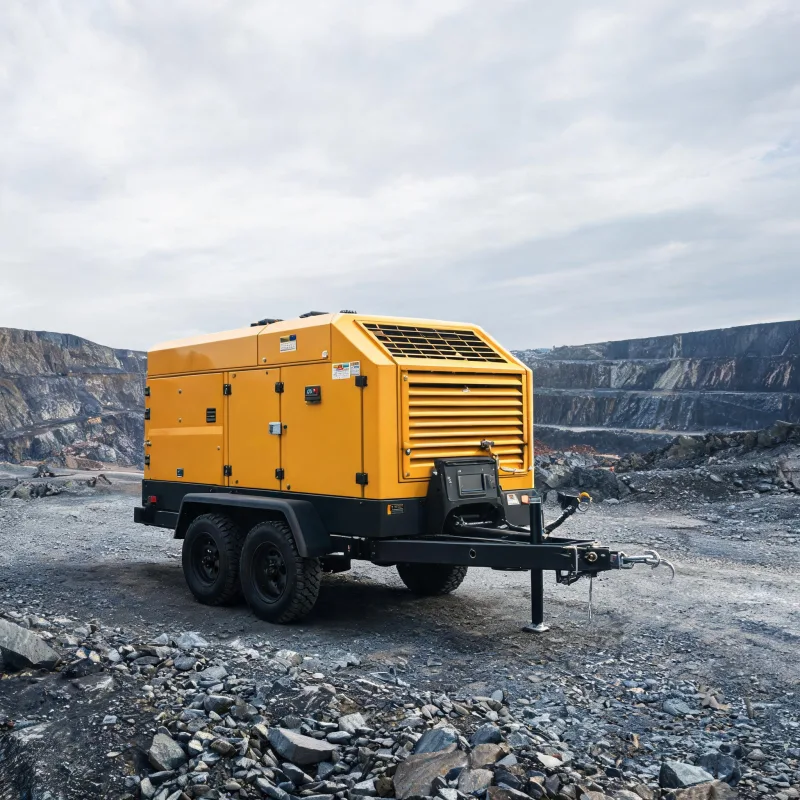
Saudi inland desert mines face conditions no off-the-shelf compressor can handle.
Blowing silica sand clogs intake filters in as little as 100 hours of operation for standard units. The sharp sand also causes rapid internal wear to rotors and seals, leading to premature pressure loss.
Common Selection Mistakes
Buying Standard Industrial Compressors
Many new operations opt for lower upfront cost standard compressors to cut capital expenditure. This backfires almost every time in the desert.
Statista 2023 data shows non-rated compressors have 3x higher annual failure rates than purpose-built models for this application.
Ignoring Local Service Support
Remote desert locations are 3+ hours away from major industrial service hubs in Saudi Arabia. If your supplier doesn’t keep common parts in-country, you can wait 3+ days for a delivery that halts all drilling operations.
This specification only applies to open-pit blast hole drilling above ground. It does not work for underground mining operations where humidity and pressure requirements shift dramatically.
Actionable Selection Criteria
First, select a unit rated for continuous operation at a minimum of 55C ambient temperature. That gives you a 3C to 7C safety buffer for the hottest recorded summer days at most inland sites.
Second, specify a multi-stage cyclone sand filtration system for the intake.
Third, pick a unit with a 25 to 35 bar continuous pressure rating. This matches the requirements for most down-the-hole blast hammers used in open-pit desert mining for hard rock formations.
Fourth, only work with suppliers that maintain a local parts and service hub in Saudi Arabia.
That payback usually comes in less than 24 months of continuous operation.
Most operators see a 10 to 12 year lifespan from a properly maintained desert-rated unit, compared to 4 to 6 years for a standard non-rated compressor. The long-term value gap is impossible to ignore for any operation targeting consistent production.




